0
0
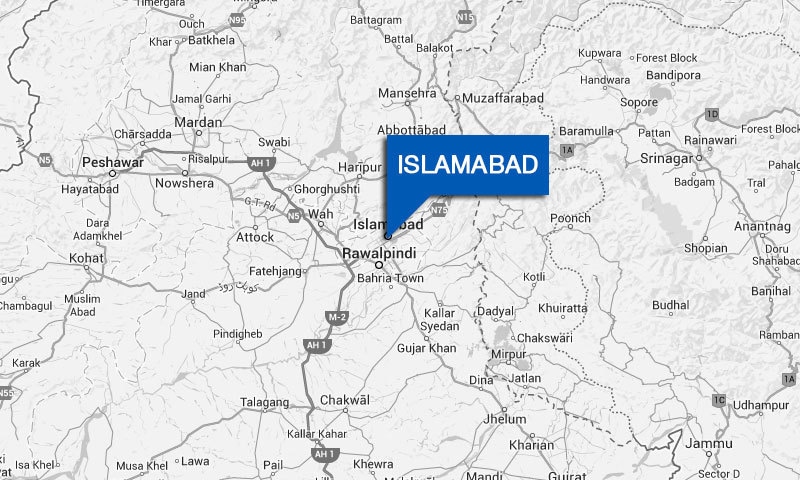

ISLAMABAD: Ahmed Usmani was a young man from Rawalpindi looking to make it big. A few years ago, he scraped together a first installment of Rs250,000, a small fortune for a middle-class man like him, to pay off a man who guaranteed that he would get Ahmed a job abroad.
But as fate would have it, Ahmed couldn’t make it to his destination and was deported back to his own country. However, rather than reporting the agent, Asadullah Khan, to the authorities, Ahmed tried to negotiate with the man in the hopes of getting his money back.
Once their ‘elders’ became involved, Ahmed told Dawn, “The agent agreed to return the money, though in installments.”
“At least I have the hope that I will get my money back,” he said when asked why he hadn’t gone to the authorities. “Had I registered an FIR, the money would have been gone for good.”
According to estimates by the Federal Investigation Agency (FIA), there are around 1,500 cases related to human trafficking pending before different courts in the twin cities.
However, an FIA official claims that this is twice as many cases as there were a decade ago. But he insists that this is still just the tip of the iceberg and a vast majority of trafficking takes place undetected.
“The reported cases account for merely one per cent of the human trafficking trade that takes place in Pakistan,” said an official.
The low rate of prosecution is due to a number of reasons, especially the lack of cooperation on part of the illegal immigrants themselves.
Even when such people are caught and sent back to Pakistan, they refuse to testify against human smugglers because their priority is to either convince the criminal ring to give them another shot at the journey or to get their money back.
The FIA official told Dawn that there were organised rackets and small groups of people who smuggled thousands of desperate men, women and children abroad every year. So much so, that despite the FIA claim that it does not have complete details about all the people involved in the trade, its Red Book lists 95 “most wanted traffickers”. The Red Book contains names of most wanted terrorists and criminals involved in the drug trade, fraud, money-laundering, human trafficking and other such illegal activities.
Most of these wanted traffickers belong to Central Punjab, while there is also a sizeable number of wanted men who hail from Sindh, Khyber Pakhtunkhwa, Balochistan and Azad Jammu and Kashmir.
In more than one case, politicians from Central Punjab have been found to be involved in the human trafficking business. For instance, a former PML-Q member of the Punjab Assembly, Zobia Rubab Malik, ran a visa consultancy firm called Future Concerns from 2008 to 2013, along with her husband, Asim Mehmood Malik, who was a director there. After the scam surfaced in 2013, Zobia and her husband fled the country.
The FIA has registered about 200 cases against the couple for defrauding a large number of Pakistanis on the pretext of securing immigration and visas for the US, UK, Canada, Australia, New Zealand and some European countries.
MPA Malik used her official position to attract naïve individuals from rural areas. According to one FIA official, her firm received more than Rs2 billion from different people.
The scam surfaced after those who were deported tried to get their money back; they filed petitions in the Lahore High Court (LHC), which ordered that a case be registered against the firm. The cases against the couple are still pending before a trial court in Lahore.
FIA officials reveal that children from extremely impoverished families hailing from Rahim Yar Khan, Bahawalpur, Hyderabad, Sukkur and Dera Ismail Khan have been smuggled to the United Arab Emirates (UAE) to serve as camel jockeys in the past. They are smuggled to the Middle East through the Iran border and the coastal areas of Balochistan.
A man who was once part of such a human trafficking ring told Dawn that his network helped illegally send people to Brazil with the help of FIA immigration officials, the cabin crew of a private airline company and a facilitator in Brazil. “The fee was Rs0.7 million,” he said.
“The person paid Rs150,000 at the airport and Rs300,000 was forked over to the crew after embarking from the plane,” he explained, adding that the crew is then responsible for the safe exit of the person from the airport at the destination.
The remaining money was paid up after reaching Brazil. This was handed over to the facilitator who got the illegal traveller admitted to a refugee camp, where a two-month stay is allowed and the refugee is even allowed to work until their asylum case is decided.
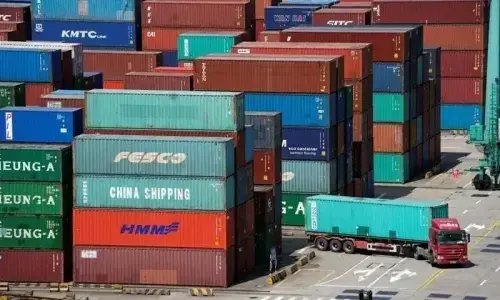
Those who can afford it pay high fees to reach their destinations with ease, while those who cannot pay well are taken via containers to European countries.
“As the containers are taken on ships, they can take 50 to 60 days to reach England from Greece,” he said. “The long traveling time has cost many immigrants their lives.”
Stuffed into containers with no toilets and little food, the danger of suffocation always looms over their heads.
Published in Dawn, April 13th, 2015
On a mobile phone? Get the Dawn Mobile App: Apple Store | Google Play