LAHORE: India has agreed to re-examine Pakistan’s objections over designs of Kishanganga dam and four other hydroelectric power projects on Jhelum and Chenab rivers.
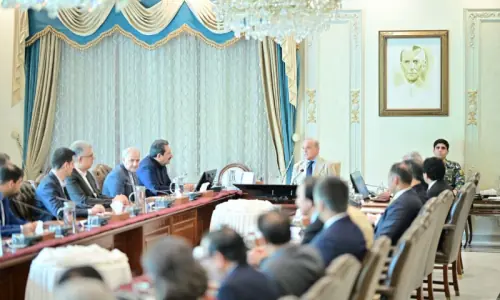
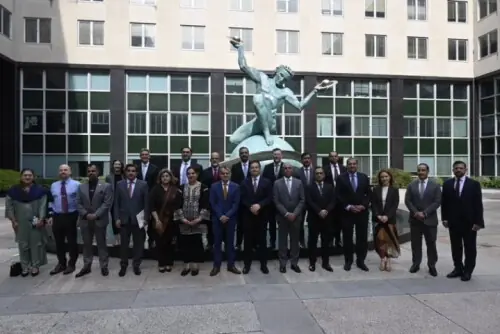
During the third and concluding day of talks held here on Tuesday, a 10-member Indian team headed by the Commissioner of Indus Water Commission pledged to resume talks after two months by submitting detailed reply/justification to the objections raised by the Pakistani Commissioner on Indus Water Commission (IWC).
“Though there is not a major breakthrough during the three-day talks, we have succeeded in explaining our objections with certain logic before the Indian team. And the team has agreed to re-examine and reply all our objections and logic deeply and restart talks again with us after two months,” Pakistan’s Commissioner on Indus Water Commission Mirza Asif Baig told Dawn.
“Actually some of their logics are not well-founded, which are not required to be even re-examined. And some of their justifications are required to be re-examined by us. So we will review these surely,” he maintained.
While explaining the objections and justifications, the commissioner said that the Pakistani team had expressed serious concerns over the designs of Kishanganga and four other dams.
“We have objected to the spillways with deep spilling of the Kishan Gang dam at the Jhelum River (Neelum distributary) and other dams at the Chenab River, as India cannot do this under the Indus Water Treaty. Similarly, we have asked them to avoid excessive water poundage and intake. Likewise, there are some other objections we have raised on the dams’ designs/drawings,” he explained.
Mirza Asif was of the view that if designs of these dams are not changed India would get complete control on the western parts of the rivers which would reduce their flow. “It can destroy our agriculture sector and other sorts of water needs in the country.”
He said members of the Pakistani team had categorically told their Indian counterparts that Pakistan wanted practical, acceptable, meaningful and viable conclusion of the talks after two months. “We have also told them that we will have no option but to approach the International Court of Justice (ICJ) for arbitration in case India does not change designs of its dams,” he added.
Published in Dawn, August 27th, 2014