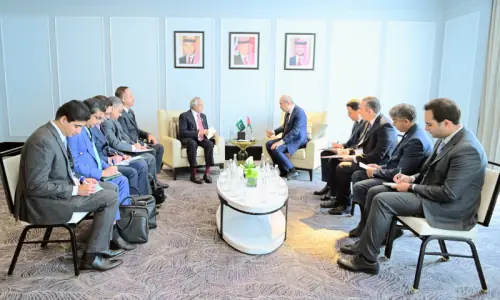
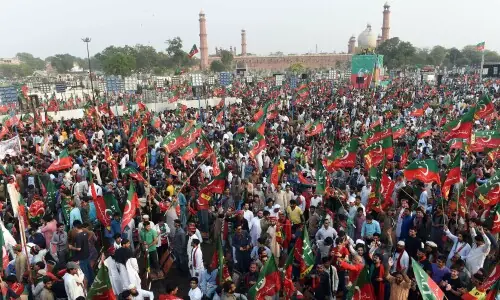
AS with everything dialogue related, it appears to be one step in one direction, another in another direction. Prime Minister Nawaz Sharif making the trek to PTI chief Imran Khan’s home for discussions prior to the announcement of a new government negotiating committee at least sends the signal that the political leadership of this country can come together and discuss issues of great national import — even if the politicians in question are bitter political foes. That trend, visible during the last PPP-led government in Islamabad too, bodes well for democratic stability and suggests that the bad old days of decades past may have been buried for good after all.
Now, to the more complicated development: the formation of a new government committee to carry forward the dialogue process with the outlawed TTP. In the government’s version, the original four-member committee had performed some useful services and laid the groundwork for more serious and direct engagement with the TTP and now it was time for a committee empowered to take decisions on what can be offered to the TTP and what is to be demanded of it. The problem with that explanation is the composition of the committee: three serving bureaucrats and one retired bureaucrat and diplomat affiliated with the PTI. To students of how power works in Pakistan and what is and is not possible, it is difficult to see how the new committee is more empowered and independent than the previous one. Bureaucrats with a deep knowledge of Fata and tribal affairs some of the members of the new committee may be, but the Pakistani bureaucratic structure does not allow for much initiative or independence — or even forthrightly presenting conflicting views to their political superiors. If this is truly the result-oriented phase, in government-speak, of the dialogue process, then it would appear that the new committee may be little more than a front for behind-the-scenes confabulations between the political government and the army leadership and among the political leadership.
Away from the issue of the composition of the new committee, there remains the issue of what the principal negotiation points will be and how the political and army leaderships will square their differences on them. The TTP in its meeting with its own nominated committee in North Waziristan will likely lay out its own set of demands, which may give an indication of what the contours of a successful agreement may eventually look like. But what the TTP demands is one thing — how the PML-N government will be able to keep both the PTI and the army leadership on board in addition to keeping public opinion on its side is quite another matter. To wit, to what extent the PTI, the PML-N and the army are on the same page is difficult to say.