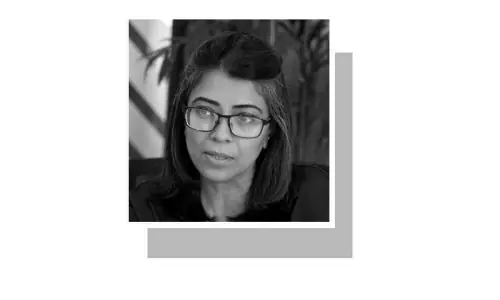
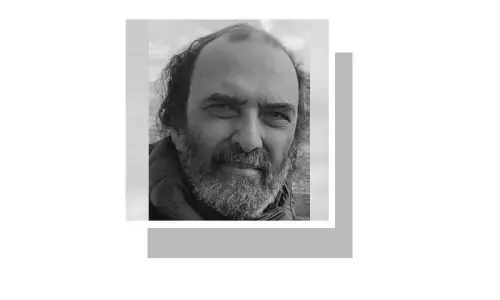
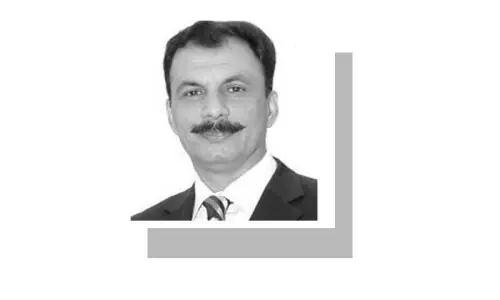
KARACHI: Asma Jehangir, Mohammed Hanif and Aasim Sajjad Akhtar were the crowd-drawing big names at the ‘Human Rights and Wrongs in Pakistan’ session at the fifth Karachi Literature Festival on Friday. But the presence of political and legal anthropologist Cabeiri deBergh Robinson in the human rights panel brought forth a new perspective on human rights.
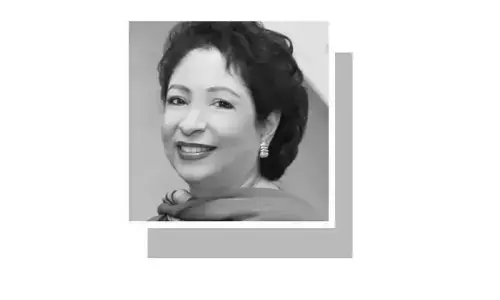
“The previous government and the current government have created laws under the pretext of controlling the Taliban turning Pakistan into a security state. My fear is that these laws will be used against poets and not Maulana Sufi,” said the much-admired human rights activist and lawyer Asma Jehangir to a crowd that heartily clapped at every sentence that she uttered at the session. Discussing the achievement of the human rights struggle, she said: “We have come a long way in terms of human rights. Earlier, women’s rights and honour crimes were not even considered as violations.” But she said there were points of concern especially with progressive and liberal forces. “The right-wingers have a consensus but unfortunately what is disappointing is that none of the progressive forces have one. We need to change direction because powerful forces have taken over our narrative, they will isolate us and we cannot afford to do so.”
Left-wing activist Aasim Sajjad Akhtar offered an old-fashioned solution to fixing the wrongs in the country. “Once upon a time there was something called the left that not only systematically highlighted human rights abuses but also challenged the structures that perpetuated those abuses. We need to bring back the terms such as class, state, imperialism, (this terminology can be refashioned) but the problem is that these terms have been co-opted by the right-wingers and have hence claimed the political space and language. Everyone here knows the causes [of the abuses] but there is no visible force that is willing to stick their neck out. We need an organised left political force. We can debate its structure but we need to do it.”
Mr Hanif focused on the language used when reporting about human rights violations such as so and so was kidnapped (aghwa kar diye gaye) and so and so was murdered (marva diye gaye). “The language is always passive we never name the killer,” and gave an analogy that amused the audience saying it was akin to old women in his village who do not take the name of their husbands as they fear that they will be divorced.
Cabeiri deBergh Robinson, who has worked extensively on conflict zones, gave a diametrically opposite view of state and human rights interventions whereby the state intervenes under the garb of protecting human rights. “The military and other humanitarian interventions (Oxfam) in conflict and war zones such as Timor and Bosnia were said to be human rights interventions. This part of human rights legitimizes it.” She also found similarities in lack of undertaking of serious responsibility for changing structural conditions in Kashmir, Balochistan and Swat. “For instance the claim is that those behind the conflict are RAW agents dressed up as terrorists. The Baloch were first said to be being supported by Indians, particularly RAW, and now the narrative is that in fact they are RAW agents dressed up as the locals. And in this way there is no serious responsibility taken for changing the structural conditions. This also allows the conflicts to be institutionalised.”