7
7
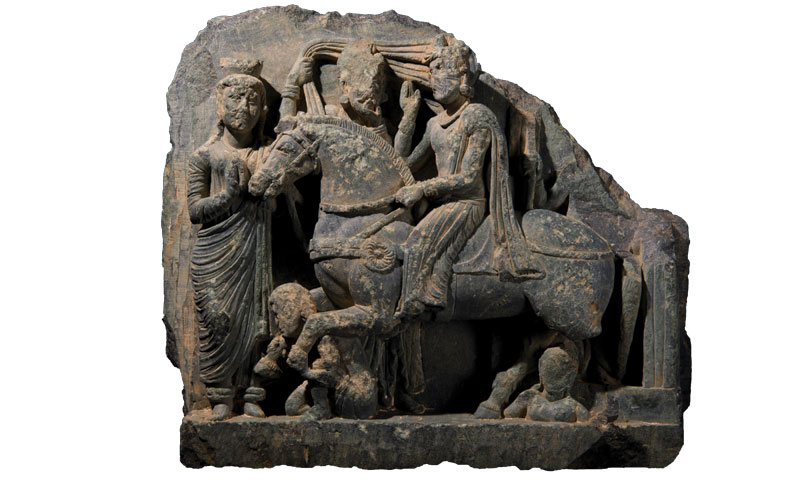
A REPORT by the archaeology department, cited by Dawn in a news story last week, says a consignment of antiquities intercepted last February, contained a mix of Gandhara and Islamic art objects besides pottery from Balochistan. While the production of fake relics, with an “art value” of their own is something of an industry in the country, what was disturbing about this consignment was that out of 1,155 relics, more than 1,000 probably worth tens of millions were found to be genuine.
Relics from Pakistan, a repository of archaeological treasures from different periods, are a part of the booming antiquities trade, much of it illegal, in both West and East. Sculptural pieces of Buddhist art from the Gandhara era are notable for the huge amounts they fetch, often to the tune of thousands of dollars, and sometimes far in excess of the expectations of auction houses.
But art objects from this era are not the only ones to find their way to the international market. “There is an international network that knows what the demand is; they are clued into what buyers want, from swords from a certain Islamic period, to Gandhara sculptures,” says art critic Niilofur Farrukh.
The players in this trade are said to be many. Off the record, even government officials have pointed a finger at elements in Customs, the archaeology department, art collectors and foreign digging teams, besides openly accusing antique dealers of acquiring relics in an underhand manner.
Meanwhile, Customs officials say that 99pc of the consignments are stopped. That fact does not quite tie in with the booming antiquities market abroad, and “unauthorised routes” have been cited as the conduit for the smuggling of artefacts. Increasingly, as profits go up, both locals, who are fast catching on to the huge amounts involved in the trade, and antique dealers are looking for remnants of the past. Says Nidaullah Sehrai, until recently curator at the Peshawar Museum, “Even protected sites have come under assault as the locals try to find relics and sell them to antique collectors. They end up destroying archaeological sites because they don’t have the expertise of proper diggers and can even use bulldozers for ‘excavating’.”
But he is quick to deny what is as yet anecdotal evidence of the involvement of foreign teams in the theft of historical objects. His views coincide with those of Qasim Ali Qasim, the director, archaeology and museums, Sindh, who maintains that representatives from the archaeology departments always accompany foreign teams to the site to register and document any find. Their presence is not very visible these days.
“Because of the conflict situation in Balochistan,” says Mr Qasim, “foreign teams have been sitting idle. And yet, over the past five years or so, other people have been illegally excavating pottery belonging to the Nal period and figurines.” Indeed, besides being home to arguably one of the world’s oldest settlements, Balochistan is believed to be full of unexplored sites. According to one researcher on Balochistan, some of the pieces unearthed were until recently openly being sold in certain bazaars in Loralai. Now the shopkeepers there are more careful.
With Pakistan’s archaeological treasures increasingly being shipped out it is tragic that the state is careless about not implementing the law. Domestic legislation in the form of the federal Antiquities Act, 1975, as well as provincial laws and the Customs Act is on the books to help curb the smuggling of these objects.
But apart from implementing, or, as Mr Sehrai recommends, improving the law, the problem at the root has to be addressed: the absence of a sense of ownership of one’s history and culture.
Says Sumaira Samad, director at the Lahore Museum: “Funding for archaeology is paltry. But apart from that, if we valued our nationhood, we would have a sense of ownership towards our historical treasures. Foreign teams are not historically linked to the treasures they unearth here and yet they understand their value. But there’s little in the general discourse about our ancient history for that sense of ownership to percolate down to the public.”
At the moment though, the goal of owning our legacy is as distant as a past whose treasures are being prised from the soil and surreptitiously packed off to where they are valued.