0
0

No alternative to dialogue
THE guns reportedly fell silent in Balochistan on Sunday. Given the fact that no truce has been agreed upon formally by the two sides, one cannot be sure that the fighting will not start again. The province has been in the grip of an on-again-off-again civil war for over a year, but since December, when the conflict intensified, hostilities have been uninterrupted. This came in the wake of a rocket attack on the president in Kohlu after which the army decided to retaliate. According to the Baloch version, 72 people have been killed in the last few weeks, many of them women and children. If Sunday’s unofficial ceasefire is not followed up with negotiations between the two sides for an agreement on stopping hostilities and this is not underpinned with a political settlement, the Balochistan problem will continue to trouble the country. In 2004, the government in Islamabad saw the wisdom of seeking a political dialogue with the Baloch leadership. A parliamentary committee was set up to look into the problems and grievances of the province. Its sub-committee headed by Mushahid Hussain visited Balochistan and negotiated a ceasefire with the Baloch sardars. It also prepared a report making many recommendations to give the province a better deal in the country’s politics and economy.
It is a pity that this dialogue was not followed up with practical measures. No move was made to begin implementation of the report even though the four nationalist parties that are grouped together in an alliance did not welcome the Mushahid Hussain recommendations. As a result, an impression was created that the stalemate could continue indefinitely. Unsurprisingly the hardliners became impatient and the province lapsed back into turbulence. Today the country faces a dangerous situation. The underlying causes that have created so much unrest in Pakistan’s largest but most sparsely populated province have not so far been seriously addressed. Since the rocket attacks resumed and the Frontier Corps began attacking the so-called “miscreants”, the two sides have come to be locked in a confrontation that could prove to be devastating and also make a dialogue even more difficult to initiate and conduct. Nevertheless, this is something that has to be done because problems of this nature cannot be resolved at gun point.
As has been suggested by the HRCP, the government must rethink its strategy and opt for a dialogue. The immediate goal must be to negotiate a ceasefire, even if it is a temporary one. By holding fire, the two sides will at least gain a respite, necessary to start talking to each other again. If the confrontation has gone so far as to make it difficult for the government to take the initiative and extend the olive branch, it should enlist the help of a few elder statesmen and senior politicians who are no longer active in politics but continue to considerable influence because of their maturity and wisdom. They would be acceptable to the Baloch and could be requested to act as mediators to help re-start the dialogue. It is also important that the government addresses the grievances of the Baloch in all sincerity so that the economic and political backwardness of the province is removed expeditiously. There is also a need to take up other issues relating to the distribution of power in the federation. If no long-term solutions are found to these problems, fighting in the province will erupt once again.
Chirac’s indiscretion
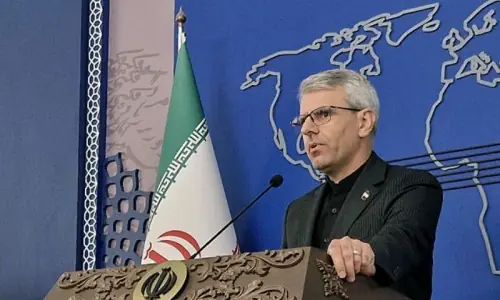
IRAN has reacted strongly to President Jacques Chirac’s unfortunate statement about using nuclear weapons. Even though the French president did not refer to Iran, Mr Chirac’s statement implied a threat to all those states purportedly harbouring terrorists. There is no evidence that Iran harbours terrorists or supports terrorism, though in western parlance support to Palestinian freedom fighters is equated with terrorism. The French statement thus could be linked to Iran’s help to the Lebanon-based Hezbollah, which waged an 18-year long struggle to finally liberate the southern strip of Lebanon which Israel had occupied while withdrawing from that country. A Iranian government spokesman called the Chirac threat “unacceptable” and “shameful” and went into history. This is all rather unfortunate, for the French stand on a number of issues, especially those affecting the Muslim world, has been commendable. On the Arab-Israeli conflict, French policy is not one of blind support to Israel, in sharp contrast to the carte blanche which Washington and London have given to the Jewish state. On the Iraq issue, France joined with Germany to oppose the American attack bypassing the UN. Both have also refused to send troops to that country.
The Iranian spokesman attributed Mr Chirac’s statement to an attempt to restore France’s image after the recent disturbances involving young immigrants in Paris and other French cities. Mr Chirac, he said, had supported President Saddam Hussain and his country was also responsible for “the massacre of millions of Algerians”. Ignoring the exaggeration in the Iranian reaction, one cannot but note that the Chirac statement was out of step with the sophistication that has been so characteristic of French diplomacy. Outpourings of the kind made by Mr Chirac can add to Anglo-Saxon reservations about the French claim that they (the French) monopolize culture and civility and all that is the best in European civilization. What President Chirac said last week would perhaps have gone unnoticed if it had come from such neocons as US Defence Secretary Donald Rumsfeld or Vice-President Dick Cheney.
Penalizing road offenders
FOR once, Karachi’s traffic and district police are to be commended for applying the rules in an impartial manner and not exempting well-connected road offenders from penalties for breaking the law. On Saturday night, the Clifton police registered a total of 186 FIRs against road offenders, many of whom were related to influential people. They were charged with a variety of offences including the use of tinted glass, coloured headlights and fancy number plates. One hopes that the police will carry on with their campaign to check road violations in a fair manner and not back away from doing their duty, as is often the case, when those with friends in high places threaten them with dire consequences if they are booked for traffic offences.
With the number of cars on the roads increasing at an alarming rate and traffic accidents a daily occurrence — more than 600 people were killed on roads last year in Karachi — it has become imperative that all rules are implemented to control rash and hazardous driving. The offenders are not only the well-heeled and those with influence who think they can get away with violating the law, but in most cases it is the drivers of vans, buses, trucks and other heavy vehicles who have no concept of road safety and drive at breakneck speeds. Somehow all efforts by traffic police instil some road sense into these drivers have failed, and despite numerous traffic campaigns, most have managed to evade the law. The police need to ask themselves about this and to admit that such reckless driving owes, in part, to their own tendency to fall prey to financial inducements and condone road offences. Unless their own house is in order, how can the police expect to achieve long-term results from their periodic road campaigns?
Bush’s White House: trapped in a cocoon
‘DESPERATE’ is not a word found in the White House vocabulary even though one may be forgiven for detecting that George W. Bush and his handlers have acted ever more desperately through the last dismaying year. In a word, it’s all been downhill for his smug administration since his re-election.
Approval ratings slipped into the dire mid-30s range, and are still ebbing. The costs of openly greedy and short-sighted policies are starting to hurt all but his wealthiest or most religiously deluded supporters. The vice president’s chief-of-staff Scooter Libby is indicted for vindictively leaking the name of a CIA agent. Bush’s “brain” Karl Rove is under heavy legal fire. Republican House of Representatives leader Tom “The hammer” DeLay of Texas is squirming under a lorry load of indictments, Republican Senate Majority Leader Bill Frist is under investigation for insider stock dealing, and a bribery scandal centred around conservative lobbyist Jack Abramoff is chewing its way through mostly Republican legislator ranks.
A housing price bubble — which fuelled the average American’s misplaced sense of prosperity — is poised to burst. Real wages for average workers fell during the Bush presidency, according the Bureau of Labour Statistics, as all benefits soared to the stratospheric top. Even the hardline Christians who voted for Bush get uneasy when their pay cheques shrink, public services decline, prices rise, and only the rich get richer.
An eight trillion dollar national debt amassed entirely under Bush looms large. Congress has curbed Patriot Act provisions and repudiated Bush on the issue of torture. The press corps, reading public opinion poll data, is getting more gumption and no longer always plays the role of White House stenographer. (The mass media’s chosen duty since 9/11 apparently was to observe in regard to Bush’s policies that black is, at worst, gray, and that most things are gray when you really look at them. It isn’t so bad; why it’s even noble.)
A stream of investigations and leaks is disclosing deliberate violations of the law ordered by the executive branch, most recently, the news of Bush’s approval of illegal spying by the National Security Agency on US citizens. A majority (58 per cent) of Americans now want a timetable for Iraq withdrawal. A Zogby poll found 53 per cent of Americans say Bush ought to be impeached if he lied in order to start the Iraq war, which implies they suspect he did. Any shrewd politician would look for ways to readjust.
Not Bush. His administration has made it a supreme virtue to be ‘out of touch’ with the American populace — excepting big donors — and with nervous allies abroad. Bush’s crew, as an upper level insider told a New York Times writer, need not trouble themselves about life in a reality-based world because they can make up reality as they go along. After 9/11, a gory gift from one band of religious fundamentalists abroad to a band of corporate fundamentalists at home, they indeed enjoyed enormous power for an unnerving spell. These rightwing ideologues can bug your boudoir and they truly believe they will get away with it even if caught. After all, they are doing it all for the greater good, as defined by themselves. Anything is justified in the name of the cause.
So torture, you see, is democracy in action. Vice-President Dick Cheney heartily defends it. Although Bush appeared to back off this repulsive stance, savvy critics note that the administration still concocts “fine print” clauses allowing them to do whatever they want. Bush, lately pressed by formidable dissident figures like Senator (and Vietnam war veteran) John Murtha, doubtless will contrive an Iraq withdrawal scenario but, however his scheme is packaged, a withdrawal will never be allowed to risk the key goal, which is control over the regional oil resources.
Opponents anticipate that Bush really is replaying a ‘Vietnamization’ strategy of relying on increased lethal air power and, by shifting to more Iraqi frontline forces (a big ‘if’) so as to ‘change the colour of the corpses.’ Renowned journalist Seymour Hersh reported in The New Yorker last month that one marine air wing alone dropped a staggering half million tons of high explosive upon Iraq. The pathetic truth is that every sign by the Bush administration of relinquishing their neo-imperial wish list is nothing but a calculated distraction, designed to retain objectives as stated in the infamous project for a New American Century blueprint.
Yet, oddly enough, the US cannot handle its own restless hemisphere, let alone dominate the rest of the planet. Columbia may be embroiled in a perpetual drug war (and beneath that, class war) financed by four billion dollars a year poured into rightwing elements, but the US proved unable, by hook or crook (including a 2002 coup attempt, to dislodge Venezuela’s feisty Hugo Chavez). By contrast, Mexico’s Vicente Fox became a great Bush favourite for promoting neoliberal free trade of the Americas proposals at the Mar del Plata summit in Argentina last November.
In any case, obedient Mexico has precious little to show for the 1992 Nafta Treaty except more poverty, maldistribution of wealth, and modest growth. Just like the big belligerent neighbour up north, which is now bogged down bloodily in the Middle East.
In Iraq, Bush never knew what hit him, or whom he it. The striking parallels with the ghastly Vietnam misadventure are a wilful American ignorance of local conditions combined with overweening technological bravado. Oil company avarice, and the Israel factor, provided added impetus to this latest American folly. All the routine protestations that the US government, out of the sheer goodness of a plainly heartless group of leaders, selflessly rescued Iraq from Saddam does not play well anymore, especially after the wretched spectacle of official indifference to the American poor in New Orleans.
Could the sorely expensive Iraqi invasion, under any imaginable circumstances, have succeeded? The quaint delusion is remarkably widespread, even among liberal American pundits, that Bush might have avoided an intractable insurgency if only he had made a shrewder move here or there. Presumably, if all conditions were met, Iraqis of all stripes would sit perfectly still while the West siphoned away their resources. Far-fetched indeed. But, yes, one might concede that it might have worked if a US government of a radically different character had invaded — except that such a government would have read intelligence data honestly and, therefore, opted not to invade.
One reason Bush behaves so serenely (or cluelessly) is that a supercilious ‘fraternity boy’ mentality thrives in his vaunted higher circles, where low cunning is lauded as brilliance, where backstabbing is a demonstration of principle, and where all you have to do to prosper is be born to the right family. One offshoot is a curious naivete. Some years ago a documentary filmmaker interviewed a corporate CEO who blurted torrents of social Darwinist cliches, expressing unveiled contempt for all those he thought beneath him. The broadcast footage was both loathsome and quite funny.
What was amusing is that the CEO actually approved the footage because every opinion he uttered throughout his cushy career dutifully was hailed by obsequious underlings, and he had no clue that his “life style” — based on being paid more than 500 times what an average employee earns was unusual. It was the only respect in which he could be said to be innocent. So too is this the case with occupants of the gun-slinging fantasyland that is the Bush White House.
This protective cocoon is what leaders, especially private sector ones, travel within — a cosy echo chamber of self-reinforcing rhetoric, with all data tailored to the ego needs of the leader. The draconian US Patriot Act, for example, makes it a felony to carry a sign inscribed with discouraging words in full view of a candidate at any election site. During Bush’s visit to London two years ago the streets virtually were swept of anyone inclined to boo him.
Today, just like Lyndon Johnson in the turbulent 1960s, Bush can only speak safely in military venues where the audience is commanded to be enthusiastic. From within these ‘cocoons’ too, a smarmy vice-president who plainly strained every pore in his body to avoid military service during Vietnam, can heap unreflective scorn on the manhood of genuine combat veterans like Senators John Kerry and John Murtha.
The Bush administration, which is beyond salvage anyway, has nothing to lose and is speaking almost exclusively to its staunchest supporters who eventually may bottom out at 20-25 per cent of the populace in polls. The conservative instinct is “stay the course” which means embrace of a deadly and deadening torpor. Bush simply cannot leave Iraq. Doing so would destroy the whole point of his crusading administration, which is at best feared both for its foolhardiness and its brutality. So Bush’s minions opportunistically are raiding the treasury for handsome perks for Halliburton (where Cheney, its former CEO, still holds stocks) and many other predatory firms who otherwise bitterly denounce government largesse, especially to the poor.
What will this year bring? “Peace with honour” or some variation of that will be unfurled and propagated. The Pentagon clearly wants out of Iraq, or at least a rapid and substantial reduction of ground troops. The acute problem for Bush is how to install an Iraqi government that is both a reliable puppet for the US and is credible to the locals. It can’t be done, of course, but reality never stopped this ardent bunch from trying anything. Can they camouflage the stark fact that they want to stay in Iraq, whatever the cost? The midterm elections in November 2006 aren’t so far away and control of at least one chamber is likely to change, which portends a rapid pickup in the pace of Bush’s disintegration.