BALOCHISTAN deserves praise for being the first in the federation to hold local government polls on Saturday since the elected local bodies were wrapped up nearly four years ago. It has set an example that the other provinces, more stable and developed than Balochistan, should follow. The elected third tier of government is an essential component of democracy anywhere, but more so in Balochistan, considering the province’s particular circumstances. Because of the Baloch people’s lack of trust in Islamabad and other factors, such as the remoteness of many communities from the provincial capital, elected local representatives can play a key role in bringing development, prosperity and peace to the province. The fact that the polls went ahead and citizens participated is a positive sign. It shows that all is not lost and that the democratic process has continued despite the many hurdles that threatened to scuttle the polls, such as the separatists’ boycott, kidnapping of candidates and the general level of insecurity in Balochistan. The provincial government should be praised for holding the polls despite all odds.
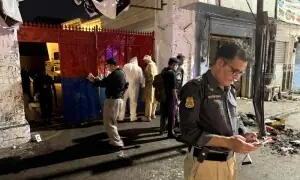
However, it is also true that polling was not entirely a seamless affair. Reports indicate election staff arrived late in some areas, while there was a shortage of staff in other locations. It is also disturbing that women voters were temporarily barred from casting their ballots in Nushki district before the authorities intervened. And while incidents of election-related violence were few in number, the turnout was low in areas where the separatists have clout. Now that the elections have taken place, perhaps the real challenge starts. The newly elected local representatives will have to work overtime to resolve the people’s problems in Balochistan — and these problems are clearly many. In the meantime, the Punjab and Sindh governments must seriously ponder what is preventing them from holding local polls. The Khyber Pakhtunkhwa administration should also do the same if it can shift its focus from sit-ins and blockades to the larger issue of the people’s welfare.