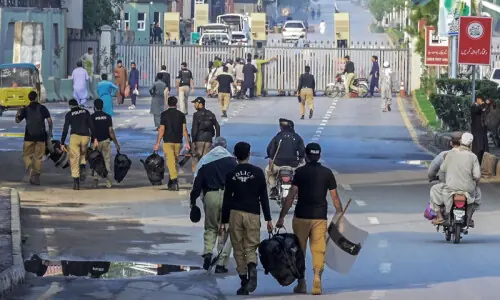
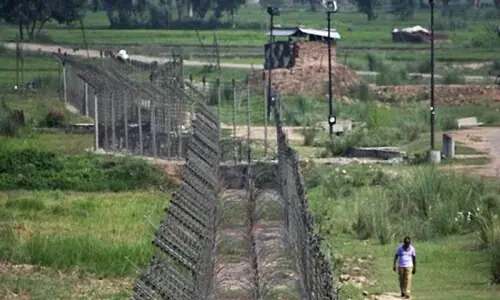
ISLAMABAD, Jan 6: Terror attacks killed almost two people a day in 2006, with Balochistan and the country’s tribal areas becoming the worst trouble spots. These are the findings of a research study conducted by an independent think-tank, Pak Institute for Peace Studies, which found that the overall security situation remained extremely precarious in the outgoing year.
The government blamed the terror attacks on insurgents in Balochistan, operatives of the Taliban and Al Qaeda, and sectarian militants.
According to the research study, 657 terrorist attacks, including 41 of a sectarian nature, took place in the outgoing year, leaving 907 people dead and 1,543 others injured.
The attacks are said to have caused a loss of billions of rupees.
The research study puts the number of people arrested by law-enforcement agencies at 1,552, including 1,094 Taliban and Afghans, 47 Al Qaeda operatives, 198 other militants and 213 nationalist insurgents.
Giving a province-wise break-up, it says that the Balochistan Liberation Army, the Balochistan Liberation Front and the Bugti Militia were blamed by the government for carrying out 403 terror attacks in Balochistan during 2006 that killed 277 people and injured 676 others.
Gas pipelines, security checkpoints and camps, government offices, rail tracks and bridges were targeted by the insurgents, it adds.
According to the research study, the killing of veteran tribal chief Nawab Akbar Bugti in a clash between security forces and his men-at-arms was the main violent event of the year 2006 which caused “a ripple effect on the political horizon in the country”.
"The Federally Administered Tribal Areas proved a big trouble for the government and security agencies as tribal Taliban started re-organising their ranks in those areas…Tribal Taliban and militants kept on hitting security agencies and other anti-Taliban elements and killed 39 locals on suspicion of spying for the US forces."
The research study says that the airstrike -- blamed by locals on US aircraft -- that left over 80 inmates of a religious seminary in Bajaur was “the biggest event of the year in the tribal areas that invited further trouble for security agencies and marred efforts for peace agreement".
A total of 144 attacks occurred in the tribal areas, killing 379 people and injuring 307 others. Sectarian clashes between two rival groups in Khyber Agency also caused a breakdown in law and order in the agency.
According to the report, the NWFP remained the in the grip of strife and violence in 2006 and saw 60 terror attacks and sectarian clashes that left 139 people dead and 303 injured.
A suicide bomb blast at the Punjab Regiment Centre in Dargai that resulted in the deaths of 42 trainee soldiers and injuries to 39 others was the most gruesome incident of the year in the already volatile province. The attack was described as a reaction to the Bajaur airstrike.
Experiencing no major terror attack in the year 2006, Punjab remained relatively peaceful, says the study, adding that the terrorists did carry out bomb blasts in different cities of the province and struck Lahore thrice, but casualties remained low. As many as 28 people were killed and 126 others injured in a total of 28 attacks in the province.
Even though fewer terror attacks took place in Sindh than in the other three provinces, two incidents of terrorism jolted the whole country, says the study.