0
0
US overlordship & Iraq
The US-led attack on Iraq on March 20, 2003, basically to overthrow the Saddam Hussein regime, was a cataclysmic event with far reaching repercussions not only for Iraq but also for the Middle East, the Islamic world and the international community at large.
To comprehend the reality behind the situation in Iraq, it is necessary to understand the real motives behind the US-led invasion of Iraq. The Bush administration initially tried to justify the attack by alleging that Iraq was clandestinely engaged in the development of weapons of mass destruction, particularly nuclear weapons, by referring to the alleged links between the Saddam Hussein regime and terrorism.
As far as weapons of mass destruction are concerned, none have been found, certainly not nuclear weapons. Even President Bush has recently admitted that Iraq did not have weapons of mass destruction when the US invasion was launched. It is also clear that both the US and the UK exaggerated and misinterpreted their own intelligence reports to concoct the charges in the face of the inability of the UN inspectors to find the weapons and formal denials by the Iraqi government.
There is no conclusive evidence of any links between the Saddam Hussein regime and international terrorism, and it is worth noting that the US, historically speaking, has maintained friendly relations with dictators when its perceived national interests so demanded. After all, the US was on friendly terms with Saddam Hussein in the 1980s during the Iran-Iraq war despite the serious human rights violations committed by him against his own people.
It is clear from the information now available, particularly in the book entitled Plan of Attack by Bob Woodward, that an attack on Iraq was being considered by President Bush and his top advisers since the early days of the Bush administration and that Bush issued orders to Defence Secretary Rumsfeld on November 21, 2001, for the preparation of a new plan of attack on Iraq to remove Saddam Hussein. Obviously, Bush made up his mind to invade Iraq soon after the attack on Afghanistan following the tragic events of 9/11.
So what were the real motives behind the US attack on Iraq? For this, one needs to understand US global strategic objectives in the aftermath of the end of the cold war.
Following the demise of the Soviet Union, the US emerged as the sole superpower. The situation eminently suited the US strategic, political and economic interests. According to US official studies, the overarching US strategic objective henceforth was to be the prevention of the emergence of another power which could challenge US global supremacy. Since then the pursuit of this strategic objective has been the central element of US foreign policy.
A supplementary US strategic objective is to exploit its current global supremacy to the hilt in promoting its strategic, political and economic interests with a view to delaying indefinitely any challenge to its hegemony from other emerging powers like China.
The Bush administration's doctrine of unilateral and preemptive military intervention to counter an emerging threat to its national security will be employed by it at the time and place of its own choice in pursuance of US strategic objectives.
In other words, the US has emerged as an imperial power, determined to impose its hegemony globally. Eliot A. Cohen in an article entitled History and the Hyperpower points out: "And the United States will not, as some hope and others fear, bind itself to an international and legal order that will domesticate and restrain it. If nothing else, domestic politics would prohibit it. No US leader in the next decade or two will call for a dramatic reduction in defence spending or deny that this country must be the strongest in the world, ready to exert its power globally and act unilaterally if necessary."
Against this background, the main motives behind the US attack on Iraq were the following:
- The US desire to control the oil and gas reserves of the Middle East because of its own depleting reserves and to have the possibility of denying the energy supplies to its enemies if the need arises.
- The desire to strengthen Israel's security. Following the signing of the Camp David peace accord and of peace treaties between Israel, on the one hand, and Egypt and Jordan, on the other, Iraq and Iran were the only two countries in the Middle East which could conceivably pose a threat to Israel. Iraq's invasion of Iran, which had been encouraged and supported by certain western powers, debilitated both the countries besides subduing Iran and reinforcing the presence of the US and other western countries in the Gulf region. The Iraqi attack on Kuwait and the subsequent developments leading to the US invasion and occupation of Iraq have taken care of the latter.
- The US attack on Iraq was also an important step in US strategy to impose its imperial hegemony in the Middle East and the world at large. The US occupation of Iraq, virtually the heartland of the Middle East, enables it not only to control Iraq's vast oil resources but also to radiate its influence in all directions, thus, keeping Iran, Syria and even Saudi Arabia under pressure.
- The US military presence in Iraq enables Washington to try to change the political map of the Middle East according to its own preferences. The US spokesmen stressed prior to the invasion of Iraq that dictatorial and retrogressive regimes in the Arab world had been the breeding ground for international terrorism. So the change or transformation of these regimes had to be an essential element of the US strategy to combat international terrorism. While making this point, the Bush administration conveniently ignored the major role that Washington's blind support to Israel in the context of the Palestinian issue and Israeli aggression and atrocities have played in creating despair among the Arabs and engendering terrorism.
The strong influence of the neo-conservatives on the decision-making process in the Bush administration, as reflected in the doctrine of unilateral and pre-emptive military intervention, was all too obvious in the invasion of Iraq. This doctrine under which the US claims the right to launch pre-emptive military strikes against actual or perceived security threats is a clear deviation from the principles of the UN Charter and can encourage predatory states to commit acts of aggression against weaker neighbours under false pretences.
The unbridled application of this doctrine would sound the death knell of the peace and security functions of the UN. It would also lead to the law of the jungle in international politics, thus negating the progress that the international community has made towards a civilized order where rules rather than might would be the decisive factor. Little wonder that UN Secretary-General Kofi Annan recently acknowledged, somewhat belatedly, that the US attack on Iraq was illegal.
This then is the reality behind the Iraqi situation - the reality of a global hegemon engaged in establishing its dominance over an oil-rich country and region in pursuit of an imperial agenda. The UN Security Council resolutions providing a modicum of legitimacy to US military presence in Iraq are no more than a fig leaf masking this unpleasant reality. This is how the US invasion and occupation of Iraq are generally seen by the Iraqis, the Arab masses and the Muslims at large.
It is not surprising, therefore, that the US occupation of Iraq and Washington's refusal to allow the UN to play a central role in the management of the post-invasion Iraqi situation caused the emergence of a national resistance to the US occupation and to those who are serving US designs in Iraq. For the same reason, the current interim government of Iraq is viewed as no more than a US puppet by most of the Arabs and the Muslims.
The important question is how the Muslim world, including Pakistan, should deal with the Iraqi situation. The last thing they should do is to dispatch their forces to Iraq in service of the US imperial agenda. It is a matter of some satisfaction that despite some initial inclination to respond positively to US requests, the government of Pakistan has categorically ruled out the possibility of sending Pakistani troops to Iraq under the present circumstances. This was the only sensible course for Pakistan to take on the issue in the face of the current Iraqi situation.
This, however, is not an argument to wash our hands off the Iraqi situation. The restoration of peace and stability in Iraq, the safeguarding of its sovereignty and territorial integrity, the earliest possible departure of foreign forces from Iraq and the establishment of a legitimate government representative of the Iraqi people should be the guiding principles of Pakistan's policy and, indeed, of the policy of the rest of the international community, particularly the Muslim world, towards Iraq.
Unfortunately, the resistance to the presence of foreign forces in Iraq is mostly in the form of acts of terrorism because of the asymmetry of forces on the two sides. Even though the UN Security Council has rightly condemned these acts of terrorism, they are likely to continue as long as foreign forces remain in Iraq. The anger and the animosity felt by the Iraqis and the rest of the Arabs in general towards the foreign troops, who are viewed as occupiers and not as liberators, leave them with no other option.
Therefore, the early departure of foreign forces from Iraq should be the central element of any plan for the restoration of peace and normality in Iraq. It would obviously be necessary to fill the power vacuum, which would thus be created, with the stationing of a UN peacekeeping force or a force from the Muslim countries enjoying UN endorsement. Needless to say, at no stage, not even during the transitional period, this UN or Islamic force should come under the US command or the command of the so-called multinational force which it would replace.
The proposed UN or Islamic force should be assigned the responsibility for organizing the elections to the transitional national assembly which would form a transitional government of Iraq and draft a permanent constitution for that country leading to a constitutionally elected government. In other words, the UN will have to play the central role rather than a mere "leading" role which has been provided in the UN Security Council resolution 1546 if the early restoration of peace and normality in Iraq is the objective of the international community and if the political process leading to the constitutionally elected government in Iraq has to have credibility in the Arab and the Muslim world.
The refusal by the US to agree to the proposed course of action would be a recipe for continued chaos and instability in Iraq with dangerous consequences for the region and the rest of the world. The struggle in Iraq is not between the forces of freedom and terrorism as the Bush administration would like the world to believe. It is in fact between US imperialism and a civilized international order in which international law rather than might would be the decisive factor.
Pakistan, without being provocative, must squarely position itself on the side of the forces of civilization in the face of the US imperial onslaught in Iraq.
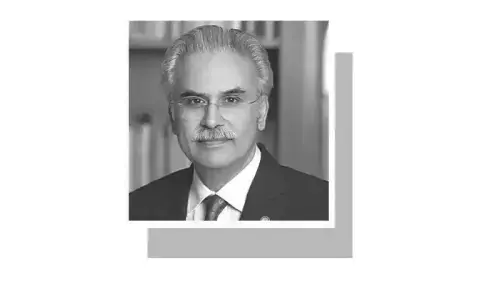
The writer is a former ambassador.
Sacked for the wrong reason
Reticence is a virtue much prized in diplomats. The Pakistani practitioners of this art wait until retirement to speak their minds, most often to captive newspaper readers. This newspaper regularly carries articles written by former ambassadors of Pakistan. They are cogent, informed, topical and measured assessments of world events - a virtual extension of the practice of the periodic reporting by envoys to the Foreign Office of the political situation in their host country.
The age-old belief that envoys lie abroad (pun intended) for the sake of their country still holds. However, the representatives of the superpowers in Third World countries and sundry banana republics have no such qualms. They routinely engage in arm twisting their hosts into toeing the line drawn by the superpowers. But lately, British diplomats have quite rightly criticized the human rights records of their host country. It is not surprising that by doing so, they have managed to irked their own governments.
Recently the UK ambassador in Nairobi criticized the Kenyan government for the persecution of political opponents of the government. However, this pales in comparison with what the Queen's erstwhile envoy in Uzbekistan had to endure for daring to speak his mind. Craig Murray, who was recently dismissed from his post by the British Foreign Office, was at 43 Britain's youngest ambassador when he arrived in Tashkent to take up his diplomatic assignment. His work in previous assignments in Africa had drawn the admiration and approval of his bosses but he had consistently turned down offers of allowing his name to be placed on the Queen's honours list. Obviously not a man to stand on ceremony!
He couldn't ignore the human rights abuse endemic in Uzbekistan. Earlier, at the beginning of summer, in an interview on the UK's Channel Four TV he described in graphic detail what political dissidents have to endure. "People come to me very often after being tortured," he disclosed.
"Normally this includes homosexual and heterosexual rape of close relatives in front of the victim; rape with objects such as broken bottles; asphyxiation; pulling out of fingernails; smashing of limbs with blunt objects; and use of boiling liquids including complete immersion of the body. This is not uncommon. Thousands of people a year suffer from this torture at the hands of the authorities."
The Guardian which interviewed him recently reported that in October 2002, Murray made a speech to his then fellow diplomats and Uzbekistani officials at a human rights conference in Tashkent in which he became the first western official for four years to state publicly that "Uzbekistan is not a functioning democracy", and to highlight the "prevalence of torture in Uzbekistani prisons" in a system where "brutality is inherent". Highlighting a case in which two men were boiled to death, he added: "All of us know that this is not an isolated incident."
Although the speech was cleared by the British Foreign Office it was a source of great embarrassment for the Uzbek and US governments. Uzbekistan had allowed the Pentagon to hire a vital military base in the southern town of Kharshi to aid the hunt for Osama bin Laden in neighbouring Afghanistan. In return, Tashkent got about half a billion dollars in aid a year. Thus Uzbekistan had great strategic importance for the United States. So it leaned heavily on Tony Blair, Washington's leading ally and partner in the war on terror to put a muzzle on Murray.
Craig Murray's acerbic criticism made matters worse for the United Kingdom government which was anxious not to cause any discomfiture to the administration of President Bush. However, there was no holding back by Murray. In an e-mail to his bosses he pointed out that the very things for which the United States and the UK had invaded Iraq - "dismantling the apparatus of terror" and "removing the torture and rape rooms" - were commonplace in Uzbekistan. But the United States had no reservations over supporting the Karimov government.
"When it comes to the Karimov regime," observed Murray, "systematic torture and rape appear to be treated as peccadilloes, not to effect the relationship and to be downplayed in the international fora ... I hope that once the present crisis is over we will make plain to the United States, at senior level, our serious concern over their policy in Uzbekistan."
Before his dismissal, for this act of perceived insubordination, he was subjected to 18 disciplinary charges, mostly unsubstantiated or involving minor infringements of rules and procedures. According to Channel Four News he was accused among other things, of having sexual relations in his office with local girls in exchange for visas to the UK. He wasn't permitted to talk about the accusations to anybody under threat of prosecution and possible imprisonment under the Official Secrets Act. Asked to resign within a week, Murray started to crack up: the beginnings of a mental breakdown began to take shape.
Shortly afterwards he collapsed during a medical check in Tashkent. He returned to London where he was hospitalized. He continued to resist the pressure to resign. The scope of the investigation proceedings into the charges levelled against him was widened. However, only two of the charges required to be investigated further - that he was "drunk at work" and had misused the embassy Range Rover. He was cleared of these charges and allowed to return to Tashkent. But he was quite sure that he would not be posted overseas once his present tenure is over.
Murray was certain that his troubles were the direct result of the extensive coverage in the media of the attention he was drawing to Uzbekistani human rights abuses. Talking to the Guardian, Murray describes the Uzbekistan regime as "kleptocratic". It has started to close down private businesses, ensuring all economic activity - from the cotton picked by child labour to the gold mines - lines the presidential elite's pockets.
The borders have been closed. Import duty is at 70 per cent. In a bid to suppress inflation and prevent businesses growing, the government has stopped printing money, made it illegal to buy things with dollars, and limited the amount of the local currency in circulation. British American Tobacco, the largest foreign employer in the country, cannot find enough sums to pay its staff and is apparently considering withdrawing from the country.
The refuge for survivors of self-immolation in Samarkand testifies to the extremes of despair Uzbekistan's poverty inspires, notes the Guardian. It provides emergency burns treatments and a place to hide while the wounds heal. Most of its 130 clients last year were women subjected to domestic violence and rape, often at the hands of their new in-laws.
Others were escapees or deportees from the slave trade to Russia, the Middle East and South East Asia. "It's very hard to imagine being so desperate to want to kill yourself in that way," says Murray. "For these women it's the end of the world, and there is nothing left for them." From this point on, Murray, too, might start writing in newspapers as a former ambassador.
Republicans see no evil
"Why do so many Americans still support Bush after all those damning revelations about Iraq?" That's the question I'm invariably asked when I travel in Asia and Europe. Former three-time Republican presidential candidate Pat Buchanan provides some fascinating answers in his new book, "Where the Right Went Wrong"
"In 2003," he writes, "the US invaded a country that did not threaten us, had not attacked us and did not want war with us, to disarm it of weapons we have since discovered it did not have."
White House assurances US troops would be greeted in Iraq with flowers were as laughable as its pledges Mideast peace and democracy would ensue. Chief US arms inspector Charles Duelfer's recent, 960-page report contradicted almost every Bush administration pre-war claims about Iraq, which were used to justify an illegal war that has killed 20,000 Iraqis and nearly 1,100 Americans, caused 14,000 US casualties (sick and wounded), and will cost US $200 billion this year at a time when Washington can't even supply flu vaccine to Americans.
No administration official has accepted blame for this needless conflict, for lying to Congress and the public, for blundering into a no-win war, for encouraging torture, or for provoking worldwide disgust at the once admired United States.
Either the self-proclaimed "war president" and his men committed the worst set of blunders overseas since Vietnam, or they took, on the basis of lies, the nation into an imperial war to grab Iraq's oil and help establish Greater Israel dominating the Arab World.
But a majority of Republicans really don't seem to care. Amazingly, a recent CNN/USA poll showed 62 per cent of Republicans still believe Iraq was behind the 9/11 attacks. This is after a flood of contrary official evidence and Duelfer's report, which again denied any links between Iraq and Al Qaeda or 9/11.
How can Republicans remain so blinkered? Part of the fault lies with the sycophantic national media, which allowed - even collaborated - with the Bush administration in whipping up war fever. The media still is not telling people the truth about Iraq, Afghanistan or the so-called war on terrorism.
The US media utterly failed to remind Americans that Bush, who loves to play war leader, actually claimed Iraqi drone aircraft were poised to fly off ships in the North Atlantic and bombard America with germs. Bush should have been laughed out of office for believing and promoting this comic-book nonsense.
Many Republicans simply don't see what the rest of the world does, and they have no idea of the growing anti-American fury in the Muslim world.
But their view remains: so what if Iraq was actually no threat, as Bush claimed? Don't bother these golf club Rambos with details. In their arrogance, ignorance and vengefulness, they're delighted to see the US pounding Arabs in revenge for 9/11. Any Muslims will do. Particularly so for Bush-venerating Christian evangelists whose demagogic leaders have been preaching jihad against Islam.
Bush's core Republican support lies in the US midwest and south, in suburbs and conservative Protestant Christian rural areas, where most people don't read books, rely on television sound bites for their world view, and have only a childish understanding of history, geography or foreign affairs. This is the new, "dumbed-down Republicans Party", fertile ground for nationalist hysteria, religious extremism and anti-foreign xenophobia."
Buchanan identifies the real secret of the Republican Party's current success: "cut taxes and don't let the Democrats outspend us." No matter that Bush's policies have created millions of jobs in China instead of the US, or that he turned a $236 surplus inherited from Bill Clinton into a $521 deficit. His tax cuts and spending win elections.
As this administration's real president, Vice President Dick Cheney, observed to a horrified former US Treasury Paul O'Neill, "deficits don't matter." This kind of liberal-left Democrat economic voodoo used to be anathema to Republicans.
Today, there's no real conservatives party left in Washington, says Buchanan. Only in tax-cutting do Republicans still hew to their principles. Otherwise, they are just like the wildest-spending, old-style liberal Democrats.
Historically, Republicans have been the party of conservative virtues - balanced budgets, healthy scepticism towards foreign wars...fierce resistance to the growth of government power. "No more," says Buchanan. "To win and hold office, many have sold their souls to the very devil they were baptized to do battle with."
As for Bush's vow to wage unceasing war on America's enemies around the globe, Buchanan quotes the revered fourth US president, James Madison (1809-1817): "Of all the enemies to public liberty war is, perhaps, the most to be dreaded, because it compromises and develops the germ of every other. No nation could preserve its freedom in the midst of continual warfare."-Copyright Eric S. Margolis
A painless journey to America
The biggest tourist attraction in America now is the immigration service at the airport. It evokes the same mild dread that was once reserved for Niagara Falls and the Grand Canyon. Common sense suggests that nothing will happen when you encounter them, but who can erase the faint consternation that you could be the next big story in the news?
There is never any logic to an accident. Surely the most famous face on the Washington-Boston air run is that of the unmistakable Senator Edward Kennedy, and yet he has been stopped, and even denied permission to emplane, six times. (Thought: which computer could have possibly programmed a likely terrorist with a name like Edward Kennedy? It must be Republican black humour.)
Senator Kennedy might grin and bear it, but one can see the apprehension on the faces of anonymous browns, particularly those with unfamiliar headgear or shaped beards. There is also the fear and loathing associated with fingerprinting. For Indians it must arouse the collective consciousness of disgust for the thana level of suspicion.
Nothing is more greasy than the thought of the thumb being jabbed on carbon ink by a fat police hand before it is pressed again on smudgy government paper. Why do Indian constables insist on holding the victim's hand all through the process? Middle class sensitivities are also affronted by the implicit suggestion of illiteracy. Only those who cannot sign must be fingerprinted, isn't it?
Now for the good news. The immigration service at the San Francisco International Airport is as friendly, efficient and fast as it is possible for a government service to be. The premonition of long, horrible queues turns out to be a mistaken nightmare. This might be because my flight landed at 12 in the afternoon instead of 12 at night, but the pace of clearance was brisk and standardized. Someone has been dictating from the relevant chapter of How to Win Friends and Influence People. The thumbprinting is psychologically painless, since 19th century ink has been replaced by 21st century electronic ray.
On domestic flights the democratization of security is reassuring. You do not have to be a defence minister of India to take off your shoes. Everyone, white, yellow, brown or black, has to do this. A minor side effect is that travellers have become conscious of their socks now that they are required to take off their shoes. Branded socks are in.
I have not fully recovered from the glow of my most painless journey to America in over two decades of travelling to the land of hope, glory and immigration. If the news changes, I shall report that as well.
Berkeley is the kind of campus they make for the movies: relaxed, sunny, gentle and anti-Bush. The weather is splendid with views (both geographic and intellectual) to match. One could make a career of doing a doctorate out here, and indeed many do. This is the first leg of a three-university lecture tour. The reaction to an alternative, Washington-sceptic presentation on Muslims, South Asia and the world after Iraq is absorbed and sympathetic from both faculty and students. Raka Ray, who heads the South Asia department, has unambiguous faith in her guests; she is unfazed by the fact that the lecture has been scheduled at precisely the same time as the Edwards-Cheney debate.
My ego gets a boost when I learn that there is even a gatecrasher. It is quickly deflated when I learn, upon investigation, that he has come for the free wine and cheese. I actually see him stuffing his baggy and bedraggled pockets with cheese. What I once thought was pedantic dressing-down is practical for minor theft. He has been known to walk off with a full bottle of wine stuck in his waistband.
Iowa is the heart of America, and the heart of America is serene, silent, rural and decisive. This is the kind of archetypal mid-western state that Dave Barry ribs when he is short of a topic for his weekly humour column. It is true that you are welcomed to Cedar Rapids, home to the University of Iowa, by a massive statue of a milch cow. The pavements of the two-avenue downtown are punctuated by large plastic eagles in American football uniforms. Milk and patriotism are the passions of Iowa.
In a mellifluous piece this week in the New York Times, R.W. Apple reveals that the information centre on the highway linking the capital, Des Moines, with Kansas City boasts a sign proclaiming "Iowa - where exciting things happen" but treat that as an advertisement. It is generally believed that the liveliest movement in the state is the swaying of amber fields of corn. Trust me, that corn on endless miles of flat, relentless plains can look beautiful.
Apple notes that John Wayne comes from Iowa, but it is entirely in character that when Wayne was in Iowa his name was Marion Morrison. However, Iowa is poised to do the most exciting thing it has done in decades. It could be the decisive swing state in a close election between George Bush and John Kerry. The fate of the world could lie in the silence of Cedar Rapids.
Frederick Smith and Philip Lutgendorf breathe life and energy into India studies. They are known familiarly as Fredji and Philipji. Fredji speaks Sanskrit like a Chennai pandit, from whom he learnt his classics. Philipji recites Tulsidas like a charm. Their Hindi, needless to add, is impeccable. Philipji makes a splendid cup of chai and his listening music includes fifties' Hindi hits as well as Dil Se.
We indulge in a lengthy and passionate conversation where I deliver myself of theories on Dev Anand, Raj Kapoor and Dilip Kumar. Only one of them, Dev Anand, I argue, is a genuine iconoclast. Raj Kapoor weeps too quickly at the sight of mother earth, and Dilip Kumar weeps too quickly, period.
We are in total agreement on Waheeda Rehman, the most glorious creation of the Almighty in the history of civilization, with some competition from Madhubala. Philipji not only teaches mediaeval Indian literature but also a course on contemporary Bollywood. Later on, during my lecture, I use the excuse of a wandering question to trace the history of Indian Muslims through the confidence levels of Muslims in the film industry.
The proposition is tentatively titled "The Guilt of Dilip Kumar" who was christened Yusuf Khan but was forced to adopt this nom de plume in order to become acceptable at the box office. True, even Hindu stars took on screen-friendly aliases, but they did not have to change their ethnic associations. Mehmood and Waheeda Rehman were the first important stars to retain their original names. It is a tribute to changing India that the three Khans, Aamir, Salman and Shah Rukh, are not required to play hide-and-seek.
The secret is out. The future of the world may lie on a couch. John Kerry's resurrection is being attributed to two reasons. He brought in some sharp Clintonians into the upper echelons of his strategy team. And they brought in Sigmund Freud. The way to George Bush Junior's jugular vein is through his dad. All you have to do to destroy Junior's composure is to praise his father, particularly on Iraq. That is what Kerry did, at judiciously spaced intervals in the first debate, now uniformly acknowledged as an unequivocal victory for Kerry.
Bush Junior, also nicknamed Bush Lite, hates being told that his father showed more sense during the earlier war against Saddam Hussein. Kerry rubbed that nerve with salt, pepper and chilli: "You know the president's father did not go into Iraq ... beyond Basra ... he wrote in his book, because there was no visible exit strategy. And he said our troops would be occupiers in a bitterly hostile land. That's exactly where we find ourselves today. There's a sense of American occupation."
It has been whispered that Junior was at least partially motivated in his Iraq adventure by the desire to be one-up on his father, who defeated Saddam but refused to pay the price that the destruction of Saddam demanded. That whisper has become a shout.
Kerry brought up Father Bush in the second debate as well, although Son Bush was better prepared to handle the trap. He was under strict orders not to scowl, or appear like a petulant rich kid watching his toys being taken away. But his advisers forgot to tell him not to blink. He kept blinking whenever Kerry spoke in the debate, like a faulty but obstinate neon light. His spin doctors tried some post-debate repair work. One of them told CNN, for instance, that Bush was having so much fun during this debate that he kept winking. Good try, but no goal. You can't wink with both eyes.
Success or failure is determined in these debates as much by what you say as what you do not say. Bush was damaged severely by his scowl in Round One of the Great Presidential Heavyweight Championship. He could lose on blinking points in Round Two. He was, generally, more assured in this round.
There was a sense that if he messed up again he would be out of the count and he did enough to stay in the race. But Kerry was in command, of the facts, of the language, of the dynamics of argument. Kerry, to return to Freud, was the son that Bush Senior might have wished to beget: patrician, patriotic, educated and balanced rather than merely gutsy, guttural and plain old lucky.
This remains an election that Kerry can't win unless Bush loses it.
The writer is editor-in-chief of Asian Age, New Delhi