Police deployment, blocking points doubled ahead of PTI march in Rawalpindi division

RAWALPINDI: A significant increase of more than double has been made in the deployment of police personnel, blocking points and other security arrangements to deal with the Pakistan Tehreek-i-Insaf’s (PTI) long march on September 27 in Rawalpindi division.
According to sources, more than 43,200 police personnel are to be deployed to deal with the PTI long march. Of the 43,200, as many as 30,700 police personnel have been deployed in Attock, 10,600 in Rawalpindi district and 1,976 in Jhelum, Murree and Chakwal, compared to the 18,900 police personnel deployed to deal with the PTI protest in November 2024 in Rawalpindi division.
Of the 18,900 police personnel, about 6,900 were deployed in Rawalpindi, 9,050 in Attock, 1,180 in Jhelum, 930 in Chakwal and 850 in Murree to deal with the PTI protest in November 2024.
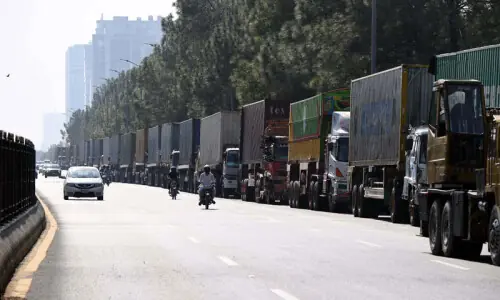
Likewise, about 120 blocking points have been identified in the division, compared to the 103 blocking points established in 2024. Of the 103 blocking points, 73 were identified in Attock, six each in Rawalpindi, Jhelum and Chakwal, and 12 in Murree in 2024. For the PTI long march on September 27, 73 blocking points have been identified in Rawalpindi district, 13 in Attock, 16 in Murree, nine in Jhelum and 10 in Chakwal.
Over 43,200 personnel to be deployed; 120 blocking points identified across the division
A special security plan has been chalked out to ensure the protection of the “additional police force” called from other districts to assist the Rawalpindi district police in dealing with the long march. A senior police official revealed that, contrary to past practice, the additional police force called from other districts has been directed to go straight to residences, school buildings and marriage halls arranged for their accommodation instead of reporting to the Police Lines Headquarters Rawalpindi.
In line with the security arrangements for the additional police force, police guards have been deployed in two shifts of 12 hours each, starting from 8am to 8pm.
Additional police personnel called from Sialkot and Gujrat have been accommodated in school buildings, marriage halls and girls’ colleges in Taxila, Wah Cantt and Azad Pattan.
The police have been directed to make all possible security arrangements for the additional police force called to the division.
One of the focal persons of the additional police force who reached Rawalpindi district expressed his satisfaction over the arrangements made for their stay and said, “We are being given two times with breakfast at 10:30am and one meal at 5pm.”
Meanwhile, Inspector General of Punjab Police Abdul Kareem on Friday visited key entry and exit points in Attock district, including Haroon Bridge, Attock Khurd and Chachh Interchange, to review security arrangements.
He inspected security arrangements at strategically important points and was briefed about the deployment of police personnel.
Published in Dawn, September 26th, 2026