What’s behind the foul smell in Karachi?
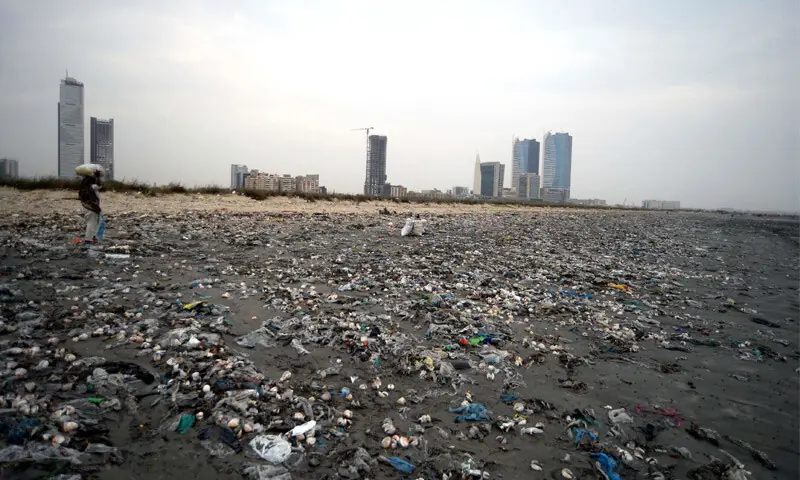
KARACHI: Residents of Karachi, particularly those living near the sea, woke up on Wednesday morning to a foul smell which some described as “fishy”.
A Pakistan Meteorological Department (PMD) official explained that the smell was linked to the seasonal changes that take place in the sea as the southwest monsoon comes to an end.
He said that every year by around September 15, the southwest monsoon current weakens and comes to an end bringing noticeable changes in sea conditions.
“During the monsoon season, small plants, algae and weeds are found in greater quantities in the sea. With the change in marine conditions at the end of the monsoon, some of these plants and algae die,” he added.
WWF-P official says the fishy smell is the result of decomposing microscopic marine algae, called phytoplankton
“Their decomposition can produce an unpleasant smell that spreads to nearby coastal areas and can sometimes be noticed farther inland, depending on wind conditions. The phenomenon was a natural process and there was no reason for concern. The smell is expected to disappear within a few days as the seasonal transition continues,” he said.
Muhammad Moazzam Khan, technical adviser on marine resources at World Wide Fund for Nature-Pakistan (WWF-P), said the fishy smell was a result of decomposing microscopic marine algae called phytoplankton — a naturally occurring event.
Phytoplankton are found in the upper 100 metres of the sea, where sunlight can penetrate, and are not visible to the naked eye.
The WWF-P expert explained that when the regional monsoon system ends in mid-September, it results in significant changes in the sea conditions. Consequently, these phytoplankton, found abundantly during the monsoon, begin to decay.
He said this phenomenon often causes a foul smell to permeate the air in the coastal areas. He added that the smell would likely dissipate in a few days.
Climate change expert Fatima Yamin also attributed the scale of the smell to the weather conditions too.
She said a low-pressure area off the coast of India’s Jamnagar was circulating wind around Karachi’s coastline, which was turning into smog because of air pollution.
She added that the combination of smog and the weather conditions was causing the smell to “circulate throughout the city”.
Published in Dawn, September 17th, 2026