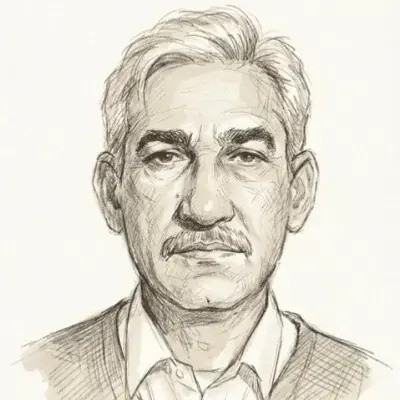
• Murad Ali Shah directs transport department to address remaining demands
• KATI warns prolonged strike could disrupt production, essential supplies
• LCCI calls for meaningful dialogue to end strike; says export containers worth $500 million stranded at factories
KARACHI: As the goods transporters’ strike entered its sixth day on Thursday, continuing to disrupt industrial activity and exports, Sindh Chief Minister Syed Murad Ali Shah claimed that the dispute was “almost resolved” and
only a few points remained under discussion.
Speaking as chief guest at the 79th Independence Day flag-hoisting ceremony organised by the Karachi Chamber of Commerce and Industry (KCCI) on Thursday, the chief minister directed the provincial transport department to make efforts to settle the remaining issues at the earliest so that disruption facing transporters, industries and businesses could end.
A delegation of the Transporters of Goods Association, led by Tariq Gujjar, met the chief minister at the KCCI event, where Mr Shah assured them that their problems would be addressed.
On the concerns of Nasla Tower affectees, Mr Shah assured the chamber that the Sindh government would examine the matter, acknowledging that they had suffered serious hardship. He said he would discuss the issue with cabinet members to explore possible solutions.
Mr Shah also supported the business community’s ambitious vision of increasing Pakistan’s exports from around $30 billion to $100bn, saying the target was “absolutely achievable” if the country harnessed Sindh’s indigenous energy potential and adopted policies to reduce the cost of doing business and make Pakistani products globally competitive, according to a KCCI press release.
He said Pakistan had demonstrated its strength on the defence and diplomatic fronts and “the next battle we have to win is on the economic front”.
The chief minister called for unity between the government and business community to achieve sustainable economic growth and strengthen Pakistan’s position in global markets.
He said Pakistan had the potential to achieve the $100bn export target, noting that overseas Pakistanis were already sending around $40bn in remittances while exports could rise substantially if competitive policies and a conducive business environment were ensured.
Mr Shah said Sindh could become Pakistan’s “energy basket”, with vast Thar coal reserves as well as significant potential in solar, wind and indigenous gas.
He maintained that inexpensive electricity generated from domestic resources could reduce production costs, improve industrial competitiveness and enable exporters to compete more effectively in international markets.
He particularly stressed the need to fully utilise Thar coal to bring down energy costs, saying Pakistan could not afford to neglect a resource capable of providing relatively inexpensive energy. He also called for greater exploration and utilisation of Sindh’s indigenous gas resources instead of excessive reliance on imported gas.
Earlier, Businessmen Group Chairman Zubair Motiwala said Pakistan could increase exports from $30bn to $100bn if the cost of doing business and manufacturing was brought on a par with competing countries.
He proposed that the government conduct a comprehensive cost-comparison study of Pakistan and competing economies, including India, Bangladesh and Cambodia, to identify factors making Pakistani products less competitive internationally.
Industry sounds alarm
Separately, Korangi Association of Trade and Industry (KATI) President Muhammad Ikram Rajput urged the government and transporters to immediately resolve their dispute through negotiations, warning that the prolonged strike was severely disrupting the movement of raw materials, finished products, industrial equipment, essential commodities and other commercial goods.
He warned that if the strike continued, disruption in supplies of food and other essential commodities could lead to shortages and higher prices.
The suspension of transportation could also disrupt factory production, force some industries to reduce output and cause financial losses, he said.
Mr Rajput warned that delays in transporting export consignments to ports could prevent exporters from meeting delivery deadlines, resulting in financial losses, undermining the confidence of foreign buyers and affecting future orders.
Meanwhile, the Lahore Chamber of Commerce and Industry (LCCI) also urged the federal government to end the strike through meaningful dialogue, warning that the prolonged disruption was threatening the supply chain, exports, industrial production and overall economic activity.
Expressing concern as the strike entered its sixth consecutive day, LCCI office-bearers led by President Faheemur Rehman Saigol said the deadlock between the government and transporters could have far-reaching consequences for businesses and consumers if not resolved immediately.
Mr Saigol said transportation was the backbone of the national economy, connecting manufacturers with markets, ports and consumers, and any prolonged disruption would create pressure across the economic chain.
The LCCI urged the government to adopt a pragmatic and conciliatory approach, address the transporters’ genuine concerns and ensure that industrial activity and the movement of essential goods remained uninterrupted.
“The textile industry, one of Pakistan’s major export-oriented sectors, has already reported serious disruption,” Mr Saigol said.
According to estimates cited by the chamber, export containers worth around $500m were stranded at factories, leaving exporters exposed to missed shipment deadlines, additional demurrage and detention charges and potential claims from international buyers.
“The situation is particularly alarming because the textile sector is currently passing through a crucial shipping period. Pakistan cannot afford to lose export orders or damage its credibility with international buyers because of disruptions in domestic logistics,” he said.
Khalid Hasnain in Lahore also contributed to this report
Published in Dawn, August 14th, 2026