• Karachi police chief says ‘broad-based’ probe launched in collaboration with Punjab police, ANF, NCCIA and FIA
• Claims forensic analysis of her cell phone yielded 835 numbers, including 300 ‘active customers’; says 132 contacts traced to Karachi alone
• Drugs recovered in raid on suspect’s Abdul Hasan Ispahani Road residence
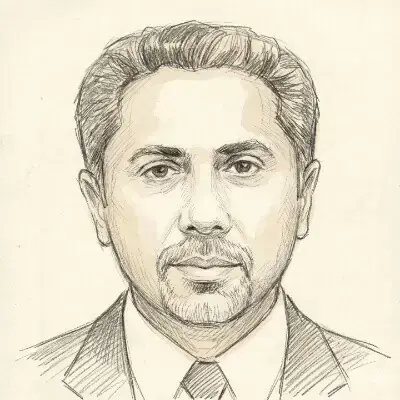
KARACHI: City police chief Azad Khan on Friday said that a “broad-based investigation” had been launched in the alleged drug queenpin Anmol Pinky case after a preliminary probe suggested the involvement of foreigners in operating the narcotics network.
Speaking at a press conference here at the Central Police Office, he said the investigation was launched in collaboration with the Punjab police, the Anti-Narcotics Force (ANF), the National Cybercrime Investigation Agency (NCCIA) and the Federal Investigation Agency (FIA).
He claimed Pinky, who was arrested recently in Karachi, was wanted by police in 20 cases in the city.
He said the case involved not only a national but also a transnational narcotics network, in which citizens of certain African countries were involved.
“This is a broad-based investigation,” declared the city police chief, adding that police had recommended placing the names of four suspects on the Exit Control List, though he did not disclose their identities.
During interrogation, she revealed that she had started the narcotics trade in 2014 along with her former husband, Rana Nasir. She used to deal with Nasir’s clients and supply drugs to them. She began her own online narcotics trade in 2018 and organised networks in different cities. She allegedly supplied drugs through local buses from one city to another after receiving orders on WhatsApp. The drugs were then delivered, concealed in food packets, through online bike riders.
He said during the forensic analysis of her mobile phone, a total of 835 contact numbers were traced, including 300 “active customers”. Nine bike riders were identified through her phone records, one of whom belonged to Karachi while the others were based in different cities of Punjab.
He said that the locations of 132 contacts had been traced to Karachi alone.
Furthermore, six different bank accounts were identified through her mobile phone, through which payments were allegedly made.
During the investigation, two suspects, namely Zeeshan and Sohail, owners of “Fayaz Communication”, were identified as individuals who supervised Anmol’s financial transactions.
According to investigators, the owners carried out transactions worth Rs30 million through four private banks over a one-year period under the directions of suspect Pinky.
Mr Khan said police were also in contact the Financial Monitoring Unit as the case involved financial and digital transactions.
‘Cocaine shipment comes from Lahore’
“The main shipment of cocaine comes from Lahore,” said the Karachi police chief, adding that the product was prepared there before being sent to Karachi through nine riders: eight from Lahore and one from Karachi.
“This network is not restricted to Karachi only,” he said, adding that 300 individuals were involved in drug-related activities including at least 20 women from Lahore.
He said sellers, harbourers and facilitators in this case would be treated as criminals, while addicts would be treated as victims in need of rehabilitation.
He added that the initial investigation into the case had already comprised 500 pages.
He said police had also conducted a raid on her “old residence” on Abul Hasan Ispahani Road, where cocaine was allegedly recovered. A separate case had been registered in connection with the recovery.
‘Storm in a teacup’
The city police chief appreciated the media for highlighting the “lapses” during the suspect’s court appearance, but lamented that “half-cooked and sensational” reports were later circulated, and that “an attempt was made to turn the villain into a hero”.
He said some criticism had been constructive and appreciated, but there had also been “character assassination” during media coverage, which he described as a “storm in a teacup” driven by unverified reports against the police and the Sindh government.
However, he said a “serious violation” had occurred when media outlets aired videos of the recovery. “This is a criminal act, as it is equivalent to tampering with evidence,” he said.
He urged the media to demonstrate “responsibility” so that the case would not be compromised.
He described the matter as a serious narcotics case affecting an entire generation and said it should be treated with the seriousness it deserved.
He said that there were many “unsung heroes” in the case, which had been detected through the concerted efforts of police and intelligence agencies. He said all intelligence agencies were assisting the police.
Published in Dawn, May 16th, 2026