Punjab’s annexation by the British in 1849 marked far more than a dynastic transfer of power; it inaugurated a decisive rupture in the region’s social, economic, and intellectual life. A province long shaped by militarised sovereignty, fluid property relations, and personalised authority was abruptly inserted into the frameworks of a modern colonial state. Codified law, systematic land settlements, canal colonisation, railways, municipalities, and above all Western education together produced what may legitimately be described as a Punjabi renaissance. Within this transformation, the Khatri strata of Punjabi Hindus emerged not merely as beneficiaries but as its principal agents.
For the British, Punjab possessed a peculiar and almost romantic allure. It was the final and most expensive conquest of their Indian empire, subdued only after the defeat of the formidable Khalsa army. As one contemporary observer noted, “The Punjab was not taken; it was wrested by sheer force of organisation and persistence.” Lord Dalhousie’s administrative experiments, followed by the rule of the Lawrence brothers, sought to stabilise and reorder the province through what John Lawrence famously called “a strong and paternal government suited to a manly and headstrong people.” This paternalism, as Malcolm Darling later observed, was not benevolent neutrality but a deliberate attempt to engineer a loyal, productive society through law, revenue, and discipline.
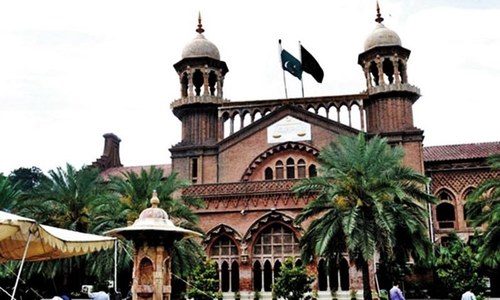
The institutional architecture of colonial Punjab was built with remarkable speed. A centralised bureaucracy, a rationalised revenue system, codified criminal and civil law, and graded courts transformed governance from a negotiated practice into an impersonal system. Lahore, restored as the provincial capital, became the nerve centre of this new order. Institutions such as the Government College (1864), Mayo School of Arts (1875), the University of the Punjab (1882), and the Chief Court (later the Lahore High Court) reoriented the city’s intellectual life. Municipal governance, public works departments, hospitals, libraries, and railways turned Lahore into what Anil Sethi has described as “the most conspicuous laboratory of colonial modernity in north India.”
It was within this expanding institutional universe that the Khatris found their historical moment. Traditionally engaged as traders, bankers, scribes, and administrators, they possessed two decisive advantages: mastery over accounts and documentation, and a remarkable willingness to embrace English education. Niladri Bhattacharya’s work on colonial social formations is particularly illuminating here: he argues that colonial modernity did not simply replace older hierarchies but “reassembled them through new criteria of literacy, legality, and property.” The Khatris exemplified this process. They translated inherited mercantile skills into bureaucratic competence and capitalist enterprise, turning cultural capital into social power.
Much like the bhadralok of Bengal, the Khatris constituted an emergent bourgeoisie that mediated between colonial authority and indigenous society. As Himmadri Bannerji has argued in the Bengali context, this class was both a product of colonial rule and an agent of modernity, internalising Enlightenment ideals while remaining socially rooted. In Punjab, Khatris performed a similar role — occupying positions as contractors, lawyers, teachers, municipal commissioners, and philanthropists—thereby spearheading the province’s transition from a medieval order to a capitalist economy.
The careers of Lala Mela Ram of Lahore and his son Lala Ram Saran Das vividly illustrate this Khatri renaissance. Born into a family dispossessed during the transition from Sikh to British rule, Mela Ram exemplified adaptability under colonial modernity. Through railway contracting — notably the Amritsar–Pathankot line — he accumulated wealth and prestige, earning the title of Rai Bahadur. His founding of Lahore’s first textile mill near Data Darbar symbolised the shift from mercantile to industrial capitalism, a transformation Anil Sethi identifies as central to Lahore’s late nineteenth-century urban dynamism.
Yet economic success was only one dimension of Khatri ascendancy. Mela Ram’s philanthropy — donations to hospitals, colleges, waterworks, and public institutions — reflected what Calvert described as the emergence of “civic-minded Indians who learned to speak the language of public good.” Equally significant was his cultural pluralism. His patronage of institutions cutting across religious lines and his role in electrifying Data Darbar embodied a non-sectarian urban ethos that characterised Lahore’s elite culture before communal polarisation hardened identities.
Lala Ram Saran Das represented the mature phase of this renaissance. An industrial pioneer and major contractor, he inaugurated the first large spinning and weaving mill in Punjab at the age of twenty-one, employing over a thousand workers. Simultaneously, he became deeply embedded in municipal and legislative politics, serving on the Lahore District Board, the Municipal Committee, the Punjab Legislative Council, and later the Council of State. His imperial honours — Rai Bahadur, the Kaiser-e-Hind Gold Medal, and the CIE — signified not merely loyalty but the colonial state’s dependence on indigenous intermediaries.
This ascendancy, however, generated deep contradictions. The very success of Khatri moneylenders and entrepreneurs in acquiring land through debt provoked colonial anxiety. Malcolm Darling, drawing on years of district experience, warned that “the peasantry is sinking under a burden of debt which threatens the moral foundations of rural society.” Similarly, Calvert viewed the rise of urban financiers as socially destabilising. These concerns culminated in the Land Alienation Act of 1901, which barred “non-agricultural tribes,” including Khatris, from acquiring rural land.
As Niladri Bhattacharya would frame it, this was a moment when colonial power sought to arrest the unintended consequences of its own reforms. The Act curtailed Khatri expansion in the countryside but did not dismantle their dominance in cities, industry, education, or politics. Instead, it sharpened their identity as an urban bourgeoisie — pushing many toward nationalist politics and strengthening their association with institutions like the Indian National Congress.
In retrospect, the Khatri renaissance after 1849 stands as one of the most consequential yet understudied episodes in Punjab’s modern history. Through education, enterprise, and institutional engagement — particularly in Lahore — the Khatris were transformed from a caste-defined group into a self-conscious class. As Bannerji reminds us, such classes were not merely economic formations but cultural projects, carriers of modern sensibilities and contradictions alike. In shaping Punjab’s passage into modernity, the Khatris left an enduring imprint on its economy, civic institutions, and urban culture — an imprint that continued to shape the region well into the twentieth century and beyond.
(The writer is a professional historian and Professor in the Department of Liberal Arts at Beaconhouse National University, Lahore)
Published in Dawn, December 21st, 2025