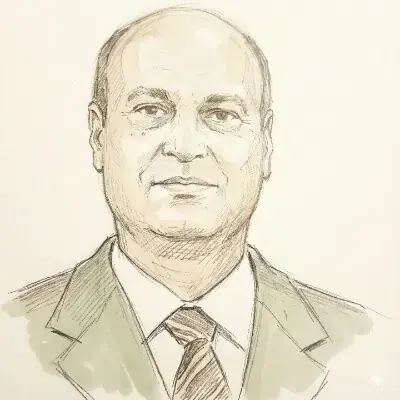
ISLAMABAD: Special Assistant to Prime Minister on Health Dr Faisal Sultan on Wednesday stressed the need for reforms in the health system and educating health regulators and professionals for changing public mindset regarding harmful effects of tobacco.
Speaking at a seminar on: Raising Tobacco Tax Rates to Promote Public Health and Increase Revenue: Policy Options for Budget 2022-23, he said higher taxation on tobacco would not only discourage its use but also drive much-needed discussion about its harmful effects on the society.
He admitted that tobacco use had not been reduced in Pakistan when compared with other countries.
He said though there was a little progress in terms of creating awareness about tobacco hazards, it was not enough at all.
The seminar was organised by the Social Policy and Development Centre (SPDC) in collaboration with World Health Organisation (WHO), Campaign for Tobacco Free Kids (CTFK), the Union and Vital Strategies.
Speaking on the occasion, the member of National Assembly Standing Committee on Finance, Revenue and Economic Affairs Dr. Aisha Ghaus-Pasha said the fact sheet makes it clear how important it is to reduce tobacco use for controlling non-communicable diseases.
“Alongside legislation and oversight, it is essential to create deterrence through awareness,” she said.
National Assembly Standing Committee on Law and Justice Chairman Riaz Fatyana said that there was a psychological element to smoking and only a collective effort will create awareness about its harmful effects.
“In addition to increasing tobacco tax, other policy measures such as effective implementation of ban on smoking in public areas. Religious scholars can also play their role in discouraging the youth from cigarette use. This is a menace which needs to be controlled as smoking is directly linked to SDGs on poverty, health, education and economic growth,” he said.
Presenting the findings of Tobacco Fact Sheet, Principal Economist SPDC Mohammad Sabir said cigarette prices in Pakistan were the lowest among the region, mainly due to low Federal Excise Duty (FED) on cigarettes.
“Average excise tax rate is around 45pc of the retail price against the widely accepted benchmark of 70pc. Cigarettes have become more affordable as FED has not been increased since July 2019. This has profound negative implications regarding tax revenue and health outcomes. He explained that tobacco use is associated with more than 160,000 deaths every year in Pakistan. SPDC’s research shows that raising FED on cigarettes by 30pc would result in 200,000 fewer smokers and an increase of more than Rs27 billion in excise tax revenue,” he said.
Earlier, introductory remarks were given by Country Head CTFK Imran Malik and Dr Shahzad Alam (National Professional Officer, WHO Pakistan).
Mr Malik said tobacco consumption was closely linked with rising poverty in Pakistan. He endorsed the recommendation for increasing tobacco tax in order to make it less affordable and proposed that taxation be based on thorough research rather than data provided by cigarette manufacturers.
Dr Shahzad Alam said the focus should be on making cigarettes less affordable as tobacco use is the major risk factor of non-communicable diseases and its damage to the exchequer is also well established.
“FED is currently 36pc and can reach the target of 70pc if the proposed tax increase is implemented through coordinated efforts at all levels,” he said.
In addition to a 30pc increase in FED, it was proposed that the government must continue reforming the tobacco tax system by implementing large excise tax increases in order to make cigarettes progressively more expensive and less affordable.
Published in Dawn, March 10th, 2022