ISLAMABAD President Asif Ali Zardari signed on Monday the Gilgit-Baltistan (Empowerment and Self-governance) Order, 2009, aimed at introducing far-reaching administrative, political, financial and judicial reforms in Northern Areas.
Explaining salient features of the order, presidential spokesman Farhatullah Babar told reporters that Gilgit-Baltistan would now have an elected legislative assembly which would elect a chief minister.
He said the governor would be appointed by the president on the advice of the prime minister. Till the election of the legislative assembly, the federal minister for Kashmir affairs and Northern Areas would be the acting governor, he added.
Mr Babar said the chief minister of Gilgit-Baltistan to be elected by the legislative assembly would be assisted by six ministers and two advisers. The assembly will have 24 members to be elected directly. Besides, there will be six women and three technocrats' seats. The assembly, he said, would have powers to make laws on 61 subjects.
He said Gilgit-Baltistan would have its own public service commission, a chief election commissioner and an auditor-general.
There would be a Gilgit-Baltistan Consolidated Fund and the annual budget would be presented to the assembly and voted upon as per practice in vogue in other provinces in the country.
About judicial reforms contained in the order, Mr Babar said the chief judge of the Supreme Appellate Court would be appointed by the chairman of the council on the advice of the governor. Other judges will be appointed by the chairman on the advice of the governor after seeking views of the chief judge. The number of judges would be increased from three to five.
The president congratulated the people of Gilgit and Baltistan on the realisation of yet another dream of emancipation.
Mr Zardari recalled the reforms introduced by the PPP in 1975 and in 1994 and said he was pleased that the PPP government and reforms in Northern Areas were interlinked.
The first major administrative, judicial and political reforms were introduced and feudal system was abolished in 1975 by the government of Zulfikar Ali Bhutto.
Further democratisation of the area was effected during the government of Benazir Bhutto through the Northern Areas Legal Framework Order, 1994.
The president has also announced a Rs5 billion economic development package for Northern Areas and decided that general and local government elections would be held there on November 12.
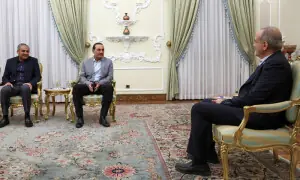
Last week, a delegation of the PPP Northern Areas led by its president Syed Mehdi Shah had called on Mr Zardari and presented a package of demands of people of the area.
The president directed the ministry of finance to release Rs3.5 billion budgetary allocation for Northern Areas.
He also agreed that people of Northern Areas would be given equal rights and over 5,000 jobs would be created.