0
0

A Qataa is a four-line rhyming poem composed by poets to comment in verse on daily happenings, situations and issues - be they political, civic, social or divine. It is slightly different from a Rubai, which is also essentially a poem of four lines. Both forms may be translated as 'quatrain' in English. So, when Allama Iqbal wrote Rubais, the nitpickers insisted they were Qataas.
Printed prominently on the comment page of almost every Urdu newspaper, Qataa attracts the immediate attention of the reader. If written by a competent poet, it rarely fails to make its impact on the reader curious about what's cooking in and around the country. Most quatrains do it in an amusing way. For instance, a quatrain in a newspaper says that previously power supply used to go off occasionally, “but now it goes (off) more often than it comes (on)”.
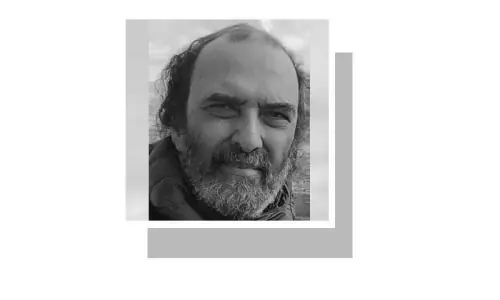
Although Anwar Shaoor excels in ghazal, with short metres and simplest possible vocabulary, he is better known for his Qataas, a genre he has been writing in for about a quarter of a century.
He began writing Qataas in the Ealaan daily and then for Amn. But when the great Qataa master Raees Amrohvi passed away, Shaoor was asked by the daily Jang's administration to take his place. Raees, who wrote Qataas for almost half a century, was the most popular-ever writer of Qataas, and donning his mantle must have been an honour for any eminent poet.
Among the people who encouraged Shaoor to write Qataas was the late journalist and poet Hasan Abidi. Quoting Abidi sahib, Shaoor said a Qataa writer must be both a journalist and poet. “As I had worked with a weekly as a subeditor, I qualified to this status, Abidi sahib said. Besides, newspaper reading has been a second nature to me for decades.”
Shaoor is a great fan of Raees Sahib. He seems to have memorized many quatrains of Amrohvi's and is eager to recite a selection of them as well as his own ones. Jon Elia, the younger brother of Raees, happened to be a very dear friend of his.
“We were together for years and I had the opportunity to see Raees sahib very closely. He was not only a great poet and columnist, he was a great human being also,” reminisces Shaoor. “In fact, Raees Amrohvi was service personified. His efforts for the resettlement of Bihari refugees were immense. But his doors were wide open for everyone seeking his help, or taking his life as the assassin did. People came to him even with requests for writing a sehra (eulogy for a bridegroom) or an elegaical quatrain denoting the date of a death. He never refused anybody, never said to them to come tomorrow,” says Shaoor.
“He received about a hundred letters on average daily. And he replied to each and every letter, though very briefly. Many aspiring poets sent him their verses for correction and he took out time to oblige everyone. And till the day of his assassination, he remained very cheerful and made whosoever came across him cheerful. Sometimes he played pranks on his close friends.”
In Qataas, Shaoor tries to present the best possible specimen of poetry and what he thinks is the truth. He says there has been no pressure on him about what to write and what not to write by the newspaper editor. “When the editor gives you the freedom to write what you please, he actually shifts his responsibility onto your shoulders. And you have to be more cautious so that you do not write something that should not go in print.”
Some poets are known to have never touched alcohol, but their poetry is replete with references to it. But Shaoor doesn't cover up his addiction. At Anjuman Taraqqi-i-Urdu, his boss the renowned research scholar Mushfiq Khwaja tried his best to wean him away from drinking, but failed. So, Shaoor literally means when makes mention of the cup and wine.
The list of his favourite poets is very long, beginning with Wali Dakkani, or Wali Gujrati as some researchers have discovered lately that he was originally from Gujrat, down to Nasir Kazmi, Ahmed Mushtaq and Muneer Niazi. “After Muneer, we seem to have become bereft of poets.” In prose he likes Saadat Hasan Manto, Krishan Chandar, Khadeeja Mastoor, Ahmed Nadeem Qasmi, etc. He likes Ibn-i-Insha's poetry as well as prose. About Ahmed Faraz, his response is lukewarm. “He is very lucky as he is the most popular poet of the day.” He, however, seems to have a good rapport with Faraz. He narrated a joke which he said was created and narrated by Faraz about Faiz Ahmed Faiz and Madame Noor Jahan.
Anwar Shaoor has to his credit three collections of poetry - Me Raqsam, Mashq-i-Sukhan and Andokhta. Publishers have approached him to bring out a collection of his Qataas, but he says he has not yet started compiling them.
Born as Anwaar Hussain in Uttar Pradesh's Farrukhabad town, he migrated with his parents to Pakistan from India in 1947, when he was four. He started writing poetry at the age of 11 and contributed his poems to children's magazines and newspaper sections from Karachi to Delhi. He was in class V when his mother died. His father treated him harshly. He dropped out from school and fled home. He repents he did not complete his education though later he had the opportunity to do so.
His first regular job was with Anjuman Taraqqi-i-Urdu, which he got courtesy Jamiluddin Aali in 1964. He later joined an Urdu weekly as a subeditor, but returned to the Anjuman after a few months, before quitting it to join a digest in 1970. There he served complete 30 years to retire in 2000. Living in a Gulshan-i-Iqbal apartment, overlooking the Karachi circular railway station and the Aladin amusement part, Shaoor is a self-satisfied man. He has a son and three daughters, all married and well settled. “I have never had any complaint that I was not being appreciated right from the beginning. Whatever I have is because of my poetry.”
When I met him for an interview on Monday, he was reading a travelogue which he had bought in the market. He is a voracious reader and reads almost every thing - poetry, fiction, philosophy and even travelogues. He says a poet must read everything, and lamented that now poets read only poetry and fiction writers read only fiction. “The situation is so bad now that poets read only their own poetry and fiction writers their own fiction.”