11
11

Dengue fever is a mosquito-borne infection; it can be asymptomatic, but commonly causes a severe flu-like illness. It can also result in bleeding and shock, a potentially lethal complication called dengue haemorrhagic fever which is a leading cause of serious childhood illness and fatality in some Asian countries. Although there is no specific treatment for the infection, good medical care with symptomatic treatment and good nursing can often save the life of an individual with dengue haemorrhagic fever.
Unwell individuals who feel they may have been exposed to mosquitoes should seek immediate medical advice. The incidence of dengue fever across the world has increased in recent years, and almost two-fifths of the world’s population are at risk. The World Health Organisation (WHO) advises that the “only way to prevent dengue virus transmission is to combat the disease-carrying mosquitoes.” Information about insect bite avoidance is available from the NaTHNaC website.
Dengue virus is endemic in Pakistan, and occurs throughout the year, but with peaks during the post-monsoon season. A 2010 study by Khan et al has shown that the average age of individuals contracting dengue fever has decreased, suggesting that younger patients may be more susceptible. Despite that dengue virus remains a major cause of morbidity and mortality, there is scarcity of data looking at the overall trend of dengue infection in Pakistan.
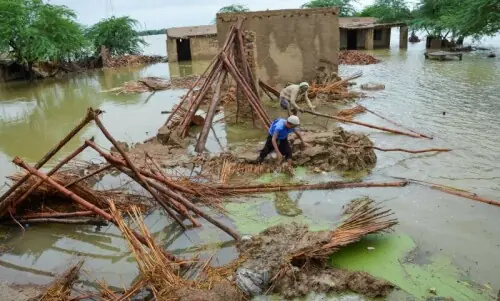
Despite this, nearly 700 cases of confirmed dengue fever have been reported across Pakistan this year. The dengue surveillance cell, headed by Dr Shakil Malik has confirmed that 696 people have been infected since August of this year, with many requiring hospitalisation. Many of the reported cases have been in Karachi; however dengue fever is also increasing in other parts of Sindh. It is likely that individuals returning from camps set-up for flood affectees in Karachi may be spreading the infection and the situation only looks to worsen.
The number of cases of dengue fever were confirmed by the Federal Secretary of Health, Khushnood Ahmed Lashari who verifies that the largest proportion of cases have been notified in Sindh, where at least five deaths from the infection have also been reported to have occurred. The official has also stated that 16 confirmed individuals with dengue fever have additionally been reported in Islamabad.
The director of the National Institute of Blood Diseases (NIBD) haematologist Dr Tahir Shamsi warns that the government’s data is incomplete as not all cases are being recognised or reported.
What is of even more concern is that researchers have shown outbreaks of dengue fever in Pakistan are becoming more severe. In a study published in February this year by Malik Asaf Humayoun, and colleagues looked at 110 patients across two outbreaks in Lahore in 2008. It showed that showed that over half of the cases developed the more severe form of the infection, namely dengue haemorrhagic fever in which bleeding and shock can occur. This can be fatal.
Humayoun, the head of the department of medicine at the Allama Iqbal Medical College and the Jinnah Hospital describes this increase in the proportion of more severe cases as alarming. He suggests “Health authorities should consider strengthening surveillance for dengue infection, given the potential for future outbreaks with increased severity.”
This Pakistan study adds to the increasing concern over dengue fever control. The WHO South East Asia Regional Office (SEARO) earlier this year has reinforced the need for accelerating important interventions in order to control of this infection. They have advised that “social mobilisation together with political commitment are crucial.”
After its eradication in the 1970s, the first confirmed dengue haemorrhagic fever outbreak in Pakistan occurred in 1994. As in previous years, fumigation and dengue awareness campaigns are in action but it is clear that not enough has been done in Pakistan to control and eradicate this disease. The question remains, why year after year, is it being left until the outbreak is in full force before any appropriate steps at disease control are attempted? Surely prevention is better than cure. Whose responsibility is it anyway? The health sector ? The government? Private individuals?

The views expressed by this blogger and in the following reader comments do not necessarily reflect the views and policies of the Dawn Media Group.