0
0

Sometimes writers make me wonder for their sheer ability to produce great works in bulk, and that too, on a regular basis. Had they been younger, I would have attributed this enormous output to their youthful years and the energy these crazy years bring with them.
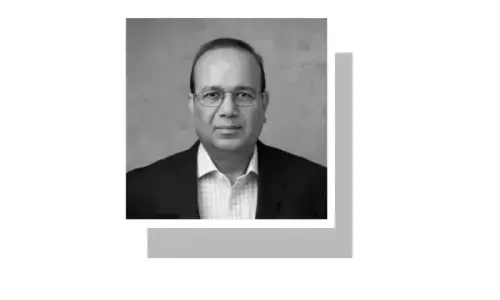
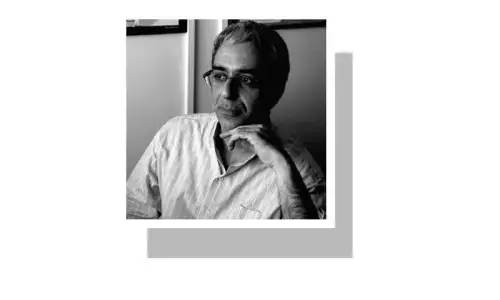
But Baqar Naqvi does not fall in this category and neither does Syed Mazhar Jameel. Yet, both of them keep churning out hefty research-based works year after year. Though I don’t mean to hurt these friends of mine by saying that the thin tufts of grey hair on their heads (or whatever of it is left there) are turning even thinner and greyer (because that goes without saying), I keep on muttering to myself what medicine or elixir they have found, and from where, that makes their minds grow even more creative as they age. Had they not been fully active in their professional careers at the same time of piling up these works, one might have easily attributed this prolificacy to the leisure and contentment that retirement after a fruitful and long career brings. But both of them are busy as bees during office hours and when the sun sets they rise and retire to their studies. May they live longer and keep on doing what they do best: writing and bringing moments of joy to the readers.
Today I would like to say something about Baqar Naqvi…
A poet and a translator who has over a dozen books to his credit, Naqvi Sahib has been translating some very technical yet useful books into chaste Urdu. Genes, computers, artificial intelligence and some other scientific topics are the ones that not only fascinate him but he has also studied them quite deeply and has translated a number of books on them from English into Urdu.
One of his remarkable works was the translation of all lectures delivered by the 20th century Nobel laureates at the time of receiving their Nobel Prize for Literature. It was published in the autumn of 2009 under the title ‘Nobel adabiyaat’. Though some of these lectures were translated into Urdu and published before, it was Naqvi Sahib who for the first time translated all of them in entirety. His book also won the Jang-UBL Literary Excellence Award.
Now, Baqar Naqvi has come up with three more works, as bulky and and as beautiful as before. I believe, had any younger scholar tried his or her hand on these tomes they would have proven as back-breaking as they are, but it is not so for Naqvi Sahib it seems. The first of his recent works is ‘Nobel amn ke sau baras’ (Hundred years of Nobel Peace). Published in December 2011 by Karachi’s Academy Bazyaft, the 1100-page book carries a blurb by Shamsur Rahman Farooqi that says: “the echo of our friend Baqar Naqvi’s great feat ‘Nobel adabiyaat’ had not quite died when he turned up before us yet another remarkable attainment. ‘Nobel amn ke sau baras’ is truly an esteemed, thought-provoking and meaningful work. Though Baqar Naqvi’s excellent translation skills had come to light through his other books, ‘Nobel adabiyaat’ was a perfect manifestation of his translating ability. This book is indeed an addition to the tradition of translations in Urdu and has earned Baqar Naqvi a place in the history of Urdu literature. It reveals that the world has not retreated from its last position on weapon industry and has rather advanced on the previous path of destruction.”
It seems that when Razi Mujtaba wished that Baqar Sahib would some time translate a few works related with Noble prizes awarded for science, it was one of those magical moments when prayers are answered. Lo and behold! The presentation speeches delivered at the time of awarding Nobel for Physiology and Medicine have been translated by Naqvi Sahib. Published a few months ago by Academy Bazyaft, ‘Nobel hayatiyaat’ is a translation of presentation speeches (not lectures, as they were too technical, too complicated and so long that it would have taken some 5, 000 pages, writes Naqvi in the preface). As Mazhar Jameel has put it, the translations by Baqar Naqvi have become the landmarks of the history of Urdu translations.
As if these works were not enough, Naqvi Sahib has just published another translation. But this time round it is a work of fiction and that too no less than by someone like Gunter Grass, a Nobel laureate. ‘Naqqara’ is the Urdu translation of ‘The tin drum’, a novel for which the German novelist Gunter Grass is more known probably because of the movie based on the book.
Sahar Ansari writes in the blurb: “the tin drum has a special importance in all of Gunter Grass’s works for this novel is nothing short of a wonder as far as its theme, characters and techniques are concerned. Though some of Grass’s writings have been rendered into Urdu before, this is the first time that any of Grass’s novels have been translated into Urdu in their entirety. Since the language and events in the novel are a bit different from the usual style of fiction, turning it into Urdu with grip and ease was a difficult task that Baqar Naqvi has accomplished very successfully.” Similarly, Asad Muhammad Khan too has paid rich tributes to Naqvi for this translation, also published by the Academy Bazyaft.
This is the third translation that Baqar Naqvi has published between December 2011 and December 2012. In cricket, they call it hat-trick. Hats off to Baqar Naqvi!
drraufparekh@yahoo.com