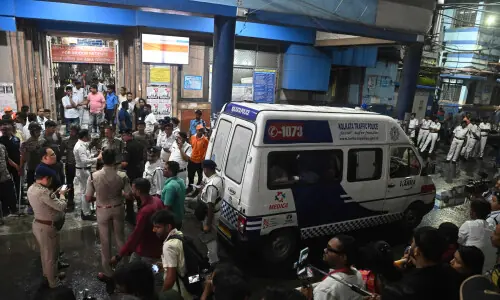
KARACHI: Thursday’s bomb blast outside an office of the Muttahida Qaumi Movement (MQM) was the 42nd attack on electioneering since April 11 when the May 11 polls were exactly a month away and the deadly trend, including bombings and armed assaults, has claimed more than 70 lives, including two contesting candidates, and left over 350 injured as both the security administration and caretaker government find it the “most bloody and challenging elections” of Pakistan’s history.
It is already looking like one of the worst waves of pre-election violence in the country’s history.
However, with less than 10 days left, the authorities sounded confused and divided in their opinion over the origin of threat, the motive behind the brutal trend and what exactly lies ahead when the mainstream parties claim to have restricted their election campaigns and others express mistrust of the administration under the caretaker set-up, demanding deployment of army troops inside every polling station.
“Obviously, the situation Pakistan faces today was never witnessed in its history before,” said Arif Nizami, the federal information minister. “So it’s a great challenge for us to hold free and fair polls on time. But you see there are misreporting by the media as well which counts every act of violence or incident under election-related violence.”
However, he agreed that militancy and banned outfits were the major threats amid “random incident of violence with political motive” and blamed “internal and local elements” for the major acts of violence.
The minister’s thought was contrary to that of the interior ministry, which says election-related attacks are being patronised from across the western borders.
“We have intelligence reports that terrorists who have infiltrated from Afghanistan are involved in attacks on political parties during electioneering,” the director general of the ministry’s National Crisis Management Cell (NCMC), Tariq Lodhi, told Dawn on Wednesday.
There was no assessment from the NCMC on local front amid threats by the Tehreek-i-Taliban Pakistan, which has claimed to have carried out majority of the recent attacks, including killing of an MQM candidate for a Sindh Assembly seat in Hyderabad, suicide attack on election rally of ANP leader Ghulam Ahmed Bilour in Peshawar that claimed 15 lives and a couple of Karachi bombings mainly targeting the electioneering.
Since April 11 to date, 74 people have been killed and 369 injured, including women and children. With the election campaign by political parties yet to gain momentum in three provinces — Sindh, Balochistan and Khyber Pakhtunkhwa — election camps and offices were also attacked. This affected the pace of electioneering and raised security concerns among candidates and activists.
The situation turned so grim that the Election Commission, in a statement issued earlier this week, had expressed dissatisfaction over security arrangements and called for chalking out an action plan to maintain peace during electioneering.
With frequent attacks averaging more than one everyday since April 11, the authorities in Sindh now admit that they would need the army’s assistance for polling security. They, however, find a “unanimous stand” by three major parties against recent acts of terror satisfactory which had saved Karachi from violence on political grounds -- a traditional phenomenon during every election.
“We have formally requested the authorities concerned for the army’s assistance,” said Sharfuddin Memon, special assistant to the caretaker chief minister of Sindh.
“Actually the united stand by three parties -- ANP, MQM and PPP -- has at least removed the fear of violence on political grounds and there is hardly any incident of violence reported in Sindh on political grounds. Fear of militancy is the only major threat so far and we hope to meet the challenge with the support of political parties.”