0
0

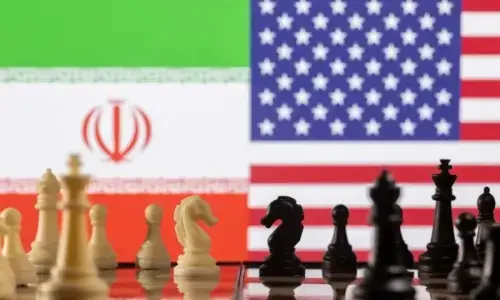
WASHINGTON: Pakistan risks sparking US sanctions if it pursues its plans with Iran to build a $7.5 billion gas pipeline linking the two nations, a senior US official said in a renewed warning Monday.
“We have serious concerns, if this project actually goes forward, that the Iran Sanctions Act would be triggered,” State Department spokeswoman Victoria Nuland said.
“We've been straight up with the Pakistanis about these concerns.”
Iranian President Mahmoud Ahmadinejad launched the construction of a much-delayed section of the gas pipeline with his Pakistani counterpart Asif Ali Zardari at a ceremony on the border of the two neighbours.
But Nuland added: “We've heard this pipeline announced about 10 or 15 times before in the past. So we have to see what actually happens.”
The United States had been seeking alternative plans, saying the move with Iran would take it “in the wrong direction right at a time that we're trying to work with Pakistan on better, more reliable ways to meet its energy needs.”
Nuland said the US was “supporting large-scale energy projects in Pakistan that will add some 900 megawatts to the power grid by the end of 2013.” Those projects included renovating the power plants at Tarbela, the Mangla Dam, as well as modernising others plants and building new dams at Satpara and Gomal Zam, she added.
Iranian state television showed footage of Ahmadinejad and Zardari shaking hands and offering prayers after unveiling a plaque to mark Pakistan’s involvement.
“The completion of the pipeline is in the interests of peace, security and progress of the two countries … it will also consolidate the economic, political and security ties of the two nations,” the two presidents said in a joint statement.
Pakistan has pursued the pipeline scheme as a way of alleviating severe energy shortages that have sparked demonstrations and battered a weak government. At the same time, it badly needs the billions of dollars it receives in US aid.
“The Pakistani government wants to show it is willing to take foreign policy decisions that defy the US, particularly when such crucial issues as energy security are at stake,” said Anthony Skinner, a director of British-based Maplecroft risks consultancy.
“The pipeline not only caters to Pakistan's energy needs, but also lodges brownie points with the many critics of the US amongst the electorate,” he told Reuters.
Iran has completed 900 km (560 miles) of pipeline on its side of the border and Iranian contractors will also construct the pipeline in Pakistan, Iran's national broadcasting network IRIB reported.
Tehran has agreed to lend Islamabad $500 million, or a third of the estimated $1.5 billion cost of the 750-km (470-mile) Pakistani section of the pipeline, Fars news agency reported.
The two sides hope the pipeline will be completed in time to start delivery of 21.5 million cubic metres (760,000 million cubic feet) of gas per day to Pakistan by December 2014.
The project faces security challenges posed by ethnic Baloch militants who have demanded greater control over Balochistan's natural resources and by Iranian Sunni insurgents also based in Pakistan who are fighting for greater rights in Iran.
“Having a pipeline running through the region makes it particularly vulnerable to bombings and disruption,” said Skinner.
“Washington could bolster its support for local elements, causing significant disruption to pipeline infrastructure,” he added.