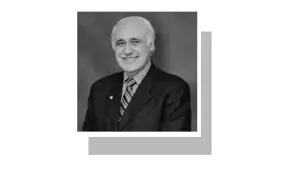
Britain will have to withdraw from the United Nations as well as the European court of human rights if it wants to deport terrorist suspects to states that carry out torture, the country's most senior judge has warned.
In his first interview since becoming president of the Supreme Court, Lord Neuberger launched a sustained attack on “slanted” coverage and “one-sided” portrayals that misrepresent the way the human rights court operates.The UK's Supreme Court is “not subservient” but works “in a dialogue” with the judges in Strasbourg, he insisted.
Pulling out of the Council of Europe body—which the home affairs minister, Theresa May, and the justice minister, Chris Grayling, both contemplate—would “certainly send an unfortunate number of messages”, Neuberger added.
The judge's comments, timed for publication on Mar 5, were made before the two ministers’ views were published in Sunday papers. Neuberger also talked about the lack of diversity in the upper reaches of the judiciary, suggesting that appointment panels could be suffering from a “subconscious bias” against women.
“Human rights excite great emotion,” the 65-year-old judge said.
“The concerns that people have about human rights are, generally speaking, exaggerated ... [although] sometimes courts get it wrong.
“What I object to is ... there are decisions which are sometimes simply misrepresented. An obvious example is attacking the [European] human rights convention because we can't send back nasty terrorists because they might be tortured.
Well, even if you think we should be able to be send them back ... there's a UN convention going back to 1948 which says you can't do that - which stops it on its own, unless we are going to pull out of the UN.”
Neuberger's reference is to the UN's 1948 Universal Declaration of Human Rights, which states that: “No one shall be subjected to torture or to cruel, inhuman or degrading treatment or punishment.”
There is also the UN convention against torture, ratified by the UK in 1988.
Coverage of the Strasbourg court, Neuberger said, was sometimes inaccurate, resulting in “human rights getting blamed when [a decision] was nothing to do with human rights”.
Decisions are often reported in a one-sided way and selectively to highlight the views of “anti” people who dislike the court's role, he added. “The overall picture is, I think, very slanted.”
Whether the UK's Supreme Court is genuinely supreme is a point of dispute. Neuberger said: “At the moment we are not told by the [UK's] human rights acts that we have to follow Strasbourg. What is said is that we have to take into account its decisions.
“A case might arise where we might feel that Strasbourg really had gone wrong and our only way to make our point would be not to follow their decision and to hope that Strasbourg might change its mind. In the end we are not subservient. We are in the position where we have a dialogue with Strasbourg.”
In June, the Supreme Court will return to the subject of prisoners’ voting rights—on which parliament and the human rights court remain at odds—when a legal challenge is brought by a Scottish prisoner, George McGeoch.
The home affairs minister has repeatedly tried and failed to deport the radical Islamic cleric Abu Qatada to Jordan.
The Strasbourg court ruled last year there was a real risk Abu Qatada would, if returned, face a retrial based on torture-tainted evidence over charges relating to bomb attacks on US and Israeli targets in Jordan in the 1990s.
British judges have since rejected Jordanian diplomatic assurances on the matter as lacking credibility. The home secretary's challenge is expected in the court of appeal soon.
By arrangement with the Guardian