0
0

ISLAMABAD, Feb 21: On the last day of the South Asia Media Summit in Islamabad, speakers discussed the role of the media in improving regional relationships.
Criticising government policies and media culture, many tied support for and freedom of the media as integral to civic rights and India-Pakistan peace.
At different panel discussions, many speakers suggested that exchange programmes for media personnel, including journalists and advertisers, be set up for South Asia, especially between India and Pakistan.
The media on either side of the border frequently demonises the other, exacerbating regional tensions.
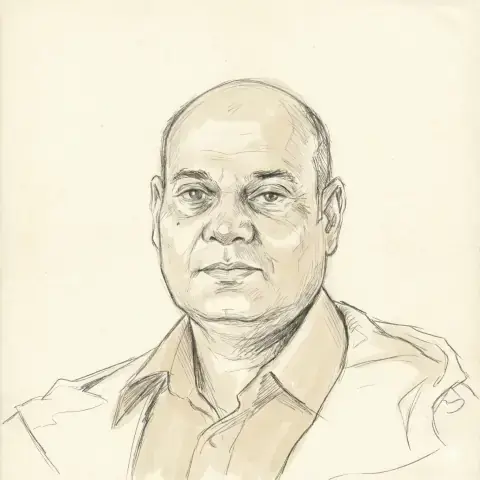
Krishna Parsad, editor-in-chief of Outlook, said: “In India, electronic media especially is guilty of more jingoism than reality.”
The Indian media gives the impression that Pakistan is entirely about generals and ISI but when I saw the public here I saw that they are just like us, he said, adding that issues and problems and ways of thinking of both countries were entirely the same.
According to Parsad, part of the problem was the race for ratings and market share, especially among TV channels, which gives them the incentive to sensationalise the news. Governments, however, were part of the problem as well.
The CEO of Dawn, Hameed Haroon, delivered Thursday's keynote address and highlighted numerous governance problems in Pakistan.
“The whole system is anti-learning,” he said, adding that freedom of the press was still under threat, the press council was never intended to work, and government advertisements were not allocated in a transparent manner.
Haroon also discussed the right to information law, which was weakened by a 2002 ordinance that restricted forwarding any information related to the military.
It could have been improved, to distinguish between classified and non-classified information but was simply allowed to lapse in 2005, he said. The rest of the law had gone somewhere unknown, he added.
While stressing that the future of the print media is intertwined with that of civic rights, Haroon acknowledged that media now must also deal with "extremists" who do not hesitate to use violence.
In a special address, Information Minister Qamar Zaman Kaira reiterated the government's commitment to “winning the war against extremism,” while alleging that such extremism was “an imported agenda imposed on Pakistani society.”
He called for the media to promote peace in South Asia, especially between India and Pakistan, noting that Indian TV channels were aired legally in Pakistan.
“Peace in Pakistan is vital for a peaceful India, and peace in India is vital for a peaceful Pakistan,” he concluded. “Media partnerships and an exchange of delegations can help make this possible,” he said.