0
0

WITH two months to go before general elections and mounting pressure on the external front, no one in the business community considers budget to be that big an issue at the moment, though they are aware that the state is legally obligated to present the budget before the expiry of the financial year on June 30.
The timing of the transfer of power from one civilian government to the next constitutionally clashes with the budget deadline. The budget of an interim government, which will be inducted primarily just to hold elections, will require the approval of an elected parliament after formation of a post-election government. The next government may like to alter the proposed budget to reflect its economic vision, partially influenced by the fresh electorate mandate.
The business community, therefore, wants the Raja government to take confidence building measures to avoid an economic meltdown in the current critical phase, with the interim set up to focus primarily on its mandate, and politicians, across the political divide, to understand the gravity of situation and act more responsibly to support the investors, manufacturers and traders to deliver growth and development.
The opinion is divided over details but the view of all segments of businesses converged on some key issues: near complete failure of governance in restoring law and order, crippling energy crisis, the misplaced priorities of the government (negligence of most productive sectors), and the state’s preoccupation on taxation to generate revenues when public was hostile to visible wasteful government spending.
The business community wishes the current phase of uncertainty to end quickly and is eager for the next government to assume power and let its policies/priorities be known through the budget.
The current government is expected to be dissolved before March 16. The interim setup is constitutionally required to hold elections within 90 days. If things go as expected the three months of interim government will expire in mid-June. The probability of budget 2013-14 being announced by the interim finance minister are, therefore, high.
When reached over phone the big business expressed indifference towards presenters but aspired for tax rationalisation to make the tax regime fair and just in the next budget. They said pains and gains need to be equitably shared. “Currently, the system punishes responsible corporate citizens and rewards those who abuse it”, said a tycoon.
“I see no progress without tax reforms and documentation. Unfortunately, no one in or outside the government shows any commitment to implement reforms. In fact, the power centres (media, judiciary and parliament) oppose any attempt to privatise, restructure loss-making state enterprises, or to deregulate. I have resigned to the fact that the situation will not improve as there is no desire to reform the economy”, CEO, Pakistan Banking Council, Kamran Mirza, reasoned.
“Unless there is change in the configuration of the next parliament it is pointless to expect much from politicians”, he added.
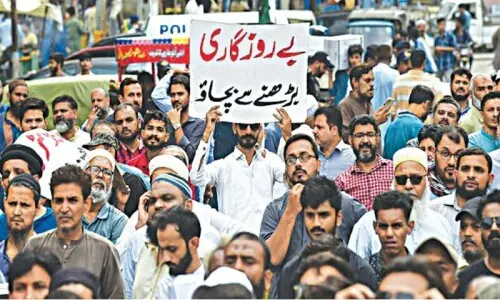
Some others customarily gave wish list demanding special concessions for their trade from the government. A textile tycoon, however, demanded improvement in law and order and the energy situation to enable the private sector to play its role in growth and development of the country, and warned of a slip to another phase of chaos if situation of joblessness persists.
“Only God can help this country. I see no ownership, everyone seems to be pursuing his own petty interest with little regard to impact of his actions on the industry and working population. Buyers are shifting orders to suppliers in other countries because of interruptions in production cycle in Pakistan. People like us who have assets based here have no option but to keep investing in modernising our plants to compete in the international market”, Iqbal Ibrahim of Orient Textiles, lamented.
Another business leader pointed out the shrinking financial space for the government to manoeuvre. “For the most part budget in the country has been reduced to a routine annual administrative exercise. The 85 per cent of the budget is consumed by recurring expenditure”, he said.
Media reports indicate that the finance ministry has been busy in budget exercise and over the next few weeks will finalise the proposed allocations for public sector development programme.
Renowned economist Dr Hafiz Pasha expressed grave concern over the fast depleting foreign reserve position. “The budget is a non issue in face of gathering storm at the external front”, he said.
“Whenever the reserves fall below $7 billion the currency starts losing value at a dangerously fast pace. The government must keep an eye on growing inter-bank and open market exchange rates. The current two-rupee difference could again prompt remitters to opt for informal channels for dollar transfers. The exporters may hold back receipts and importers may rush to open L/Cs. They can all add up to spell crisis”, he explained.
“The market is holding on to hear the good news of promised support. A bailout from IMF or release of the next dose from Coalition Support Fund can dispel fears and stabilise the market at least for the immediate future” he suggested over telephone from Lahore.