0
0

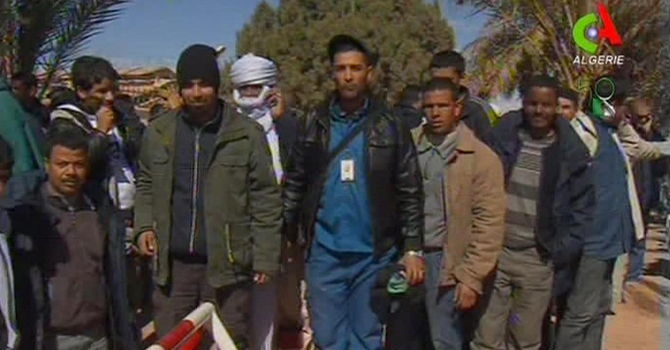
The involvement of a Canadian citizen in the recent attack on a gas field in Algeria has raised concerns amongst the authorities that the North American nation might be becoming a safe haven for terrorists hailing from various backgrounds.
At least 38 plant workers, including citizens of Japan, the United States, Britain and France, and nearly 30 militants were killed in the operation to retake control of the facility at In Amenas where hostages were held.
After reports surface that a Canadian was part of the attack, questions are being raised about how Canada is dealing with the problem of radicalisation, which the rest of the world is also faced with. The Canadian intelligence service has said that Canadian citizens have been killed as suspected terrorists in Afghanistan, Chechnya, Israel, Oman, Pakistan, Saudi Arabia, Sri Lanka, Somalia, Tunisia and the United States.
Canadian authorities have revealed that they have identified around 60 nationals who have recently attempted to join extremist causes which brings to light another question - is Canada exporting terrorism?
Doug Sanders, in his article for the Globe and Mail, emphasized that marginalizing entire communities based on suspicion of religious extremism is not the solution to the problem and also pointed out what a report by Canada's Security Intelligence Service (CSIS) backs up: the problem is not religion.
CSIS has compiled findings related to 'all known Canadian extremists' and according to the research, most of those who turn towards extremism are well-educated and hardly any of them are immigrants or refugees.
Another common trait among those who were profiled is that almost all of them were “highly integrated into Canadian society” while none of them appeared to have a radically religious background.
“It’s a criminal tendency, neither imported nor theological, not rooted in communities or faiths. At the very least, we now know where we shouldn’t bother looking,” Saunders wrote.
In the light of the CSIS report, Saunders rightly pointed out that authorities now know where not to look in their efforts to stamp out extremism.