0
0

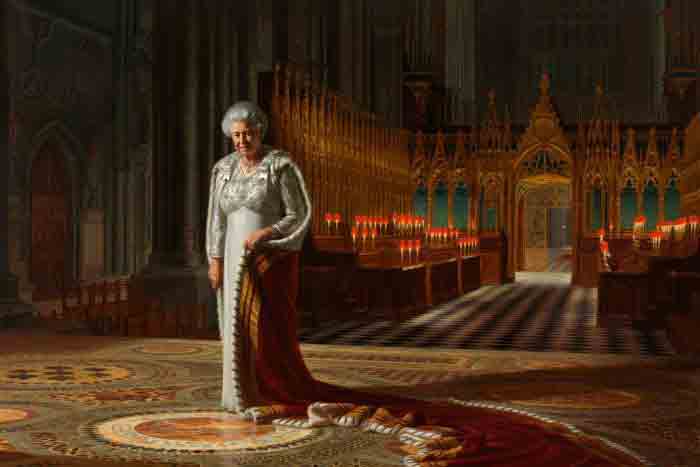
“She is the living representative of the power structure that struggles to protect and sustain some 62 million people and another 72 million in other realms…. She is Britain’s Department of Warmth, the Secretary of State for Friendship. She is ‘our own dear queen’.”
The Diamond Queen: Elizabeth II and Her People is an unabashedly glowing tribute to one of the longest reigning monarchs in history and Andrew Marr makes no bones about his admiration for the Queen without whom, in his opinion, “Britain would have been a greyer, shriller, more meagre place.” So if you’re looking for scandalous bits of gossip about the royal family, this is not the book to choose. If, however, you’re interested in the history of the British monarchy, an understanding of the Queen’s role in the working of the state and a rather long-winded account of her dealings with her various prime ministers, this might be something for your bookshelf.
Award-winning journalist and bestselling author Andrew Marr’s career spans three decades and he is best known for his documentaries, most of which dwell on the history and politics of Britain. The Queen’s diamond jubilee was obviously a not-to-be-missed opportunity and Marr marked the occasion with a three-part BBC series and a companion book by the same name.
By arranging his book thematically — starting with “What the Queen Does”— rather than chronologically, Marr makes it easier to wade through (and sometimes skip over) a rather detailed account of what her 60-year reign has meant — for Britain, for the Commonwealth and for the Queen herself.
As someone who has made a career out of British history, it is a given that Marr’s book will be crammed chock-full of information and it is interesting to learn that though the British monarchy is one of the oldest in the world, the present dynasty came into being less than a hundred years ago. In the tense years of World War I, Elizabeth’s grand-father, King George V, sought to minimise the court’s German affiliation and in July 1917, officially changed the name of the dynasty from Saxe-Coburg-Gotha to the far more friendly (and British) Windsor.
We get a glimpse of the Queen’s childhood — “happy but isolated”— her first meeting with Prince Philip of Greece — “Elizabeth was delighted and she never took her eyes off him. Friends say she never has since” — and her arduous travel schedules. Indeed, there is an entire chapter, “Britannia and the Waves”, devoted to the Queen’s royal yacht on which, we are told, she has taken “968 official voyages, called at over 600 ports in 135 countries.” Marr spends a great deal of page time lamenting the fact that the ship was decommissioned in 1997; the Britannia was, Marr sorrowfully explains, the Queen’s private refuge, “like anybody else’s holiday cottage.” A ‘holiday cottage’, let us not forget, that cost the national exchequer a mere 100 million annually in upkeep.
The interlude chapter, titled simply “Money” gives a better, if perhaps slightly scaled down, idea of the Queen’s wealth. In addition to her annual 13 million pounds private income, and the returns on her private investments, Her Majesty also receives a generous amount from the Treasury for the upkeep of the monarchy — an amount that is less than the daily cost of two cigarettes per person in the United Kingdom, per year, Marr assures us.
“Into the Maelstrom” is the chapter where Marr lets loose on Lady Diana and what he sees as her attempts to undermine and bring down — or worse still, “radicalise” — the monarchy. But even Marr sees the wry humour (or call it hypocrisy if you must) in the elaborate manoeuvrings by the Palace to legitimise Prince Charles’ remarriage. “Laws and doctrines which had blighted the hopes of Princess Margaret and, before her, Edward VII, were cast away like so much waste paper.”
The Diamond Queen may have been Marr’s attempt to bring the Queen closer to the reader; if so, it’s not the book he has written. Except for a few rare glimpses — her love for horses and refusal to wear a helmet when riding, for instance — Her Majesty remains aloof, hidden behind the curtain of glory that Marr weaves. Unfortunately he has not even done this with finesse; the language is clumsy at times with clunky sentences (“a huge influence on the influence of the monarchy”) and basic spelling mistakes (“the swingeing seventies”). Overall, this book may be about royalty but it is not really fit for a queen. Elizabeth deserves better.
The reviewer is a Dawn staffer
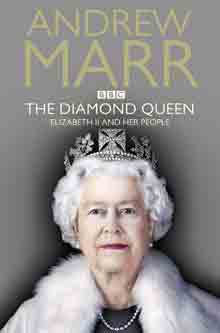
(Biography)
By Andrew Marr
Pan Macmillan, London
ISBN 0330544160
400pp. £7.99