0
0

POLITICAL parties and their leaders do it all the time, more to score brownie points over their rivals or to win cheap plaudits from their supporters.
But when constitutional authorities and senior government officials indulge in such tactics — leaking confidential reports, indulging in hyperbole and playing to the gallery — it often boomerangs on them.
The ‘activist’ Comptroller and Auditor General (CAG) of India, and the ‘activist’ ex-chief of the Indian Army, have both been working with a wider agenda of embarrassing the United Progressive Alliance (UPA) government and hoping that the regime would collapse before the end of its term.
Sadly, the Bharatiya Janata Party (BJP), which has been despairing since 2004 over the loss of its government and is in a big hurry to dislodge the UPA government, has been reduced to clutching at straws that are thrown its way by sundry sadhus — such as Baba Ramdev, the yoga guru — immature ‘mass leaders’ such as Anna Hazare, and of course the CAG or the former army chief.
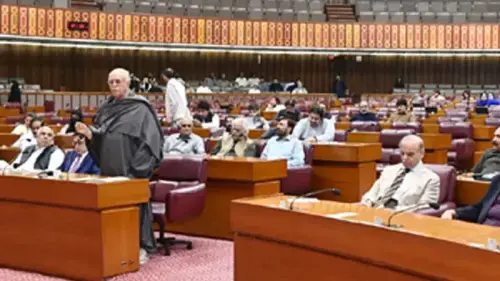
The latest example of BJP’s desperation is the manner in which it has crippled the functioning of parliament, demanding the resignation of Prime Minister Manmohan Singh and the UPA government over yet another of those hyperbolic reports of the CAG.
The CAG is a constitutional authority that is supposed to audit the government’s accounts, but the incumbent has been playing to the opposition galleries by bringing out reports proclaiming mind-boggling losses to the national exchequer, thanks to the decisions of the UPA government.
Vinod Rai, the CAG, has also been indulging in lecturing the government on policy decisions, finding fault with what is an exclusive prerogative of the executive.
He has bungled with reports such as the one on Air India, contradicting himself in different reports. The CAG’s reports also reflect his political inclinations, where he tends to lecture the government on its policy matters, opposing reformist measures, clearly encroaching on its territory.
But worse, the national auditor has also got into the habit of throwing mind-boggling figures of losses, just as Baba Ramdev, the over-ambitious yoga teacher — and apparently untutored in economics — keeps harping about hundreds of billions and trillions of rupees or dollars that have been allegedly looted from the country by multinational corporations, Indian business houses and non-Hindutva politicians.
*****
LAST WEEK, the BJP decided that the CAG report on the potential loss to the exchequer of Rs1.86 trillion (about $34 billion) — the CAG was forced to revise the losses from its earlier estimate of an unbelievable Rs10 trillion — following the allocation of 57 coal mines to Indian companies — would surely bring down the government.
However, in a major embarrassment for the party, the UPA government disclosed that it had all along been willing to opt for the auctioning of the blocks — a pet theory of the CAG is that auctioning is a better route than other alternatives — but was forced not to do so by four BJP-ruled states.
The so-called nationalist party now has to defend its destructive tactics employed by it in parliament.
It costs the nation about Rs2.5 million an hour when parliament is in session. And when it cannot function, the country has to bear the burden, as MPs do not stop taking their hefty salaries and allowances. Faced with evidence of its own chief ministers opposing the auctioning of coal blocks, the BJP finds itself in a bind now.
Its allies, including the Janata Dal (U) and the Biju Janata Dal (BJD) have warned that they will not tolerate any more disruptions of parliament.
Other opposition parties, including the Left and outside supporters of the UPA have also criticised the BJP for its short-sighted strategy.
*****
THOUGH the CAG is supposed to restrict itself to auditing of government accounts, it has been encroaching on the executive’s policy decisions, accusing it of depriving the exchequer of billions of rupees by not auctioning natural resources.
The UPA government has been keen to amend the Coal Mines Nationalisation Act, which would allow it to auction coal blocks, but the BJP typically has opposed the changes. The result: the act allows the government to allocate blocks to private parties for specific purposes — such as meeting the demand for power — but not to auction them.
The government allowed companies to opt for captive mining of coal blocks, as long as the mineral was used to generate much-needed power.
Auctioning of natural resources is a decision the government has to take — it can, for instance, justify that telecommunication rates in India are among the lowest in the world and the country has the largest base of mobile phones numbering almost a billion because of the low tariffs.
Similarly, political parties and even citizens oppose hikes in power tariffs. If coal blocks are to be auctioned, private miners would pass on the hefty costs to power generators, who would have to demand more from consumers.
The government of the day has to take decisions about the amount of subsidies, sale of natural resources, allocation of mining rights, etc.
Critics of the CAG note that the auditing authority cannot then put across notional losses to the exchequer because of certain policy decisions of the government.
The UPA government has, for instance, refused to increase the rates of diesel, forcing state-owned refiners to sustain heavy losses. But the policy is backed by all political parties including the BJP.
The CAG could theoretically add up the losses — the difference between the cost of producing diesel and the market price — and come out with some fantastic figure to show that the UPA has indulged in corrupt practices and deprived the nation of trillions of rupees.
The coal ministry has argued that the objective of allocating coal blocks to private parties was not to earn profits; it was to meet the huge shortfall in coal production in the country and to help generate more power.