ONE year after the euphoria of independence, South Sudan faces economic disaster that could reverse recent development gains after it shut down oil production in a dispute over pipeline fees with Sudan.
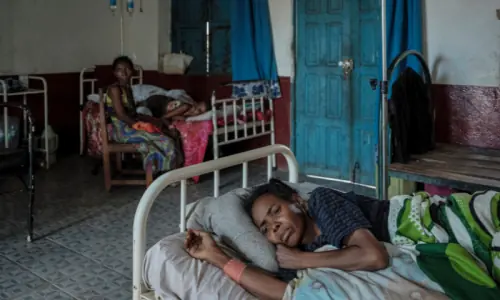
Preying on people’s minds in Juba is the thought that the government is about to run out of money — shutting down vital services in an already impoverished country. A few months ago, some thought the government would run out of cash to pay teachers and health workers as early as August; now the prediction is September or the end of the year.
Khartoum is feeling the economic and political heat as well. Taking a leaf out of South Sudan’s book, Sudan’s president, Omar al-Bashir, is cutting the number of cabinet posts from 31 to 26. However, other austerity measures — a rise in transport costs and a doubling of fuel and food prices following cuts in subsidies — have provoked demonstrations and calls for Bashir to step down.
Analysts say the calamitous economic situation in both countries could force Juba and Khartoum — with prodding from outside, particularly the US and China — to cut a deal to start the oil flowing again.
“The fiscal picture in South Sudan is terrible, the socio-economic stress is harsh, there are protests in Sudan, there are border tensions,” said Jason Mosley, an associate fellow at the Africa programme at Chatham House, the international affairs think tank. “The economic picture is so bad it could push both sides towards some sort of compromise.”
Oil production accounts for 80 per cent of South Sudan’s economy and provides the state with 98 per cent of its revenues, so the decision to stop production in January sparked consternation among the country’s backers, including the UK, which has barely concealed its irritation at Juba’s decision. Those who back the decision say it was partly justified as Khartoum was siphoning off some of the oil.
Mutual suspicion is hardly surprising, given the bitter history between north and south. South Sudan broke away from Sudan after an independence vote last July, the culmination of a 2005 peace treaty after decades of war, during which more than 2 million people were killed.
The oil shutdown has led to fuel shortages in Juba, where car queues outside petrol stations are common. In border states, markets are almost bare and prices for staple foods, such as a tin of millet, which feeds a family of five for two days, have quadrupled. The price of pasta, a common food in South Sudan, is rising fast in line with inflation. Annual inflation accelerated to 79.5 per cent in May, from 29.5 per cent the previous month.
— The Guardian, London