0
0

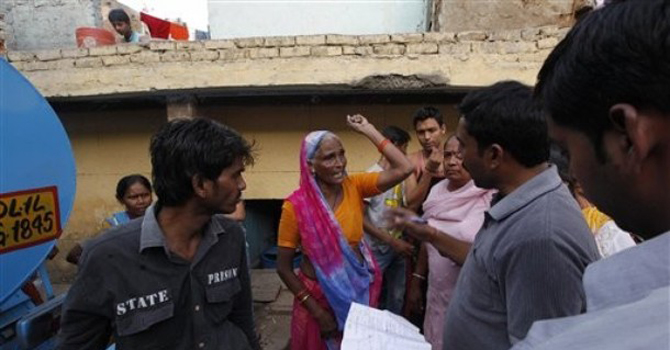
NEW DELHI: Large parts of New Delhi were struggling with acute water shortages on Friday after a neighbouring state cut its supplies at the peak of summer, officials said.
The sprawling Indian capital, with a population of 16 million sweltering in 43 degree C (109.4 F) summer heat, relies on four neighbouring states for its water – Haryana, Uttar Pradesh, Punjab and Uttarakhand.
Haryana, the biggest supplier, cut its flow to the city on Thursday and about three million people have suffered shortages or been completely cut off, according to the Delhi Jal Board, a government agency responsible for water supply.
Some of the capital's smartest districts are among the affected areas, and the crisis reflects growing water stresses in the country of 1.2 billion people.
“Suddenly, Haryana is refusing to release water to Delhi,” a top Delhi Jal Board official told AFP, requesting anonymity.
“We are struggling at all levels. Every minute we are registering complaints of water shortage. This crisis has left us in a mess.”
Several states across India face major challenges over water supply, triggering long-running legal battles over water sharing.
Delhi Chief Minister Sheila Dikshit accused Haryana, which says it has to conserve water for its own residents, of “playing foul” with the capital.
“We are not asking for any favours. We want what is due to us,” Dikshit said in a statement Thursday.
In the peak of summer, New Delhi needs 1,100 million gallons of water every day, according to the Delhi Jal Board, but public water providers are able to only supply 835 million gallons.
“There is always a supply-demand gap but this gap is just widening and worsening the crisis,” said Himanshu Thakkar, an expert on water management at the South Asia Network on Dams, Rivers and People research group in New Delhi.
According to a federal government report on water consumption in 2010, usage per capita in Delhi is higher than in most European cities.
“Delhi is a privileged city, it is a spoilt child. It does not use rain water harvesting, refuses to recharge 600 water bodies (reservoirs) and just chooses to complain about shortages,” said Thakkar. A 2011 study by experts published in the Proceedings of the National Academy of Sciences, a US journal, estimated that more than one billion urban Indians will face serious water shortages by 2050.
India's six biggest cities – Mumbai, Delhi, Kolkata, Bangalore, Chennai and Hyderabad – are among those most affected by the shortages.