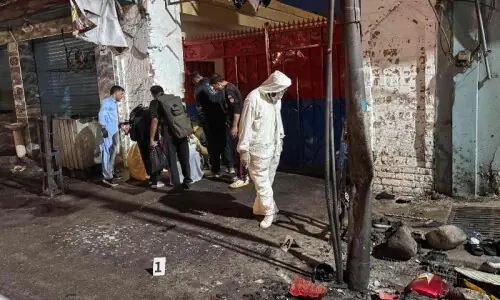
IT’S the oldest excuse in the book, trotted out to cover up the mistakes and blunders of the Pakistani state. Maj-Gen Obaidullah Khattak, inspector general of the Frontier Corps in Balochistan, claimed on Saturday that some 20 foreign intelligence agencies were active in Balochistan, helping the insurgents in that restive province in order to keep the state off balance and to lower the public’s trust in their security forces. For those familiar with the history of Balochistan, Maj-Gen Khattak’s allegations echo the claims in the 1970s that the insurgency in the province then was also the doing of outside powers and foreign agencies. To be sure, Balochistan is a tempting arena for regional and extra-regional powers. It borders Iran and Afghanistan, is a vast, sparsely populated land, is endowed with untold wealth in the form of natural resources and is racked by internal security issues. However, there is also another reality, one perhaps far more pertinent: the state’s mishandling of Balochistan for decades, its policy of wielding the stick where engagement was needed, its fury unleashed where a soft touch was required, all of that and more is why Balochistan stands where it does today.
The problem in Balochistan is that both the diagnosis and the policy are wrong. Baloch militancy is extant not because foreign intelligence agencies supply explosives and triggers or train snipers but because there is a ready supply of alienated and angry young Baloch men who are willing to take the fight to the Pakistani state. As long as the wellspring of anger and alienation in Balochistan remains, there will be Baloch willing to risk their lives to inflict damage on what they see as symbols of an oppressive state. Policies such as ‘kill and dump’ and ‘killing the killers’ are akin to standing at the end of a pipeline and shooting anything that comes tumbling out. Until the source is tracked and the supply shut down, such policies will never yield more than temporary lulls in insurgent violence.
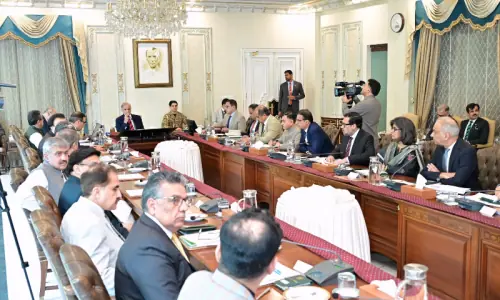
Ultimately, however, the security forces and their leaderships are trained to see everything through a security prism. What Maj-Gen Khattak or his superiors in GHQ say and believe about Balochistan are the result of a certain kind of mindset. Militaries are not designed to develop and execute winning strategies in a province such as Balochistan. That is the job of the civilians. Perhaps Prime Minister Gilani’s two-day visit could herald the beginning of a new boldness and decisiveness by the civilian leadership. If not, expect Balochistan to keep bleeding.