0
0

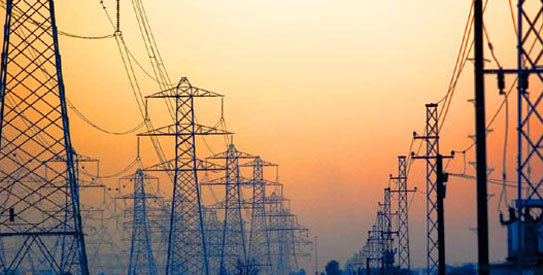
ISLAMABAD: Eleven independent power producers (IPPs) with a total generation capacity of about 2,500MW have served notices about invoking the government’s sovereign guarantees over non-payment of Rs42 billion arrears.
A power ministry official confirmed that nine IPPs established under the 2002 power policy and two under the 1994 policy had served notices on the Central Power Purchasing Agency (CPPA), which is responsible for procuring electricity from the IPPs, public sector thermal power plants and Wapda to invoke the sovereign guarantees.
He said the CPPA or the government would have to address concerns of the private power companies by April 19 to either reach an amicable resolution or settle the arrears.
“We have sufficient time to deal with the IPPs’ notices, the major issue for the government at present is to minimise loadshedding and defuse public anger,” he said.
He downplayed the threat posed by the notices and said they had resorted to the same tactic in August last year but the matter was resolved before the 30-day deadline.
Responding to a question, he said besides the smaller IPPs with a total capacity of about 1900MW who had also served similar notices last year, two older IPPs – Rousch and Saba Power – established under the 1994 policy had also threatened to invoke the guarantees.
He said the government had time till April 19 to clear their dues to ward off the legal process for encashment of the guarantees. Otherwise, on April 19, the IPPs may issue a final notice which would automatically lead, in 10 days, to encashment of the government paper.
The official said that the prime minister had taken notice of the situation and on his directive a meeting of the cabinet committee on energy headed by finance minister Dr Abdul Hafeez Shaikh had been convened on March 20.
Before that, the chief executives of all distribution and generation companies of Wapda would meet the minister for water and power to update him on the situation about recovery of electricity arrears and the overall energy crisis arising out of non-payment of bills by provincial governments and public sector consumers.
An official statement said the prime minister had directed that remedial measures be taken “on most urgent basis to lessen sufferings of the people and reduce the gap in the supply and demand of electricity”.
The statement said that “as a result of the prime minister’s directions, which he issued from Seoul on Monday, 1200MW have been added to the national grid” which had helped reduce loadshedding in the country.
He said the energy committee had also been directed to meet on March 29, to consider and decide strategy to overcome electricity shortage and to provide relief to the people from loadshedding. A spokesman for the water and power ministry claimed that the unannounced loadshedding had been brought to an end in most parts of the country, particularly in major cities, after power generation was increased to 9,500MW, limiting the power shortfall to 3,500MW.
Separately, a spokesman for the defunct Pakistan Electric Power Company (Pepco) said the gap between electricity generation and demand still stood at 4,400MW.
The power ministry spokesman asserted that loadshedding in Islamabad had been reduced to four hours in urban areas and six hours in rural areas, while it had been reduced to 3-4 hours in major cities like Karachi and Lahore. Other cities were still facing about seven to eight hours of loadshedding, he said, adding that the duration of loadshedding was being further reduced with the stabilisation of power supply.