THE location of Zulfiqarabad mega city project may have been apparently conceived because of availability of land, but ignoring the fact that the area is prone to natural hazards.
The proposed urban development on such a location carries risk of human disaster if implemented without cautious planning.
Surprisingly, there seems to be little or no lesson learnt from the experience of Islamabad — the first planned city of Pakistan — that was also built in a highly active seismic zone.
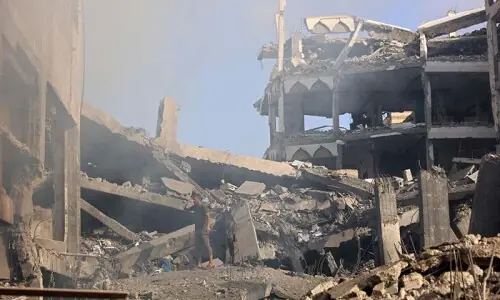
The zone produced an unprecedented earthquake in 2005 causing 87,000 deaths and destroyed about 32,335 building in various towns and cities including the collapse of Margalla Towers in Islamabad.
Even the argument of availability of land in the existing location of Zulfiqarabad cannot be sufficiently justified since a major portion of the government land is a ‘protected mangrove’ area while the remaining land is under some form of private or communal ownership. It can be reckoned that with the development of Zulfiqarabad city, about 50 per cent of the mangrove cover of Pakistan will be lost.
Loss of environmentally important mangroves coupled with large scale development on account of Zulfiqarabad city may further accentuate the metrological and geological hazards and cause extensive disaster, resulting in loss of lives and properties of future inhabitants.
That the site is exposed to metrological and geological hazards are consistent with various research studies suggesting that seismic disturbances originating in the Kachchh region of India could endanger Karachi (300 km Northwest of Kachchh) and thus are valid threats to development of Zulfiqarabad site — proximate to the epicenters of various past earthquakes.
Apart from the disaster vulnerability of Zulfiqarabad site, livelihoods of local communities are linked with the surrounding natural resources including mangroves, marine fishery and agricultural lands. Recent research has shown that upstream diversion of the Indus River has already resulted in loss of traditional paddy farmers and camel herders of the downstream who handled the situation by shifting their occupation to marine fishery.
Certainly, Zulfiqarabad will make it impossible for them to continue their fishing activities and thus put them in a similar situation when they were left after the construction of dams on the Indus River few decades ago. The ethical question that poses itself boldly here is why these coastal communities have to bear the cost of the burden of all kind of ‘development’ in the country.
The writer is Assistant Professor at the Department of Development Studies, Pakistan Institute of Development Economics, Islamabad. memon@pide.org.pk