10
10


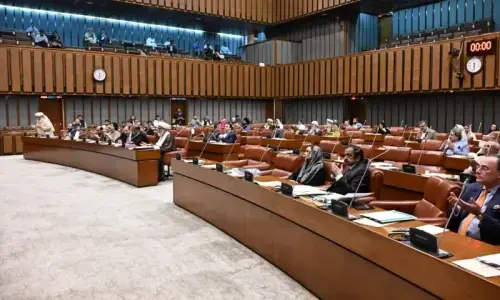
HYDERABAD: Promising ideas, projects and concepts were presented in the 2nd International Conference on Energy, Environment and Sustainable Development (EESD) from February 27 – February 29.
The Mehran University of Engineering and Technology (MUET) hosted the conference in association with the Higher Education Commission (HEC) and Pakistan Science Foundation (PSF).
The Chairman of the conference Dr. Aslam Uqaili highlighted the scope and overview of the conference in his welcome address.
Dr. Fayyaz Ali Memon (UK), Prof. BK Bala (Bangladesh) and Prof. Susan Buckingham (UK) presented keynote lectures. Vice Chancellor of MUET, Prof. Dr. A Q K Rajput also addressed the participants in opening ceremony.
Later, the Chairman of Pakistan Science Foundation (PSF) highlighted the responsibility of PSF in the promotion of science and technology in the country and in supporting conferences like EESD 2012.
Dr Khanji Harijan, the secretary of the conference thanked all the participants from India, Bangladesh, Nepal, China, UK, Iran and from other states.
In her keynote lecture, Dr. Buckingham presented some specifics related to the solid waste management issues in Pakistan by gender perspective. She mentioned that children, girls and women in Pakistan are more susceptible to environmental problems. Children and women are a large fraction of garbage collectors in Pakistan.
In one of her presentation slides, she quoted a Quranic Verse:
‘But waste not by excess, for Allah does not love the wasters’ (Qu’ran: Al An’am (6) 141) (EcoIslam, no 4, 008)
Professor Buckingham said that 12.5 per cent wheat and 15 per cent milk were wasted in Pakistan annually. She said that some 77 million Pakistanis were currently facing food insecurity and one-third of Pakistani children were stunted by malnutrition.
Later, she told Dawn.com that it was her third visit to Pakistan.
“Pakistani people are very hospitable and the students had a thirst of knowledge; always eager to learn,” she added.
Papers, projects and proceedings
National and International scholars and experts conducted some important presentations that focused on the resolutions of environment, energy and sustainable development related problems.
Fuel Cell Technology in Pakistan
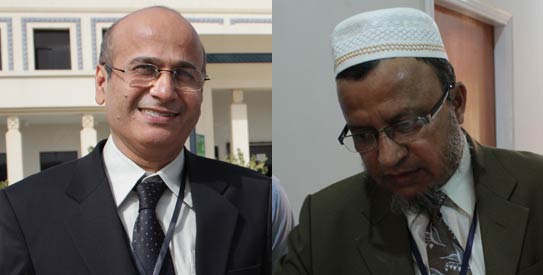
Professor Muzzaffar Mahmood from NED University talked about the promising technology of fuel cell development. He added that the cost of fuel cells is currently very high but that we should not give up the research for an economical production of the fuel cell.
Mahmood also talked about a fuel cell based eco-car developed by the university. Some 30 fuel cells were installed in the car, which participated in the EcoMarathon held in Indonesia where it traveled two and a half laps out of three. All the components of the car were indigenously built by students from NED University.
Women, videos and sustainable development
Dr. Abdul Momen Miah from the Bangladesh Agriculture University shared a practical way of safeguarding the environment through women and participatory videos.
Through learning videos, Miah and his team communicated with the women of rural Bangladesh and the recipes of botanical pesticides, the cultivation of organic brinjal and leafy vegetables and the production of vermi-compost.
The videos imprinted a cinematic pattern on the women minds and they were quickly able to replicate the ideas of sustainable agricultural practices.
A simple process needed to produce vermi-compost – a natural fertilizer – which essentially needs cow dung and species of worm. This mixture of cow dung and worms contains nutrients and beneficial microbes.
The compost triggers additional vegetable growth and the production of fertilizer adds economic benefits for the rural women. Many people also adopted worm farming for the compost as the quantity of worms triples within 45 days. Now more women are learning the eco-friendly and economically beneficial practices via videos.
Four in one biogas plant
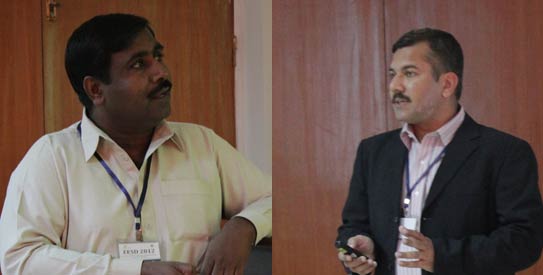
Dr. Anjum Khalid of NED University proposed a biogas plant installation at the Bhains Colony, Karachi. The colony has the largest dairy farm in the city and produces 5,000 tones of manure each day.
Anjum presented a biogas digester with multiple applications as it serves to produce electricity, biogas, bio fertilizer and also serve as cold storage for dairy products. At least 10 per cent milk goes to waste at Bhains Colony due to a lack of cold storage facilities. The cost of this 12 megawatt plant was estimated at US $ 72 million.
Anjum told Dawn.com, that NZAID – New Zealand’s aid agency first proposed a similar plant for Bhains colony and had even initiated developing a pilot plant there in 2007 but after a dispute with KESC, the company left the country with an unfinished pilot project.
Speaking to Dawn.com, Anjum said the plan is economically viable as the cost will be covered in 9.8 years and will be beneficial for at least 50,000 persons because they are suffering from harmful animal wastes in the colony.
Water quality in Rahim Yar Khan
Muhammad Tariq Mahar from the Center for Environmental Sciences, Sindh University shared his findings of ground water quality near evaporation ponds of distilleries.
Some 35 samples of water (10 from spent wash, two from drainage water and 30 from ground water) were studied to assess the effect of evaporating ponds, of ethanol distillery spent wash on ground water with reference to heavy metal contamination.
The ground water around the evaporation ponds is used for drinking and irrigation purposes and 33 per cent of the ground water samples were found extremely polluted with heavy metals.
Fuel from Molasses
Zulfiqar Ali Bhatti from MUET talked about the importance of molasses – generally a viscous byproduct from sugarcane – for the preparation of fuel alcohol.
Bhatti said that fine molasses can be obtained by better harvesting, good quality of water and soil and better practices. Pakistan is currently producing ethanol from the sugar cane industry.
The study concluded that molasses from Punjab and Khyber Pakhtunkhwa have better quality as compared to the molasses samples from Balochistan and Sindh. He also revealed that better quality of molasses could be produced by adopting good practices.
Insecticides and sustainable agriculture
The use of notorious insecticides Methyl Parathion and Ethyl Parathion have been prohibited in Pakistan but are still being used illegally.
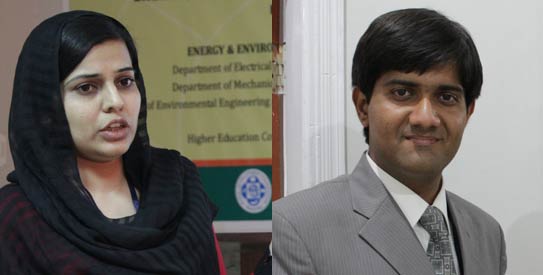
Noshaba Tabassum from Fatima Jinnah University, Rawalpindi not only assessed the residual concentration of the toxins but also suggested absorption dynamics of the insecticides.
Tabassum and her colleague found that agricultural soil as compared to other types of soil is better absorbent for both insecticides. The researchers tried the insecticides on various types of soils while using standard procedures and concluded that absorption is an efficient and convenient method for the removal of these insecticides.
Micro-hydro power in Pakistan
Syed Danish Qamar, a young engineer of WAPDA proposed the micro power turbines on rivers, barrages and lakes across Pakistan. He said that if these micro-hydro projects were installed in the country, there would be an enormous potential of an additional 1000s of megawatts of electricity.
He also suggested that the beautiful lakes of the northern areas are potentially a great source for power generation from flowing water. In his presentation, Qamar showed detailed diagrams about the location, designing and materials of the micro turbines.
Theoretically, the carefully designed micro turbines operate with respect to the flow of water. A Gates and Programmable Logic Controller (PLC) could be used to control the flow of water with respect to electricity load.
Nearly a hundred presentations and papers were discussed in the first two days of the conference. All the papers were presented under the themes of Energy, Environment and Sustainable Development, Energy Conservation and Development, Renewable and Energy systems, Environmental Engineering and Management, Chemical and Biological Treatment, Energy and Environmental Sustainability and Waste Treatment and Management.