0
0

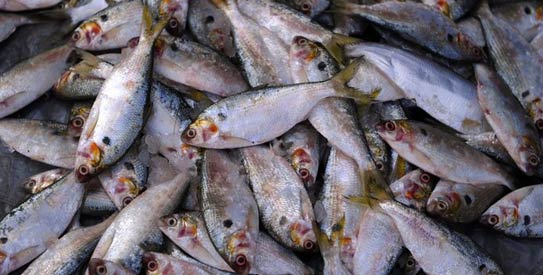
‘OVER fishing’ by foreign-owned deep sea vessels and the unauthorised use of fine mesh fishing nets are the major hurdles in the path of sustainable fisheries development. No doubt deep sea fishing trawlers with large nets catch unwanted species and throw the dead back into the ocean, polluting the sea and destroying fish resources.
But it is not only these deep sea trawlers that are damaging fish resources. It is also because of the new fishing methods that have replaced the indigenous practices. Traditionally, fishing was carried out with cotton woven nets that have now been replaced by nylon nets of small mesh size like Gillnet, Bulla, Gujja, and Katra etc.
Two types of these gears, i.e. encircling net ‘katra’ and estuarine set bag net ‘bulla’ are considered extremely harmful to juvenile populations of commercially important species which abound in creek systems. A trawl shrimp net ‘Gujja’ is used in creek areas.
By using these illegal nets small pelagic species such as mullet, silver wittings and other small sized fishes, especially juveniles of large commercially important estuarine fish are trapped. The other net (gillnet), used by a majority of local fishermen to catch fish, is also a destructive tool and has been termed a “wall of death” by experts as it can injure and kill threatened and endangered marine species, for instance, dolphins, turtles and whales, though juvenile fish could escape it.
A number of local fishermen operating small boats apply these harmful and dangerous nets, depleting fish resources. Besides, the influential persons or sea lords who had forcefully occupied several channels or creeks and do not allow the local fishermen to harvest in their marked territories. They hire their own non-professional fishermen on cheap labour rates who employ harmful methods to earn more and more. They use illegal/banned nets to exploit fish resources for their individual benefit and in doing so they destroy the stock of fish in an unsustainable manner.
About 60 per cent of non-exported marine fishery catch, equivalent to about 170,000 tons of fish, is used to produce about 37,000 tons of fishmeal, most of which is used locally in poultry feed. Its major content is juvenile fish and those specimens that go rot on fishing vessels. Around 70 to 100 trucks (depending upon the season), are daily loaded with trash catch at the harbour. The stock is then shifted to trucks destined to Ibrahim Hyderi where a number of factories manufactured fish feed. Even the fish meal prepared is poor quality because the fishermen do not keep the trash stock in ice that greatly reduces its protein content.
Along this, June and July is considered as breeding period of fish but by allowing fishing in these two months, a sizeable quantity of new breed of fish is netted. Fishermen net juvenile fish in larger quantities. For example, a boat comes with 50,000 kg of juvenile fish catch in which only 1,000-2,000 kg are medium and large fish meant for export while small fish of few centimetres are used for making chicken feed. These fishermen are destroying their future with their own hands.
In June 2004, the Sindh Assembly passed a law to ban the use of these harmful nets. The Sindh Fisheries Department authorised Maritime Security Agency to stop the boats using prohibited nets but not a single offender has been prosecuted so far.
Under the Sindh Fisheries Ordinance of 1980, the use of these nets are completely banned in Sindh’s territorial waters and the violator is liable for six months imprisonment, whereas the nets are forfeited. Strict implementation is required to curb such rampant malpractice.
However, fishing and the use of detractive nets and gears and traditional methods are essentially symptoms of a larger problem. These relate to poverty, lack of education, alternative livelihood and sources of income for poor fishermen.
Policies should not focus merely on the symptoms; instead they should address the source of the problem. Unfortunately, workers in the fishing sector are marginalised, poorly paid and have no access to social protection offered by the state. Employer – worker relationship remains informal.
Overall, fishermen are the most vulnerable workers as neither they have protection during their working lives nor are they socially and financially secure after retirement; for getting some more profit they used these illegal means.