



 0
0

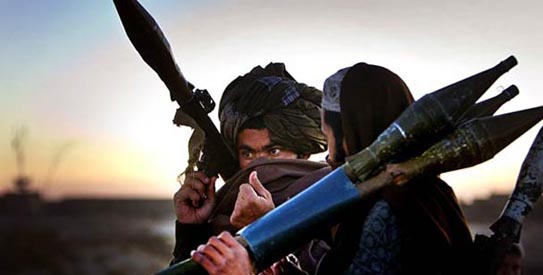
LONDON: Pakistan's security service provides weapons and training to Taliban insurgents fighting US and British troops in Afghanistan, despite official denials, Taliban commanders say, in allegations that could worsen tensions between Pakistan and the United States.
A number of middle-ranking Taliban commanders revealed the extent of Pakistani support in interviews for a BBC Two documentary series, “Secret Pakistan”, the first part of which was being broadcast on Wednesday.
A former head of Afghan intelligence also told the programme that Afghanistan gave Pakistan's former president, Gen. Pervez Musharraf, information in 2006 that Osama bin Laden was hiding in northern Pakistan close to where the former al Qaeda leader was eventually killed by US special forces in May.
Admiral Mike Mullen, then the top US military officer, accused Pakistani intelligence last month of backing violence against US targets including the US Embassy in Kabul.
He said the Haqqani network, an Afghan militant group blamed for the Sept. 13 embassy attack, was a “veritable arm” of Pakistan's Inter-Services Intelligence agency (ISI). Pakistan denies the US allegations.
One Taliban commander, Mullah Qaseem, told the BBC the important things for a fighter were supplies and a hiding place.
“Pakistan plays a significant role. First they support us by providing a place to hide which is really important. Secondly they provide us with weapons,” he said, according to excerpts provided by the BBC.
Other Taliban commanders described how they and their fighters were, and are, trained in a network of camps on Pakistani soil.
According to a commander using the name Mullah Azizullah, the experts running the training are either members of the ISI or have close links to it.
“They are all the ISI's men. They are the ones who run the training. First they train us about bombs; then they give us practical guidance,” he said.
Another Taliban fighter, known as Commander Najib, said al Qaeda trainers also operated in the camps, talent spotting possible suicide bombers.
“I was in the camp for a month ... They were giving us practical training in whatever weapons we specialised in ... Suicide bombers were taken to a different section and were kept apart from us. Those who were taught to be suicide bombers were there,” he said.
A former head of Afghan intelligence told the BBC Afghan officials gave Musharraf information in 2006 suggesting bin Laden was hiding in Mansehra, a town just 12 miles (20 km) from Abbottabad, where bin Laden was killed by US forces in May, but that the information was not acted upon.
Amrullah Saleh, head of Afghan intelligence from 2004 to 2010, said Syed Akbar, a Pakistani believed to be smuggling guns to the Taliban, told Afghan intelligence he had escorted bin Laden from one location to another.
“The information we had was suggesting Mansehra was the town where bin Laden was hiding ... It happens after so many years that bin Laden was about 12 miles from that location,” he said.
Saleh and Afghan President Hamid Karzai took the evidence to Musharraf who, according to Saleh, reacted angrily.
“He (Musharraf) banged the table and looked at President Karzai and said, 'Am I president of a banana republic? If not, then how can you tell me bin Laden is hiding in a settled area of Pakistan'. I said 'Well, this is the information so you can go and check it.',” said Saleh, who quit last year after disagreeing with Karzai over plans to talk to the Taliban.
The BBC said Pakistan strongly denied the allegations made in the programme.
Gen. Athar Abbas, director general of the Inter Services public relations and official spokesman for the Pakistan military, told the BBC: “To say that these militant groups were being supported by the state with the organised camps in these areas ... I think nothing could be further from the truth.”



























