0
0

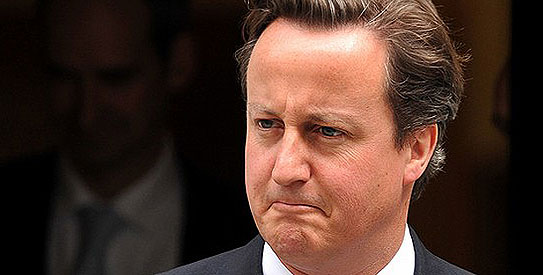
OTTAWA: British Prime Minister David Cameron visited Ottawa on Thursday and called for a united front and swift action with Canada to tackle the debt crisis which is sapping confidence in the global economy.
Cameron's was making a brief stop en route home from the United Nations in New York, and spoke in a joint address to parliament that was heavily focused on the problems of debt in the euro zone that are plaguing growth worldwide.
Addressing lawmakers, Cameron said he and Canadian Prime Minister Stephen Harper “share the same analysis of what is wrong and what needs to be put right.” This is not a traditional, cyclical recession, it's a debt crisis,” said the British premier whose government is fighting anemic economic growth and heavy borrowing, while across the English channel the eurozone is mired in trouble.
Cameron prescribed a three-pronged solution: making it easier to do business, boosting trade and most importantly “getting to grips with debt to restore credibility and confidence.”
When the fundamental problem is the level of debt and the fear of those levels then the usual economic prescriptions cannot be applied,” Cameron said.
“It is not simply a question of using conventional fiscal and monetary levers to stimulate growth until confidence and normal economic activity returns.
“The economic situation is much more dangerous and the solution for most countries can not be simply to borrow more,” he added.
Cameron's visit came after the leaders of six G20 industrialized and developing nations, including Canada and Britain, in an open letter called on eurozone governments to urgently tackle the debt crisis, warning of contagion risks to the world economy.
In a joint declaration, the British prime minister and his Canadian counterpart, agreed to work together “through wider cooperation in the G20” to push their joint agenda, and railing against the creation of new international financial watchdogs, which France has proposed.
Earlier while introducing Cameron to lawmakers, Harper warned of the return to a global recession unless “key nations” slashed their deficits and “dangerous levels of national indebtedness,” resisted protectionism and allowed “more flexible exchange rates.”
Neither of us will be accused of exaggeration, if we acknowledge that the most immediate test confronting us all is to avoid the devastating consequences of a return to global recession,” Harper said.
Britain is Canada's fourth largest trading partner with bilateral trade topping $27 billion last year, up 21 percent from 2009.
Cameron's visit follows Prince William and his wife Catherine's first official overseas trip to Canada, which was feted by the public in late June and early July.
Harper praised Cameron for fiscal discipline, despite official figures Wednesday that showed British public sector net borrowing at #15.9 billion (18.2 billion euros, dollar 25 billion), the highest level for August since records began 18 years ago, and a significant increase on the #14 billion of August 2010.
Before their speeches, Harper and Cameron participated in a wreath-laying ceremony at Canada's National War Memorial and also met privately to discuss Libya.
In recent years, Canada and Britain also intensified their military, law enforcement and intelligence cooperation, including in Afghanistan and through their engagement in the NATO-led operation in Libya.
On Thursday, the two nations agreed to “deepen cooperation on procurement and capabilities,” in their respective militaries, and strengthen counter-terrorism collaborations, in particular in the Horn of Africa, the Sahel and South Asia.
Tony Blair, in 2001, was the last British prime minister to address a joint session of parliament in Ottawa.
Cameron had quipped upon his arrival, “One of the things I am finding about this job is that whichever countries I visit, members of the Royal family have got there first,” referring to the Duke and Duchess of Cambridge's visit.