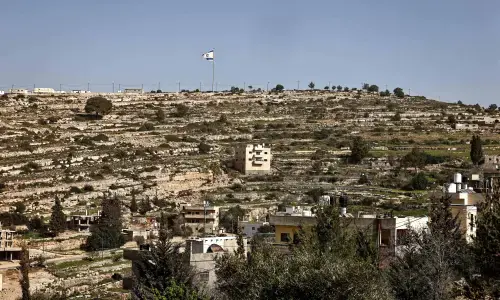
THE confirmation by the Jammu Kashmir State Human Rights Commission that thousands of bullet-riddled bodies have been dumped in unmarked graves — many of them mass graves — in Indian-administered Kashmir has exposed the gross human rights abuses perpetrated by the Indian security forces over the years in a bid to suppress a popular uprising. Particularly revealing is the finding that of the more than 2,000 bodies found, at least 574 were local residents — a grim refutation of the boilerplate Indian claim that all men buried in such graves are 'militants'. Clearly, contrary to the long-held Indian allegation that the insurgency in Kashmir is wholly sponsored by Pakistan and primarily driven by cross-LoC incursions, the troubles in Jammu and Kashmir have been very much local in nature. A painstaking effort by the Indian government to pretend as if the protests in Indian-held Kashmir in recent years have gradually been headed off by peaceful means has also come unstuck. Local observers have repeatedly suggested that the oppressive security blanket and an expansive network of informants has meant that protests are quickly nipped in the bud through anything but peaceful means.
Troubling as the findings of the human rights commission are, it also presents an opportunity for India to conclusively break from the tactics of the past and acknowledge that a new paradigm is needed. The solution to the Kashmir dispute is by no means simple, but it is also not impossible. With a new round of dialogue opened with Pakistan, an Indian premier who appears genuinely interested in easing the plight of the Kashmiris and a realisation on all sides — Indian, Pakistani and Kashmiri — that violence will not solve the problem, there is an opportunity to start anew in the region. First, though, a frank acknowledgement of the past and the failed tactics of both states will need to be made. On Pakistan's side, that would mean acknowledging that 'keeping alive' the Kashmir dispute on the international stage has come at great cost to the security and stability of Pakistan itself. On India's side, a realisation that Kashmir is a first and foremost a human tragedy is the minimum that is required.