0
0

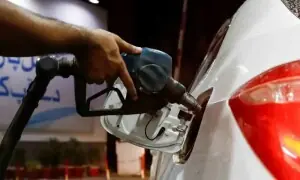
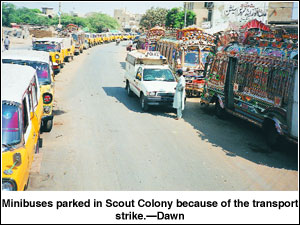 KARACHI, Nov 6: People in the city on Wednesday faced immense trouble as public transport — buses, minibuses and coaches — remained off the road here on Wednesday in response to the strike call given by transport operators in protest against the intermittent raise in petroleum prices by the Oil Companies’ Advisory Committee (OCAC).
The strike was sponsored by two major organizations of transport operators who effectively enforced it through their allied bodies. They maintained that the fortnightly upward change in petroleum prices had made it almost impossible for them to continue the business.
The inter-cities bus service operators also joined in the strike leaving quite a large number of commuters stranded. The worst affected appeared those shuttling between Karachi and upcountry destinations frequently.
There was no bus, minibus or coach seen moving with passengers in any part of Karachi since dawn on Wednesday. However, a handful of them appeared on roads in different localities in the evening.
The call for the strike was supported by Karachi Transport Ittehad, National Transport Ittehad, All Pakistan Oil Tanker- owners Association, Karachi Road Transport Workers Federation and Anjuman-i-Ittehad Bus Malikan Karachi.
The common concern of the striking organization is the ‘authority’ accorded to the OCAC to raise or reduce the petroleum prices arbitrarily. While taking the extreme action of stopping their business for a day, they jointly put forward their demand that the OCAC be disbanded.
“We want to register our protest with President Pervez Musharraf and the federal government. If the government does not disband the OCAC and bring down the diesel price at what it was in Oct 15-31 period, we will observe another strike after Ramazan,” Irshad Bokhari, chief of the Karachi Transport Ittehad, declared on Wednesday.
Saleem Khan Bangash, chief of the National Transport Ittehad (NTI), defended the strike saying that the steep rise in diesel price had no justification as the commodity’s price in the international market showed a constant downward trend. He also highlighted other problems facing the transporters and especially mentioned ‘excesses’ on them by the National Highway Authorities, Customs Intelligence, traffic police and the motorway police. He severely criticized the reintroduction of the motor vehicle tax on vehicles as old as 10 years. The NTI enjoys support of the All Pakistan Oil Tanker-owners Association and Supreme Council of All Pakistan Transporters.
Amid absence of buses, minibuses and coaches, taxis and rickshaws did a roaring business in thickly populated areas. Many commuters complained that rickshaw and taxi drivers had charged exorbitantly high fare taking advantage of the strike.
Saleemullah Khan, a resident of Jamshed Quarters said: “I used to take my mother to a private hospital for a weakly dialysis and pay Rs80-100 as normal fare. However, I had to pay Rs150 for the same distance today.”
Metrobus kept operating throughout the day but with maintaining a restricted route for the day. It terminated its loop on Sharea-i-Faisal.
Large crowds were witnessed at most of the bus stops during the office-going hours with people, including women, mistakenly hoping for the transport-means of their choice. They were seen returning to their homes, with frustration clearly visible from their gestures, a couple of hours later.
“We have been waiting for an hour for a bus or minibus but in vain,” a group of dejected commuters standing at Gulberg bus stop, moaned while returning home.
Most of the workers who managed to reach their work place were those having their own vehicles or company-provided transport means. Quite a good number of people told this reporter that they use their personal vehicles only in such emergencies. These factors contributed to the unusually heavy traffic on some often busy roads of the city.
There was a heavy private traffic during the morning and evening hours causing jams at various places. The main arteries in the city, like Shahrea-i-Faisal, M. A. Jinnah Road, I. I. Chundrigar Road, University Road, etc. were the worst affected.
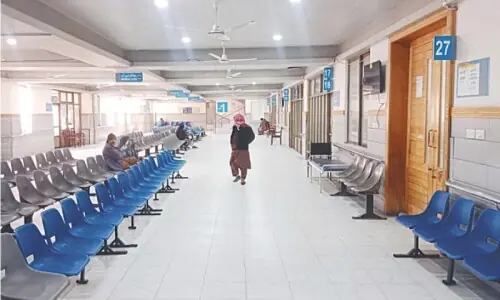
The strike severely affected the routine work at almost all the public and private offices as attendance there remained thin.
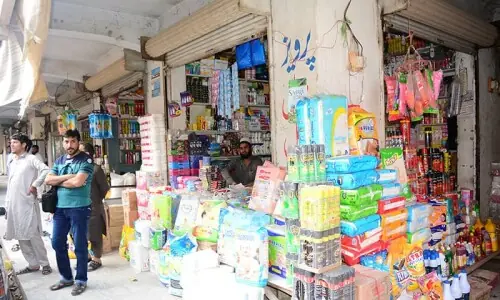
Although shops, markets and major commercial centres in the city were open, most of them were evidently without a buyer.