0
0

ISLAMABAD: The government is considering imposing a special surcharge on electricity bills and passing on to the consumers the impact of interest and late payment charges of banks and private power producers to generate additional funds for paying off a chronic circular debt that is contributing to loadshedding.
An official told Dawn on Wednesday that an additional surcharge on electricity bills across the country was one of the options a special committee constituted by Prime Minister Yousuf Raza Gilani deliberated upon to overcome circular debt and liquidity crunch.
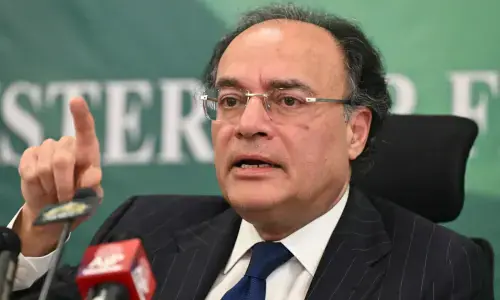
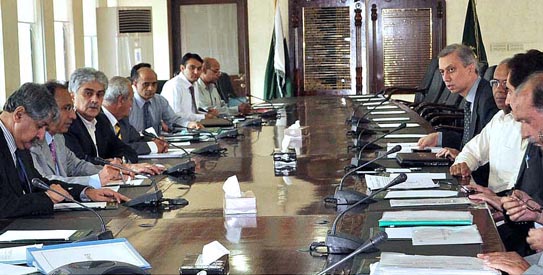
The committee led by Finance Minister Dr Abdul Hafeez Shaikh continued its deliberations for the second day but failed to reach a final decision and sought more input from other stakeholders on a host of options.
The ministers for water and power and petroleum and natural resources, deputy chairman of the Planning Commission, senior officers of the power ministry, Planning Commission, National Electric Power Regulatory Authority (Nepra), Federal Board of Revenue and the finance ministry’s Economic Reforms Unit attended the meeting.
According to sources, the committee was briefed on the issue of surcharge on delayed payments by Wapda companies to independent power producers (IPPs) that had been disallowed by Nepra and was to be passed on to the end-consumers.
It was noted that because of non-payments by Wapda companies the IPPs had to borrow from banks to meet their running expenditures and fuel costs.
The IPPs bill these additional interest costs to the power companies on account of late payments.
The Central Power Purchase Agency (CPPA) has been demanding on behalf of generation companies that these expenses should be recovered from consumers through the electricity tariff. They argue that they are bound under power purchase agreements signed by the government and the IPPs to pay late payment surcharge.
However, Nepra has held more than once that such charges cannot be recovered from all consumers for no fault on their part. It held that late payment and interest costs were due to inefficiency of the power companies or the government and the consumers could not be penalised for the fault of someone else. It said the additional costs should be borne by the power companies.
The government now wants to change Nepra laws through its policy jurisdiction to pass on the interest costs and late payment surcharges to the consumers on a monthly basis along with the fuel price adjustment.
The committee decided to move quickly on amending laws so that tariffs determined by Nepra could be immediately implemented through monthly hearings on the pattern of fuel cost adjustment, without waiting for the government to notify them, which it felt was creating a gap between determined tariff and notified tariff and resulting in circular debt.
The official disclosed that one of the options to end circular debt was increasing electricity tariff by a small percentage every month to generate additional revenue.
He said another option was more gas supplies to the Karachi Electric Supply Company to contain its rising generation cost but it was yet to be ascertained if additional gas could be spared.
The KESC is sitting on payables of over Rs55 billion to the Pakistan Electric Power Company on account of electricity it took from Wapda’s network, contributing a major factor to the liquidity crunch being faced by the power sector and to rising circular debt for the entire energy sector, including gas and oil companies.
Before reaching a final decision, the committee will call all stakeholders, including IPPs, boards of directors and managements of distribution and generation companies, including the KESC, and some private sector representatives to hear their problems, viewpoints and possible solutions.
The committee is of the view that the boards and managements of the companies should be bound to achieve specific targets to be set after the consultation.
An official statement said the committee deliberated in detail on the current state of the power sector, especially the financial aspect, including circular debt. It discussed various options to mitigate the financial crunch in the sector and decided to further analyse the options.
The committee decided that there was a need to resolve the matters regarding tariff determination and notification and resolved to improve the efficiency of the power sector through better and responsive management and introduction of corporate governance.