0
0

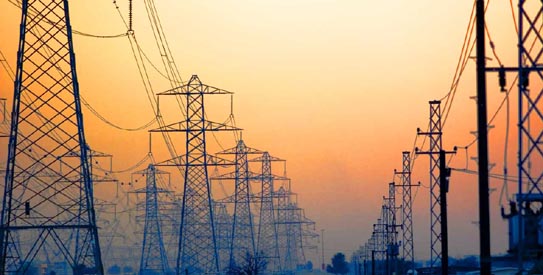
KARACHI: The city was spared a major power crisis on Thursday following the intervention of Petroleum and Natural Affairs Minister Dr Asim Hussain who directed the Sui Southern Gas Company to supply at least 180MMCFD (million cubic feet per day) to the Karachi Electric Supply Company.
According to SSGC Deputy Managing Director Zohair Siddiqui, efforts were being made to gradually increase the supply, earlier reduced to 120MMCFD.
He said financial issues with the KESC would be discussed at a meeting called by Dr Hussain on Friday.
During the day, the KESC had warned the people of the city of even more prolonged loadshedding after the SSGC announced it had curtailed the supply to the KESC by 60MMCFD, saying outstanding dues against the power company had risen to Rs28 billion.
While ordinary power consumers are being penalized over the unsettled circular debt issue and the KESC’s reluctance to up its own generation capacity amid government apathy, industrialists threatened to close down their businesses if the power utility increased the duration of loadshedding.
A KESC spokesperson had asserted that the power utility had no choice but to stop uninterrupted supply to strategic installations in Karachi, including the Karachi Water and Sewerage Board (KWSB) and police.
He had said that because of the gas supply reduction, gas turbines at the power plants had started tripping, leading not only to the damage of equipment but also to a cut in the power generation capability.
Amid speculation that a change of the guard at the KESC was being contemplated, load shedding became more intense and extended up to 14 hours in several parts of the city on Thursday.
Speaking at a hurriedly-called press conference, an SSGC official said that the KESC had paid only 50 per cent of its current bill last month and this month it had not made any further payments to the gas utility although the due date was July 20.
He said the KESC had paid its full current bill only till November 2010.
As a result, he had said, the SSGC was facing a severe financial crunch and its management was unable to pay salaries to its employees as well as to settle its obligations with E&P companies.
The SSGC official said the worsening position of receivables threatened SSGC survival unless the KESC started paying its dues on a regular basis.
The KESC spokesperson claimed that curtailment of gas would result in further shortfall of 250MW, adding that in Karachi public sector entities had to pay Rs22 billion to the KESC.
"If the government is unable to honour its sovereign guarantee then we will also not ensure uninterrupted power supply to strategic installations and treat them as ordinary consumers," the spokesperson said.
He asserted that the KESC missed Rs4 billion payments to the SSGC last year and during the same period, the KWSB missed Rs4 billion payments to the KESC.
"This is exactly what we are telling the government…pay this to the SSGC as the government is liable to pay if government institutions fail to make payments within 90 days," the KESC spokesperson said.
He had further claimed that from July 2010 to June 2011, the gas purchase was for Rs25.6 billion against which Rs21.4 billion had been paid.
He said the KWSB owed the power utility Rs14.3 billion – last 12 months’ billing to the KWSB was Rs4.3 billion and it only paid Rs0.25 billion.
Referring to the gas quota, he said the ECC had decided to increase gas supply to the KESC from 160MMCFD to 276MMCFD. The KESC official termed the SSGC move of gas reduction on the grounds of non-payment of its dues by the KESC as unthinkable. He said the power utility was experiencing a similar situation at the end of the PSO, adding that the KWSB, CDGK, police, etc. owed it over Rs22 billion and the amount had been long overdue.
He had said the KESC had requested the ministry of finance to release this overdue payment directly to the SSGC and the PSO in order to resolve the issue. However, he said, with gas going down to 120MMCFD, limited supply of furnace oil by the PSO and unavailability of KANNUP (80MW), the KESC had no choice but to resort toload shedding in government institutions, the spokesperson said.
The SSGC had said that ECC’s allocations were subject to signing of a Gas Supply Agreement which the power utility was evading.