0
0

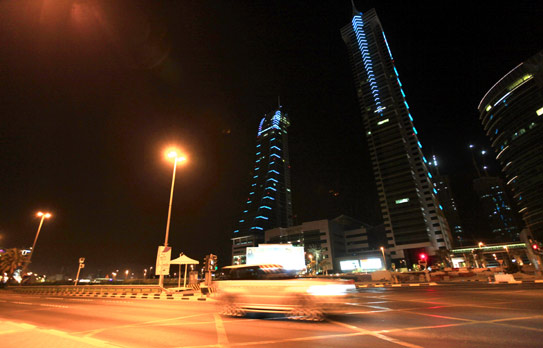
MANAMA: Bahrain will lift a state of emergency next week that was imposed when the government suppressed a democracy protest movement in March with the help of Saudi and other Gulf Arab forces.
After two months of negative publicity around the world over its crackdown and a collapse of business and leisure tourism, Bahrain hopes for a return to normalcy on June 1, following the end of night curfew in Manama this week.
Martial law was imposed in mid-March when the authorities broke up a sit-in of thousands at a traffic roundabout in Manama. Ending the emergency situation two weeks early, the government hopes, will send the right signals to the outside world.
But democracy activists say that while the ruling Al-Khalifa family and the Sunni Muslim elite are keen for business to return, they have no intention of easing up on behind-the-scenes repression of the majority Shia population.
They would be helped in that by a purge of people who took part in the protests and other Shi'ites in many companies over the past two months. Clashes between police and protesters in Shia villages would be tolerable since the country has often experienced such street unrest in the past and a media crackdown makes it less likely to get reported.
Some areas saw protests this week after a military court upheld the death sentence against two people over the killing of two policemen.
A boon for the government would be reinstating Bahrain in this year's Formula One motor racing calendar, after it was forced to postpone its grand prix scheduled for March. The championship is due to take a decision on the issue on June 3.
“Removing the curfew and ending the law earlier than the defined period shows things are moving better than expected and life is returning to normal,” said Jamal Fakhro, deputy speaker of parliament. “Everybody is excited.”
US President Barack Obama criticised Bahrain - an ally that hosts the US Fifth Fleet and seen as a bulwark against Iran - during a speech last week but pressure has been slight.
US and British warnings against travel to the country remain.
“The only way forward is for the government and opposition to engage in a dialogue and you can't have a real dialogue when parts of the peaceful opposition are in jail,” Obama said, outlining the US approach to uprisings sweeping the region.
He criticised the crackdown, saying mass arrests and brute force were at odds with the universal rights of Bahrainis and would not make legitimate calls for reform disappear.
But in a sop to the government, he said Bahrain had a “legitimate interest” in the rule of law and that Washington remained committed to its security. He said Iran, which complained to the United Nations over the crackdown, had tried to take advantage of the turmoil.
British Prime Minister David Cameron drew criticism last week for appearing in a photocall outside Downing Street with visiting Crown Prince Salman bin Hamad al-Khalifa. While Cameron has been a vocal critic of Libyan leader Muammar Qadhafi, he also visited Bahrain with a delegation of arms dealers earlier this year, leading to accusations of hypocrisy.