



 0
0

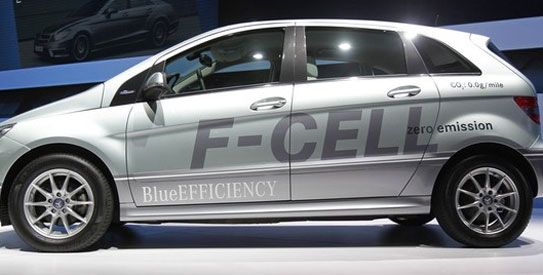
LONDON: A new technology that allows hydrogen to be stored in a cheap and practical way, could make its widespread use as a carbon-free alternative to petrol a reality, according to its developers.
The technology is based on a new way of producing nano-fibres from hydrides, materials that soak up hydrogen like a sponge, and then encapsulating them in tiny plastic beads so small they behave like a liquid.
The process is being developed by Cella Energy, a spin-off from Britain’s Rutherford Appleton Laboratory, who say that the technique allows hydrogen to be released at a much faster rate and at lower temperatures than before.
“What we’ve been doing is taking these materials and encasing them in plastic and making them into a very fine powder and that improves their properties,” Cella Energy Chief Scientific Officer Stephen Bennington said. “It also means you can pump it like a fluid and it’s safe. It is not gong to easily burst into flames,” he said.
Hydrogen produces only water when its burned and is considered an ideal solution to cutting carbon emissions from petrol or diesel vehicles, which are estimated to cause 25 percent of all carbon release.
But until now, attempts to store hydrogen have not been consumer-friendly so this has not been a viable option. Cella Energy Ltd say their technology would allow people to use the carbon-free fuel with their existing car after a few modifications.
“You would pump it into your petrol tank of your car -- that would go off, be heated, drive the hydrogen off, which would go and run your vehicle and then the waste little beads that we have created you store in the car. And when you go and refuel your car you have two nozzles. One which puts in the new beads and one which takes out the old beads which goes off to be recycled and the hydrogen added to it again,” Bennington said.
The development has been to turn hydrides into fibres or beads, 30 times smaller than a human hair, through a process of electro-spinning. This produces a white tissue-like material that can be controlled to capture and release hydrogen.
The encapsulation process protects the hydrides from oxygen and water, prolonging their life and making it possible to handle them safely in air and because it behaves like a liquid, current infrastructure will need minimal modification.
“You can use tankers to carry the material around,” said Bennington. “You can take it to forecourts and then you can pump it into the vehicle and give the customer the same kind of experience they have now.”
All part of the reason Cella Energy believe their process could herald a new era of carbon-free motoring.
“The experience that most people have now is using regular liquid fuels where it takes three minutes to fill your vehicle and then you can travel 300 miles,” said Stephen Voller, Cella Energy’s CEO. “Now you can have exactly the same experience with hydrogen but you can’t have that experience with an electric car.”
The company said hydrogen could be an economically viable alternative to fossil fuels if the gas is produced with renewable energy sources like wind or solar. It has three times more energy than petrol per unit of weight and could power cars, planes and other vehicles that currently use hydrocarbons.
It said it is also attracting interest from large established companies in the energy and transportation sectors.


























