0
0

NEW DELHI: Most Indians are missing out on the “digital revolution” due to dismal Internet access for the poor with the nation lagging far behind its emerging market peers, a study found on Wednesday.
The study said India was at “extreme risk” from a lack of “digital inclusion” as a vast proportion of its 1.2 billion population had no access to the Internet.
“Digital inclusion has the potential to bring education to people in countries where educational infrastructure is limited and the development of cadres of teachers is still constrained,” said Alyson Warhurst, head of British risk analysis firm MapleCroft, which carried out the survey.
Digital inclusion is also crucial in helping people take part in economic activities and improves democratic governance, Warhurst added.
A Digital Inclusion Index compiled by MapleCroft found that of 186 countries India was in the lowest category, well behind Russia, China and Brazil in the BRIC grouping of emerging economies.
India is one of the world’s fastest growing economies and is expected to clock nine per cent expansion in the coming financial year starting April 1.
However, on a scale of one to 186 with one the worst, India stood at 39, in the same “extreme risk” category as Niger, ranked number one, Chad and Ethiopia.
Russia stood at 134, Brazil at 110 and China at 103, all of which are classified as being at “medium risk”.
The Netherlands came top of the index at 186, with Sweden at 183 and Britain at 182.
The United States was ranked 169, still categorised as low-risk, but the study noted Hispanic and African American families suffered from “significant digital exclusion.”
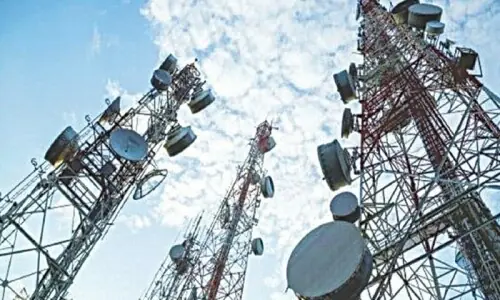
The study used 10 indicators, including mobile and broadband subscriptions, to identify countries whose populations were being held back by a lack of “digital inclusion.”
India is the world’s fastest-growing mobile market with some 771 million mobile subscribers and monthly additions averaging around 19 million.
But the survey found it was just the wealthier segment of India’s population, mainly in urban areas, who use modern communications technology.—AFP