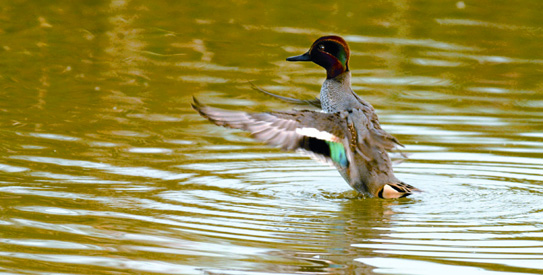
ISLAMABAD, Feb 6: The number of migratory birds visiting the capital's Rawal Lake every winter is dwindling because of habitat destruction and indiscriminate hunting.
“They start arriving in October and November and stay till March. Habitat destruction, water quality, less food, forest decline and indiscriminate hunting are contributing to the decreasing trend,” said Jamshed Iqbal Chaudhry, a wetlands biologist of Pakistan Wetlands Programme.The Indus Flyway is one of the seven routes around the globe birds use to escape severe weather conditions, and feed and breed in some cases. Migratory birds escape harsh cold in Russia and China and travel more than 4,500 kilometres to enter Pakistan from the north and following the mighty Indus River all the way down to the south, stopping at more than 300 water bodies and wetlands dotting the land. Cranes, ducks-mallards, common pochards, common teal, northern pintail, northern shoveler, cormorant, snipes, stints, plovers, gulls and score of other birds fly to Pakistan every winter.
“And it's not just the Rawal Lake where excessive fishing and construction disturbances have degenerated natural environment. Lesser birds have been coming into Pakistan's most frequented wetlands, particularly in Punjab,” he lamented. “The white-headed duck that visited Khabekki Lake in the internationally-recognised Ochali wetlands near the Salt Range was last spotted in 2006.”
Chaudhry recorded a few greater flamingos and white eyed pochards but sociable plovers had been missing in this season. A pleasant surprise for the wetlands team last winter was the arrival of great white-fronted geese in the Rawal Lake. They counted 100 great white-fronted geese. “The geese were last recorded in 1968,” said Chaudhry, hoping to picture them this winter before the water birds head back to native habitat. “We have not spotted them yet, but winter is still not over,” he said.
But hunting around the Rawal Lake is a bigger concern for him. “There have been cases of illegal hunting and necessary action was taken in collaboration with the local authorities,” he said. According to an official in the Capital Development Authority's Environment Wing, hunting was strictly prohibited. “But there are cases every winter when the migratory birds around the lake are hunted, mostly before the sunrise.”
An official of the Ministry of Environment also conceded that hunting parties did catch a bird or two, although it was not allowed. According to the official, the migratory birds were also threatened by hunters in other parts of the country. “Our ministry is investigating an incident near Sialkot last December when thousands of great bar headed geese were indiscriminately hunted.”