0
0

THE confession of a tribal MNA regarding the sale of votes by National Assembly members representing the tribal areas to elect senators has once more brought this troubled region into focus.
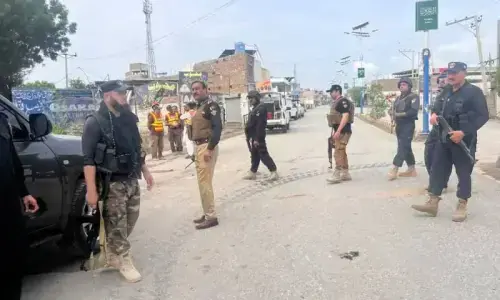
Although the issue has become part of public discourse, the silence of the country's main institutions has strengthened the perception that nobody in power cares for issues related to the tribal areas. It is because of this callous attitude of successive regimes that, today, 140,000 regular troops are fighting tribal insurgents threatening Pakistan's existence.
The buying of votes for election to the Senate may not be too uncommon in this nascent democracy. For many, as confessed by a tribal MNA, this is a matter of routine. However, the conduct of tribal parliamentarians, particularly in the prevailing circumstances, demonstrates a treacherous disregard for the problems faced by their tribal electorate, of whom hundreds of thousands have been displaced from their homes for years.
In a recent television talk show, a senator from the tribal areas made another interesting confession. The senator, affiliated with a religious party, said that during the last presidential elections, tribal parliamentarians were offered palatial bungalows in a posh Rawalpindi township. Many, he claimed, accepted.
Fata is unique in many ways. Unlike the rest of the country, where elections are held on a party basis, in the tribal belt a person is disqualified if he/she uses the symbol of a political party for election. Pakistan's constitution forbids political activities in the tribal areas. However, every political party of the country is represented by a formal organisation in each tribal agency, plus an elected/selected body for Fata on the pattern of a party's provincial organisation.
The current parliament, despite its weaknesses, has done a remarkable job by passing the 18th and 19th constitutional amendments. But out of the 102 clauses amended through the 18th amendment act, not a single relates to the tribal people. Even the constitutional reforms committee ignored amending Article 247 to give parliament a role in tribal affairs.
Political reforms in the tribal areas are an essential part of every party manifesto but neither tribal parliamentarians nor others in the constitutional reforms committee campaigned for it. For our politicians, the tribal region is so irrelevant that during the last three years parliament has never debated tribal affairs. Tribal parliamentarians have also preferred silence over the fate of their tribesmen who are being killed by militants, the military and American drones.
Amnesty International, in its recent survey, said that nearly four million tribal people in Fata are living under Taliban rule and are subjected to extreme human rights abuses by both the militants and the military. About 3,500 political and influential people including tribal elders have been ruthlessly killed.
In 2010, American drones carried out a record number of attacks in the tribal areas, killing almost 1,200 tribal people. According to figures compiled by Pakistani authorities, on the average US drone attacks killed 98 people every month. In the past, the political administration in the tribal regions was in control of the situation. The tribal administration is now in disarray, unable to respond to the multiple challenges of militancy, rising crime and the economic downslide.
The spillover of militancy from Afghanistan after 9/11, the US-led invasion, and the subsequent induction of the Pakistan Army in Fata delivered a major blow to Fata's political administration. The prevailing situation in the tribal areas threatens Pakistan's very existence and needs immediate action on different fronts. Tribal people are campaigning to bring the area into the mainstream.
The last decade of upheaval in the region has brought about pressure as well as opportunities for massive reforms. This decade also offers a conducive environment for all stakeholders, including the tribal people, the government and the political parties, to prepare themselves to accept major reforms. naib tehsildar
The government needs to muster up the courage to abolish Article 247 to bring these areas under the ambit of parliament. There is also an immediate need to amend Article 246 to change the status of the Federally Administered Tribal Areas to Provincially Administered Tribal Areas in order to give representation to tribal people in the Khyber Pakhtunkhwa Assembly. This is crucial, as the tribal bureaucracy, from the (lower ranking official) to the governor, is drawn from the provincial government.
The extension of the Political Parties Act is a long-standing demand and the president has announced this. Speaking to a tribal jirga on Aug 14, 2009, President Zardari promised to extend the act to the tribal areas soon. This has not been done. There is no reason for the president to delay matters as all stakeholders except, reportedly, the military establishment, want the same.
There appears to be a strong perception that the military establishment is creating hurdles in the introduction of political reforms in the tribal areas. The military itself has been bogged down here for several years and should welcome attempts by the political leadership to rescue it from this quagmire. Political activity is the only way to rid the area of violence and insecurity as it increases a sense of participation among the masses in state and government affairs.
In March 2008, Prime Minister Gilani, in his inaugural policy statement in the National Assembly, announced that the Frontier Crimes Regulations would be abolished and the tribal territory brought at par with the rest of Pakistan. Currently, there is an acceptance at all levels of political reforms but, unfortunately, no glimpse of urgency. The political leadership must address the call of 'reform now or perish' before matters get out of hand.
The writer is Director, News & Current Affairs, Khyber Television.
hasan.khyber@gmail.com