0
0

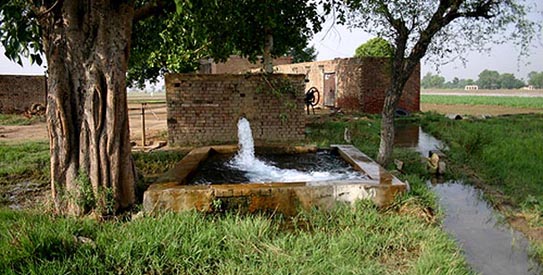
ISLAMABAD: The government has decided in principle to withdraw subsidy on agricultural tube-wells with retrospective effect from July 1, 2010, and make at-source deduction of about Rs17 billion from provincial accounts to recover last year’s arrears in a move to partially offset power sector losses.
Informed sources said the ministry of water and power has completed consultations with provincial governments to do away with the subsidy on agricultural subsidy, and the move has been opposed by Khyber Pakhtunkhwa, Balochistan and the ministry of food and agriculture.
The ministry of finance, which is under a standby programme with the International Monetary Fund (IMF), has taken a strong position while Punjab and Sindh governments have also supported the proposal.
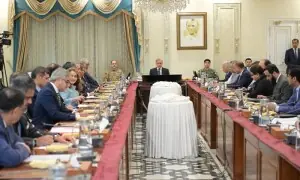
The sources said a federal cabinet meeting next week was expected to formally take the crucial decision to meet international commitments.
“The amounts due on federal government (Rs3.729 billion) and provincial governments (Rs12.986 billion) need to be paid on priority basis. In case of non-payment by provincial governments, the federal adjuster may deduct such sums at source,” said Secretary of Water and Power Javed Iqbal in a summary submitted to the federal cabinet.
This amount was payable by the ministry of finance and provincial governments as on June 30, 2010, he said.
The ministry has also sought elimination of subsidy on agricultural tube-wells with retrospective effect from July 1, this year on the grounds that the finance bill 2010-11 envisaged zero subsidy on power sector with effect from financial year 2010-11.
Despite hectic consultations, provinces have not paid their share of the tube-well subsidy over the past few years, the sources said.
The power companies of Pepco are of the opinion that even the federal government has not made payments against agreed subsidy amounts.
The finance ministry officials, however, said the centre had taken over a lot of power companies’ receivables, including Rs301 billion transferred to a newly-created Power Holding Company last year, and another Rs125 billion in the process of being taken off the power sector’s balance-sheets. Interestingly, the power companies have already been asked to stop subsidised power supply to tube-wells at the provincial level, complete installation of electricity meters on tube-wells and recover full cost from farmers.
About 300,000 agricultural consumers currently use about 14 per cent of the country’s total electricity supply that has increased from 12 per cent in 2006-07 because of subsidies.
Punjab and Sindh have also called for withdrawal of subsidy to agricultural tube-wells. Balochistan and KP, however, want continuation of the subsidy.
This is despite the fact that in March 1997 the then prime minister Nawaz Sharif allowed the agricultural tube-wells in Balochistan to pay a flat rate of Rs4,000 per month and the balance of the bill was picked by the federal government, Pepco and the provincial government.
Subsequently, Pervez Musharraf in his capacity as chief executive decided that the tube-well subsidy be shared 40 per cent by the centre and 30 per cent each by provincial governments and Pepco.
With rising losses and cash flow problems in the power sector, the federal cabinet decided in June 2007 to provide only 25 per cent subsidy on electricity charges for tube-wells to be shared equally by the federal and provincial governments to boost production.
Officials said that after the 18th Amendment and 7th National Finance Commission Award, agricultural subsidy, if required at all, had to be provided by provincial governments keeping in view their respective priorities without any recourse to federal finances.