0
0

When Harvard student Kaavya Viswanathan’s much-talked-about debut novel came under allegations of plagiarism, a book deal, a sparkling potential career, and her reputation were all destroyed in one swoop. Plagiarism scandals, when brought out in the open, have an astounding potential to embarrass.
But when we consider that Shakespeare was a cheat (the plots of some of his most famous plays being based on previously published works), and that yet this fact in no way discounts his genius, the logic of the standard position is called into question. Is plagiarism really such a big deal? Where do you draw the line between inspiration and appropriation of ideas? How are students trained to think about and react to issues of academic honesty, especially in the internet age?
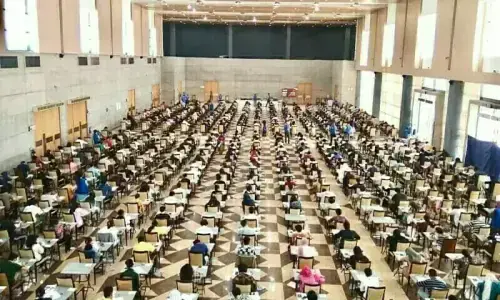
Any college student will testify to the stringent policies and rules in place to prevent plagiarism from occuring; it’s the cardinal sin of an academic environment. Yet, copying someone else’s words or ideas without citation is incredibly common. Any college student shoulder-deep in assignments and quizzes, among all the other pressures of college life, will relate to feelings of anxiety and frustration, and often will be tempted to cheat. Desperate times call for desperate measures, despite the total disgrace and risks of expulsion that accompany these measures.
One reason behind the trend may be that, especially in our educational system, students who are plunged into a college environment straight out of high schools are completely unprepared for the new ideas that they must grapple with. Saad Zubair, a college student in Lahore, says, “In school plagiarism was a way of life. The teachers were fully aware of this practice but there was never really any attempt to curtail it.” “In college,” says his peer Nadir Ali Khan, “Cutting and pasting was simply not an option anymore.” Many of their peers, in both local and foreign universities, concur.
Another reason for the prevalence of the problem would be, as a student studying abroad puts it, “Sheer laziness and an inane belief that they will somehow manage to get away with it.” This is compounded by the time factor, the complicated subjects under discussion and the pressure to get good grades.
Personal factors, then, outweigh the newfound principles of academic honesty, intellectual property, and original thought. The internet sometimes fuels the fire, by providing a vast amount of information from a number of different sources quite readily. However, most students consider the web to be a ‘double-edged sword’, providing as many mechanisms to detect cheating as it does to encourage it.
All over the world, educators are worried by the ubiquity of plagiarism, and feel that students do not truly understand what the issue is and why it is important. The sensitive issue has sparked a lot of debate. While most academics are up in arms about it, some argue that if we look at the roots of knowledge system as a whole, it is extremely hard to draw a line. Whole cultures have appropriated and used discoveries of other cultures without reference, and even our most standard ideas and assumptions were once somebody else’s intellectual property.
Stanley Fish, in an article in The New York Times argues, “Plagiarism is breach of disciplinary decorum, not a breach of the moral universe.” It may well be convention, rather than real and powerful philosophical concepts, that hold the institution in place.
In contrast to this, many college students strongly believe in the fairness of the rules that they are introduced to, although some ‘wouldn’t mind bending them a little’. Stealing another person’s ideas and passing them off as one’s own is understood to be ethically wrong.
Most students accept that these rules make them work harder and strive to produce worthwhile work, especially in subjects like economics and mathematics, which operate on sets of rules, and make cheating much more possible. They also recognise that dishonesty in an academic setting can have consequences in the workplace, and on a generation as a whole.
In times of cultural relativism, it can be said that whether you’re against plagiarism or consider it acceptable depends on your individual concept of ‘morality’. However, such an attitude may not be fair to the capacities and capabilities of young people, and in fact may be a constraint to their development, and many students see it as such.
A student in America, quoted in an article in The New York Times, summed this up quite adequately: “It’s kind of an insult that that ideal is gone, and now we’re left only to make collages of the work of previous generations.”