0
0


What happens when your national identity card expires? Do you cease to exist or lose your identity?
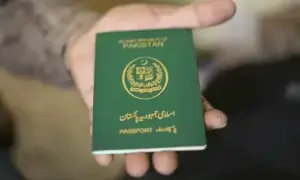
To my straightforward mind the idea of an identity card getting expired seems absurd, to say the least. One's identity does not change and so the ID card should be for ever. If someone changes his/her name due to a change in marital status or has a change of address, there should be a simple way to get the necessary changes incorporated in the database and a new card issued.
When I received my computerised identity card (CNIC) I was surprised to discover that it had an expiry date. They expect me to die by then, was my first thought. The basis on which the expiry date was calculated was also not clear. My father and I received our cards on the same day but we had different expiry dates (almost a year apart). To top it all when the card expired, it turned out that we had to undergo a tedious procedure to get it renewed, which included waiting in line under the blazing sun for hours to acquire a token to get inside for the photograph and other information required. This followed another visit after a month to collect the new card.
If the card needs renewal, there should be an easy way to get it done; similarly when the photograph and data had already been provided in the first place they only had to be verified, so why make the people go through a cumbersome procedure.
When asked to explain the logic behind the expiry of CNIC the Nadra spokesperson said that renewal is required as a lot of things change in 10 years like facial features, marital status, etc. He explained that initially ID cards were produced through form-based applications, but now for renewal, finger prints are also taken to ensure data collection. Biometrics including fingerprints and photographs ensure that renewal is being done by the same individual.
That much is acceptable but the system can be simplified. At least separate counters can be established for people visiting the office for different reasons. Presently, whether one has to get a new card made or get the name changed or needs some correction done or get the old card renewed, it is processed through the same counters.
Nadra says that there are separate counters at 60-70 per cent of the centres to facilitate applicants, but at the centre I went to, the scene was totally chaotic. After acquiring the token, when I finally went inside, it was difficult for a moment to make out how things would progress. Inside the two interconnected rooms, dozens of applicants were trying to move from one step of the dreary procedure to another. Even fast track applicants were being handled by the same personnel, which added to the chaos and crossfire of hot words between stressed staff and distressed applicants. What else could be expected when fast track applicants were given priority and moved ahead in a queue just because they had paid a higher fee?
Seeing an old lady struggle to the counter with her companion's support, as she had trouble walking; one wondered if there could be a way to ease her difficulty. Thankfully, on request, she was provided a wheelchair but still had to go through the long winded process for renewal of her card. A shortcut or special facilities for senior citizens/special persons would be of great help.
According to the spokesperson at Nadra, senior citizens are given preference in queues, while people aged 65 years and above are not required to renew their cards anymore; their cards are valid for life. Wheel chairs are made available at NRCs for senior citizens/special persons, while special people are processed in the fast track category, free of cost. Nadra has also established a dedicated counter for senior and special citizens at most centres where suitable space for the counter is available. Arrangements have also been made wherein teams with laptops and other equipment visit and process applications at their doorstep.
A lot of problems that people face can be eased if a list of required documents and other conditions to be fulfilled are displayed prominently in the centres or through leaflets made available in post offices. This would save people from waiting in queues only to discover that they do not have all the required documents, etc. Could you imagine the agony of the girl who waited in line for more than an hour and was then told that she'd have to come again because her hennaed hands could not be scanned for biometrics. The poor girl only wanted her father's name replaced by her husband's.
Nadra claims that essential information regarding guidance/requirement for documents is displayed on information boards outside all major NRCs. Information can also be obtained through Nadra's UAN 111-786-100. The spokesperson said that plans are underway to appoint facilitators to help applicants.
Hopefully in the near future we will see progress as the spokesperson seemed open to suggestions and feedback.