0
0

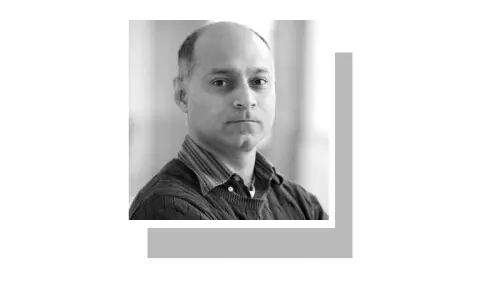
Prof (Dr) Ahmed Hassan Dani, an internationally acclaimed archaeologist, historian, linguist, and one of the pioneers of archaeology of Pakistan, who devoted his entire life to the cause of archaeology and to the advancement of human knowledge, passed away on January 26, 2009. He was regarded an authority on culture, linguistics, Buddhism and Central Asian archaeology and history.
Dr Dani's contribution to setting up of several museums in the country and his vast publications had set the pace for future course of action in this vital field. During his long career, Prof Dani had held various academic positions and international fellowships and conducted archaeological excavations and research.
Born in Basna in Raipur Chhattisgarh, India, on June 20, 1920, Dr Dani got his early education in Amritsar. He did his Masters in 1944 and became the first Muslim graduate of Banaras Hindu University. He got his PhD from the University of London in 1955 and the title of his thesis was "Prehistory and proto-history of Eastern India”.
In 1945, Prof Dani started his carrier as a young archaeologist in the supervision of Sir Mortimer Wheeler. He participated in excavations at Sirkap, the second capital city of ancient Takshasila and Moenjodaro. Later on, he joined the Archaeological Survey of British India. After the creation of Pakistan, he moved to Dhaka and worked as assistant superintendent at the Department of Archaeology, re-organised the Varendra Museum in Rajshahi. Prof Dani served as associate professor of history at the University of Dhaka, remained as curator at Dhaka museum from 1950 to 1962 and conducted comprehensive archaeological studies on the Muslim history of Bengal.
Prof Dani joined the University of Peshawar as professor in 1962 on the request of Field Marshal Muhammad Ayub Khan. He established there the Department of Archaeology, first of its kind in Pakistan. Being head of the Department of Archaeology, the first successful enterprise of Dr Dani was the discovery of a pre-historic cave at Sanghao, Mardan in 1962. The second major discovery of Prof Dani was that of Gandhara Grave Culture in Timergara, Dir, and Swat Valley. Under his leadership, the Department of Archaeology, carried out survey in Gomal plains in 1970 and made important discoveries of sites such as Gumla, Hathala, Karam Shah and Rehman Dheri. Dr Dani conducted excavations at Gumla. The most remarkable discovery, in this regard, in the Upper Indus basin is the site of Rehman Dheri. The site provides vivid evidence for the prototype of town planning as seen at the twin capital cities of Harappa and Moenjodaro.
Prof Dani's next important discovery was Shaikhan Dherai in Charsadda, the first capital of the ancient Gandhara, with the collaboration of the Cambridge University, which yielded remains of the Indo-Greek city founded by King Menander in 180BCE.
Sir Aurel Stein made the most important archaeological exploration in Chilas, Gilgit-Baltistan, in 942. He recorded a large number of rock carvings depicting Buddhist scenes, symbols and legends as well as Brahmi inscriptions. Inspired by Sir Aurel Stein's reports, Dr Dani in 1980 resumed the archaeological explorations in Gilgit-Baltistan. A team of Pak-German Study Group, headed by Dr Dani and Prof Karl Jettmar of the South Asia Institute of the Heidelberg University, Germany and Prof Harald Hauptman of the Heidelberg Academy of Sciences, embarked on thorough archaeological explorations in Diamer and Hunza Districts as well as other parts of Gilgit-Baltistan. During their campaign, they studied and documented rock carvings in Hunza and Chilas.
In 1971, he moved to Quaid-i-Azam University in Islamabad where he established the Faculty of Social Sciences and served it until 1980. After his retirement, he was honoured as Professor of Emeritus at the Quaid-i-Azam University, a distinction bestowed on him in recognition of his contributions.
Later on, the Taxila Institute of Asian Civilizations carried out a comprehensive research in the Potohar plateau under the directions of Dr Dani. The research deals with the Palaeolithic cultures of Potohar and its report is published in the Journal of Asian Civilizations (December 1997). The Institute continued its researches, under Dr Dani, at Chakwal, Khushab, Salt Range, Thatta, Chinniot Hills, Jehlum Valley and Margalla Hills, Islamabad, and reported a considerable number of archaeological findings.
In 1990-91, he led Unesco's international scientific teams for the Desert Route Expedition of Silk Road in China and the Steppe Route Expedition of the Silk Road in the former Soviet Union. He edited the journal Ancient Pakistan in 1964, and was one of the editors of Unesco's Scientific and Cultural History of Mankind.
In 1993, Prof Dani established the Islamabad Museum. In 1997, he became honorary director at the Taxila Institute of Asian Civilisations.
Dr Dani has to his credit 45 books, which have important understandings about the history, archaeology, ancient languages, civilizations, religions and ethnology of south and central Asia. As a recognised linguist, he was proficient in more than 14 national and international languages and dialects, including Bangla, French, Hindi, Kashmiri, Marathi, Pashto, Persian, Punjabi, Sanskrit, Seraiki, Sindhi, Tamil, Turkish and Urdu.
The Taxila Institute of Asian Civilizations has followed in the footsteps of Dr Dani about the development of human knowledge in terms of human past. It has recently conducted an archaeological survey of sites and monuments of district Rawalpindi.
The Quaid-i-Azam University plans to establish a separate building for the Taxila Institute of Asian Civilizations and museum of Asian civilizations, which will be a further step towards the realization of Dr. Dani's dream.
The writer is the Director of Taxila Institute of Asian civilizations, Quaid-i-Azam University, Islamabad. He can be reached at ashrafarchaeologist@hotmail.com