0
0


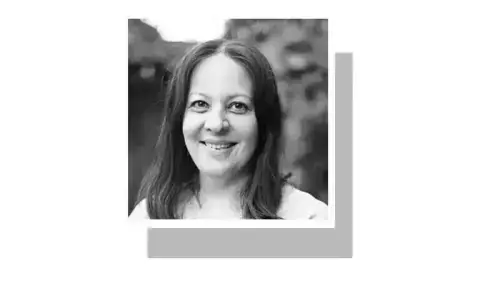
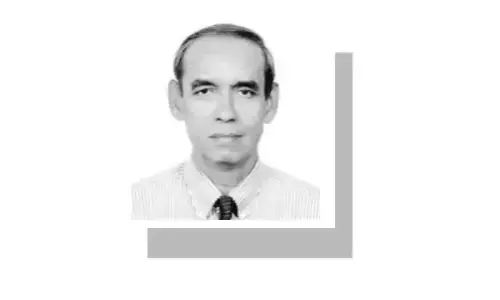
Prof Dr Talat A. Wizarat is an intellectual asset. A former chairperson of the Department of International Relations at the University of Karachi, who is currently also engaged as a faculty member at the Institute of Business Administration (IBA), Dr Wizarat received her early education at PECHS School and College to then go into International Relations.
In her own words “I was not too good at mathematics and decided to join International Relations, a subject in which I had genuine interest. Later, I found out that it too included mathematical models, something very significant if one really wanted to understand the subject.” She secured her first master's degree in International Relations from the University of Karachi.
Having received a Fulbright Scholarship, Dr Wizarat proceeded to the United States for a second master's in government and international studies from the University of South Carolina (1977-78). Her PhD on “Strategies for Peace and Security in the Persian Gulf” is from the University of Karachi.
“I had planned joining the Foreign Service but was also attracted to teaching because I saw communication with younger people a way to keep one abreast with new ideas. Teaching is a very rewarding profession. It gives me inner satisfaction,” she shares.
The professor regards 'peace' as far more complex than a mere absence of war. She says “We need a harmony of relationships between different elements living in a particular region or different communities or states. Interaction is very important in the peace process. If there is no interdependence among the people, then lack of conflict cannot be regarded as peace because the people are in isolation.”
She remarks “I stress on interaction and interdependence between people, communities and states as it is after all the raw material for peace. Conflicts might arise at any time during interaction but there should be methods of peaceful conflict resolution. Tolerance, right mindset and interdependence are vital.”
Focusing on international organisations, she says “They are primarily important in inter-state interactions. But the role of the UN in the Israel-Gaza conflict has brought down the graph of international institutions. The UN tried stopping US aggression against Iraq in 2003 but United States was not deterred.
“So I say that the international community should become assertive and these international institutions will gain legitimacy after we develop that will to let them play their right role. Apart from the UN, we have other international organisations, too, like the many NGOs, regional organisations, and multinational corporations taking over the world.”
She mentions the reason for having specialised in the Middle East as “I chose this particular region as so much is happening there and also because of our cultural and spiritual links with it. But that does not mean an absence of interest in the other regions. I have diverse interests in International Relations. I am interested in Conflict Resolution, which is in itself diversified.”
Dr Wizarat holds research as a very important aspect of any kind of study. “Normally many people have the wrong concept about research that you read a lot of sources and put
them together. But research is to create new knowledge and not just to go through the available knowledge. Now research is a very well-developed academic activity. There are research methodologies and tools to help you along. The computer and Internet, too, has made it easier in managing data, particularly in the case of statistical analysis,” she explains.
“I would say anybody can apply these techniques but you also need a particular mindset for research. If you are a researcher, then you should be able to at least consider the possibility that your assumptions or hypothesis can be right or wrong. You cannot stick to a single point of view and refuse to accept contradictory evidences.”
She stresses on familiarising the children with research methods such as involving simple survey, interviews, etc. They can learn the proper methods as they grow and become more sophisticated in their approach.
She also holds linguistic skills important in order to specialise in a particular region. “As far as my specialisation is concerned, I learned Arabic at school, which helped me in basic communication and understanding and I was not left blank. Visiting the places of research is essential, too. I organised a comparative study tour for my students to Turkey and Iran in 1992.
“This must be made a regular practice for research students and the government should support these ventures in order to groom the best talent. But there is a probability of students opting only for Europe and Middle East or Far East because they all want to be in Japan and China. We should inculcate the importance of every region within the students. Like Africa is such an important developing region, most of the problems in the resourceful region of Africa are due to their colonial legacy, European countries specially Britain and United States' CIA and local leadership as well.”
She appreciates the efforts of the Higher Education Commission (HEC) in this regard. “I think HEC is doing very well by attracting the best talent towards research and actually grooming it. They have started programmes for the financial assistance of research-oriented students. As in the past, everyone who had time wanted to do PhD. Many people used to approach me for this but I always said to them that time alone is not enough. You should also have the right inclination and commitment.”
Dr Wizarat also laments over the gap between learning centres and practitioners. She says “There is a need for the users of knowledge in the practical fields to realise the capabilities of the university. There was a similar problem in the management of the science faculty as there was no link between the industry and the university.
“But I think the walls are falling now. For example, foreign office people used to visit our seminars and spend two to three days with us but, though I am not a part of the International Relations department anymore, I wish there would be more occaWrite to us at education@dawn.com
sions, where the foreign office would invite the International Relations department for their input in foreign policy-making at various levels. Maybe this thing will take a couple of years to flourish,” she says while appreciating the entrepreneurship centre at IBA in this regard.
Speaking about her books, Dr Wizarat says “I have so far edited one book on South Asia comprising of conflict resolution techniques that we can follow in South Asia. While researching for it, I drew some lessons from other regions and tried to apply them on South Asia. These were actually proceedings of a conference that took place in December 1996.”
She is currently working on anPhoto by writer
other volume which is going to focus on the Middle East. “I have got a collection of essays from different people, which I am editing. I have written three chapters myself and there are chapters contributed by others that follow. My next project is to publish my own thesis and to work on it more as when you write a thesis, its from another perspective but publishing it involves a financial perspective for the publisher, too, in terms of style and images,” she adds.
Dr Wizarat approaches the solution to Pakistan's problems positively. She says “Regional integration is taking place now and Pakistan is lucky to be a member and have an important position at the Economic Cooperation Organisation (ECO), South Asian Association of Regional Cooperation (Saarc) and Organisation of the Islamic Conference (OIC). The society we live in today is far more complex than it was some 100 years back but once the Muslim countries as well as the developing countries know what they want, they can convince the rest of the world of their aims by keeping open the channels of communication.”